
International Flatbed Trucks For Sale
Shop International flatbed trucks with specs that fit hauling, delivery, utility, and vocational work across medium-duty and severe-service applications.
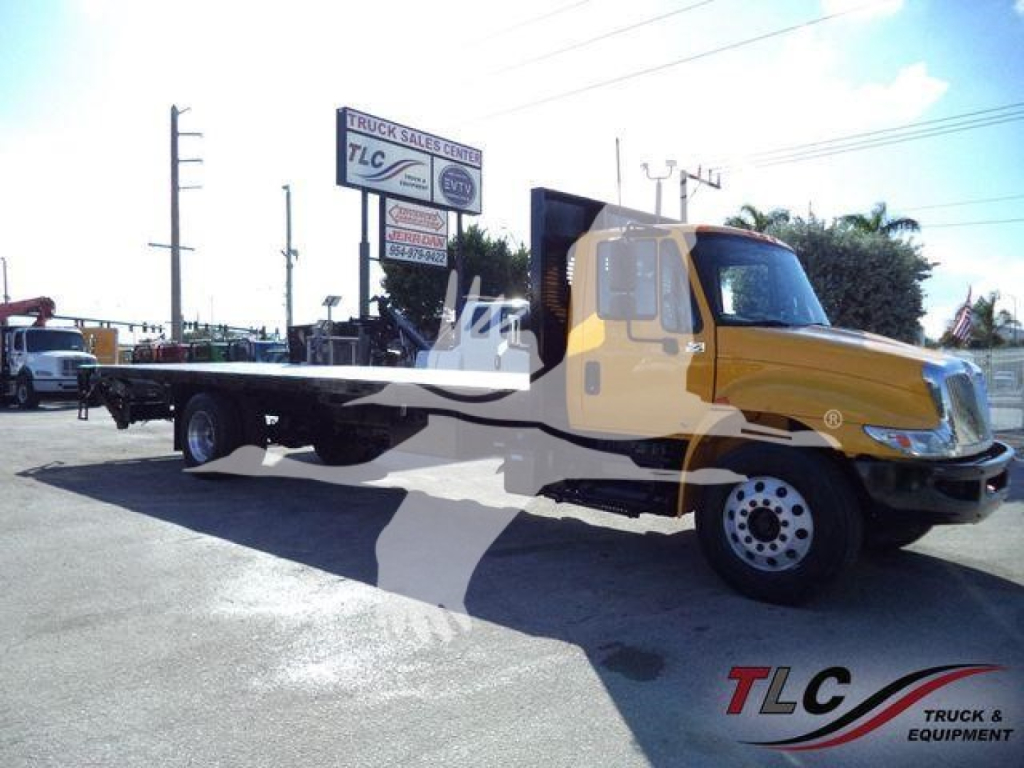
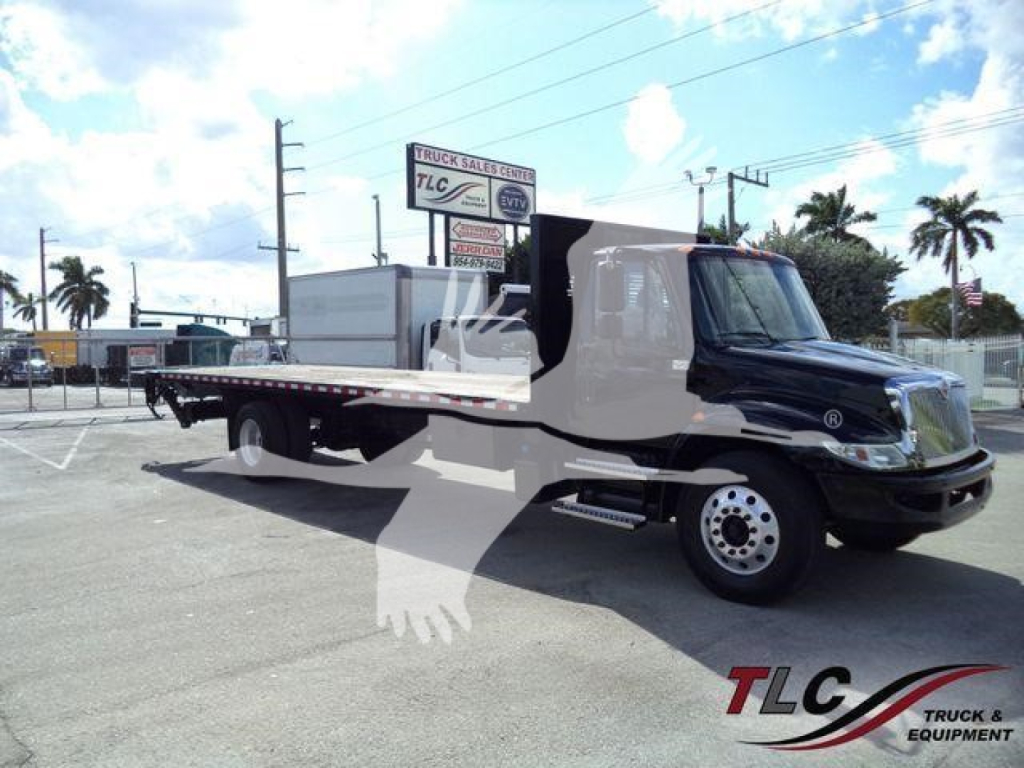
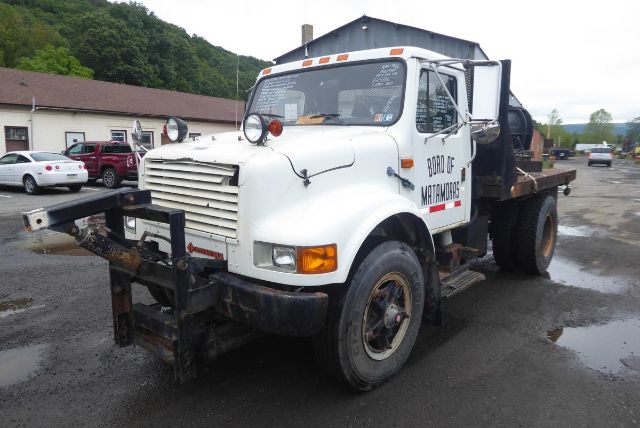
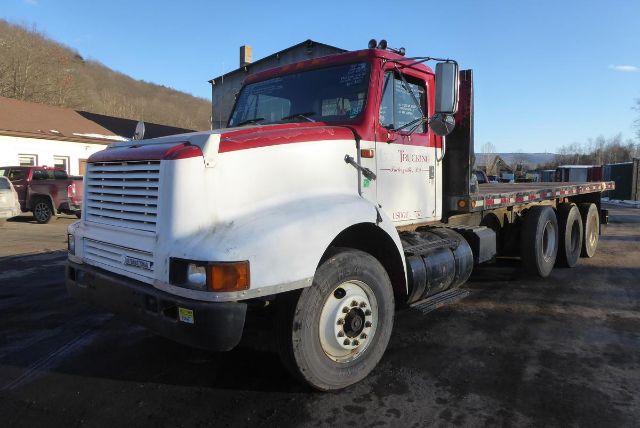
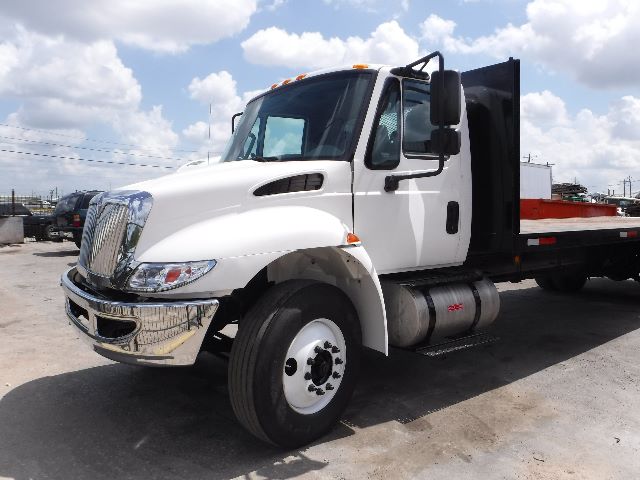

Selling a international flatbed truck? List your international flatbed truck for sale and reach thousands of commercial buyers.
International Flatbed Trucks
Powertrain and GVWR should be matched to the actual load profile, not just the bed size. International flatbeds are commonly spec'd with diesel engines, Allison automatic transmissions, and either spring or vocational suspension setups, depending on intended use. Medium-duty configurations often fall into Class 4 through Class 7, while heavier single-axle and tandem-axle units push into severe-service territory for cranes, hoists, plows, or trailer towing. Buyers should pay close attention to cab-to-axle, cab-to-end, rear axle ratio, brake type, and whether the frame has been reinforced with a liner or double-frame section. Those details affect body upfit compatibility, legal payload, and how well the truck handles mounted equipment.
The flatbed itself deserves as much scrutiny as the chassis. Steel beds are common for hard use and concentrated loads, while lighter platform designs can preserve payload for delivery work. Stake pockets, rub rails, winches, D-rings, headache racks, toolboxes, and rear hitches all add value when they match the job. Some International flatbeds are set up for gooseneck or kingpin towing, and others carry hydraulic circuits for plows, liftgates, or auxiliary equipment. Deck condition, crossmember integrity, floor wear, tie-down layout, and signs of corrosion around mounts and body seams tell you a lot about remaining service life, especially on older vocational trucks.
International has long been a practical choice for fleets that want straightforward serviceability and a broad range of vocational specs. When comparing listings, focus on the truck's actual working configuration instead of model year alone. Mileage, engine hours, maintenance history, emissions system condition, tire size, and front and rear axle ratings will usually matter more than cosmetics. A well-matched International flatbed can serve as a simple delivery truck, a contractor's material hauler, a municipal support unit, or a platform for specialized upfits, so the best buy is the one whose chassis, bed, and equipment already align with the work you need it to do.
Frequently Asked Questions about International Flatbed Trucks
What should I look at first when comparing International flatbed trucks?
Start with GVWR, axle ratings, wheelbase, and cab-to-axle measurement. Those numbers determine payload capability, body fit, and how the truck will balance a load on the deck. After that, review the engine and transmission pairing, suspension type, brake setup, and any vocational equipment such as hitches, hydraulics, or reinforced frames. A flatbed truck that is correctly spec'd for the job is usually more valuable than a newer truck with the wrong configuration.
Which International models are commonly used as flatbed trucks?
International flatbeds commonly appear on medium-duty and vocational chassis such as the 4300, CV515, HV, 4700, and 7300. The 4300 is often used for delivery and contractor applications, while the HV and 7300 platforms are more likely to be found in heavier vocational service. Older 4700 models remain common in municipal and farm use because of their simple mechanical layouts and durable chassis design.
Is a steel flatbed better than an aluminum or lighter platform body?
A steel flatbed is usually better for rough service, concentrated loads, and jobsite abuse. It tends to hold up well under forklifts, equipment, and heavy materials, but it adds tare weight that reduces payload. A lighter platform body can improve legal carrying capacity and fuel efficiency for delivery work. The better choice depends on what the truck hauls every day and how often the deck is exposed to impact, abrasion, and weather.
How important are cab-to-axle and wheelbase on a flatbed truck?
Cab-to-axle and wheelbase are critical because they control body length compatibility and load distribution. If the cab-to-axle dimension does not match the bed or upfit, the truck may not balance properly or may require costly modifications. Wheelbase also affects ride quality, turning radius, and how the truck performs in tight yards or urban delivery routes. These measurements should be verified before focusing on cosmetic condition or optional accessories.
Can an International flatbed be used for towing equipment or trailers?
Many International flatbed trucks can be configured for towing, but the truck must have the right hitch, frame strength, axle ratings, brake capacity, and GCWR for the trailer and load. Some units are equipped with pintle hitches, receiver hitches, gooseneck setups, or even kingpin-style couplers. Buyers should confirm that the truck's towing hardware and chassis ratings match the intended trailer use, especially if the truck will haul equipment regularly.