
Flatbed Trucks For Sale in Alabama
Browse flatbed trucks for sale in Alabama. Compare deck lengths, GVWR, axle setups, engines, and upfit features for hauling equipment and materials.
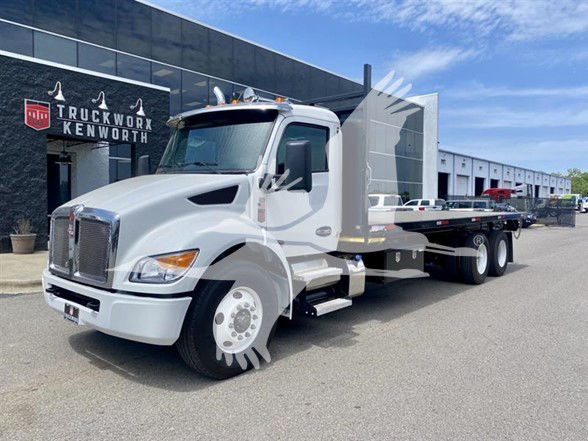
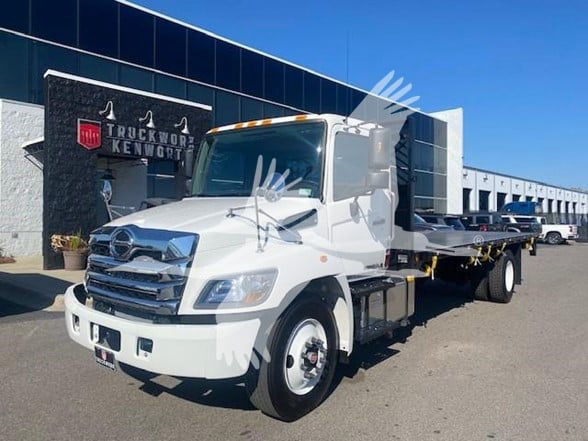
Selling a flatbed truck? List your flatbed truck for sale and reach thousands of commercial buyers.
Flatbed Trucks in Alabama
A big part of the buying decision is matching the chassis to the body and the work. Many flatbed trucks in this class run 22-foot to 26-foot beds, though shorter and longer platforms exist depending on wheelbase and intended use. Steel and aluminum beds each have a place. Steel offers durability for hard use and point loading, while aluminum helps reduce curb weight and preserve payload. Look closely at stake pockets, rub rails, tie-down points, headboard design, floor construction, and underbody toolbox space. If the truck will haul equipment or wheeled machines, buyers should pay attention to deck height, ramp options, and rear overhang. If it will handle building materials, a moffett kit, strap storage, and easy side access can matter more than raw horsepower.
Powertrain choices on flatbed trucks are usually centered on medium-duty diesel platforms, often in the 260 to 360 horsepower range, paired with automatic or automated transmissions and ratios selected for local route work, stop-and-go operation, or heavier regional hauling. Suspension type also affects usability. Spring suspension is common for straightforward vocational service, while heavier tandem setups may use vocational suspensions such as Chalmers for durability under load. In Alabama, terrain, route length, and legal weight needs should guide the spec. A truck running Birmingham construction routes has different demands than one covering rural deliveries across the state with mixed highway miles and repeated loading cycles.
Condition, body upfit quality, and serviceability often matter as much as headline specs. Check the bed manufacturer, frame modifications, crossmember spacing, and how the body is mounted to the chassis. Review GVWR, front and rear axle ratings, wheelbase, and the relationship between cab-to-axle measurement and usable deck space. Buyers should also inspect lighting, ICC bumper configuration, trailer hitch or pintle provisions, and any hydraulic or PTO-driven accessories if the truck includes cranes or other attachments. A well-matched flatbed truck should load easily, secure freight efficiently, and stay compliant without giving up payload to unnecessary equipment.
Frequently Asked Questions about Flatbed Trucks in Alabama
What is the difference between a flatbed truck and a flatbed trailer?
A flatbed truck is a self-contained straight truck with an open platform body mounted directly to the chassis. A flatbed trailer is a separate towed trailer that requires a tractor. Flatbed trucks are often preferred for local and regional delivery work because they are easier to maneuver in tight jobsites, loading yards, and city routes. They also simplify loading for shorter-haul operations where a full tractor-trailer combination is not necessary.
What deck length is common on a flatbed truck?
Many medium-duty and vocational flatbed trucks are equipped with beds in the 22-foot to 26-foot range, but the right length depends on wheelbase, axle ratings, and the type of freight. Shorter decks can improve turning radius and urban usability, while longer decks allow more pallet positions or longer material such as pipe, steel, or lumber. Buyers should confirm that the cab-to-axle dimension and rear overhang are appropriate for the body length so weight distribution stays within axle limits.
Should I choose a single-axle or tandem-axle flatbed truck?
A single-axle flatbed truck is usually the better fit for lighter payloads, tighter routes, and lower acquisition and maintenance costs. A tandem-axle flatbed is better suited for heavier loads, more demanding vocational work, and applications where rear axle capacity and stability are important. The decision should be based on expected payload, freight density, local bridge and road restrictions, and how often the truck will operate near its rated capacity.
What features matter most on a flatbed body?
Tie-down functionality is one of the most important considerations. Buyers should inspect the number and placement of stake pockets, rub rails, winches, D-rings, and chain tie-down points. Headboard strength, floor material, deck height, toolbox placement, and access for forklifts all affect daily usability. For specific applications, features such as ramps, liftgates, piggyback forklift kits, or crane provisions can be more valuable than a basic deck with no upfit support.
Are flatbed trucks good for Alabama construction and material delivery work?
Yes. Flatbed trucks are widely used in Alabama for construction supply, equipment transport, steel service, lumber yards, and municipal or utility support because they allow fast loading from the side, rear, or overhead. That flexibility is useful on jobsites and in yards where dock access is limited. Buyers in Alabama should still match the truck to route conditions, expected payload, and body durability needs, especially if the truck will see rough sites, repeated forklift loading, or mixed highway and local service.