
Commercial Trucks For Sale Near Enid, Oklahoma
Browse trucks for sale in Enid, Oklahoma, including day cabs, dump trucks, and cab & chassis models built for highway and vocational work.
Have commercial truck to sell? List it here to reach thousands of buyers.
Commercial Trucks Near Enid, Oklahoma
For highway-oriented trucks, common specs include tandem drive axles around 40,000 pounds, front axles in the 12,000 to 12,500 pound range, wheelbases around 185 to 205 inches, and engine ratings in the 425 to 435 horsepower range. Automated manual transmissions such as Volvo I-Shift and Mack mDRIVE are common because they help with fuel economy, driver consistency, and resale appeal. Rear axle ratios in the high 2s to mid 2s are typical on road tractors intended for regional freight, especially when paired with direct or overdrive 12-speed transmissions. Buyers comparing conventional day cabs should pay attention to wheelbase, suspension type, and PTO readiness if the truck may later need a wet kit, blower, or other vocational adaptation.
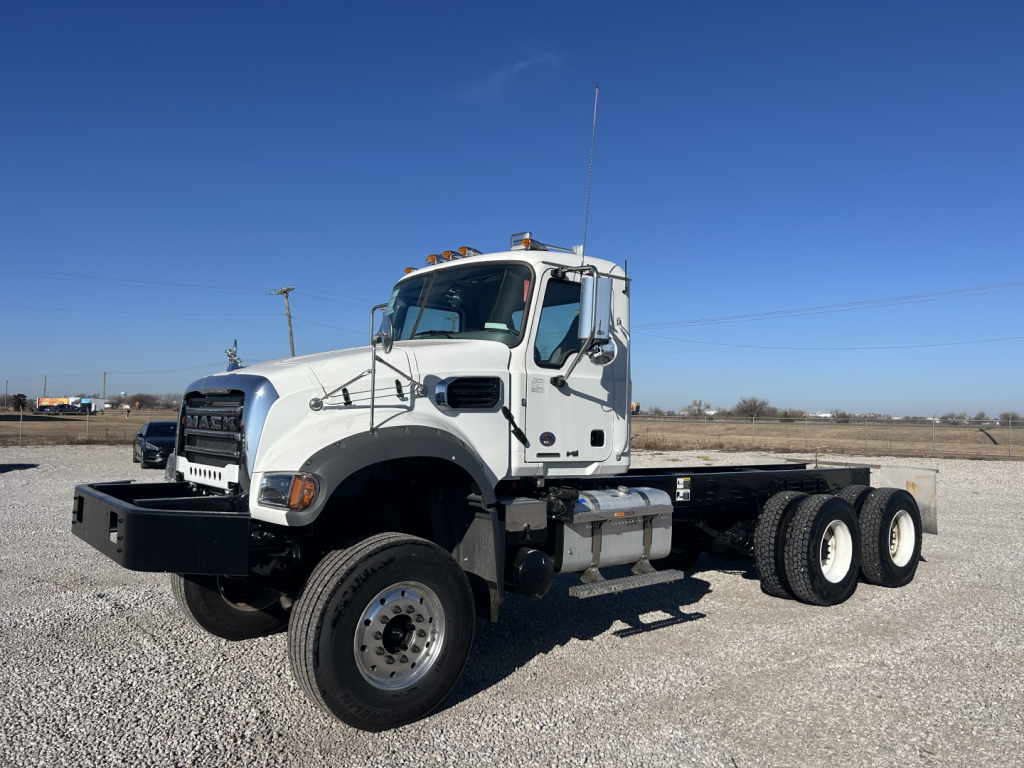
Vocational trucks in this category usually move in the opposite direction on spec. Dump trucks and severe-duty cab and chassis models often carry 14,600 to 18,000 pound front axles, 44,000 to 46,000 pound rears, heavier suspensions such as Camelback or Hendrickson, and shorter gearing like 3.56 or 4.19 ratios for startability and jobsite performance. Engines in the mid-400 horsepower range are common, and transmissions may be heavy-duty automated units or full automatic Allison setups depending on terrain, stop-and-go cycles, PTO demands, and driver preference. If the truck will spend time off pavement in Oklahoma aggregate, dirt, or construction service, suspension design, frame strength, ride height, and body compatibility deserve as much attention as engine make.
A good truck listing should tell you how the unit is configured, not just what badge is on the hood. GVWR, front and rear axle capacity, number of axles, wheelbase, rear suspension, and transmission model are the details that separate a freight tractor from a true vocational chassis. In this market, buyers often compare Mack, Volvo, and similar Class 8 platforms because support, durability, and driver acceptance are all part of the ownership cost. The best choice is the one whose gearing, axle ratings, cab layout, and body or trailer compatibility match the work without leaving you under-trucked or carrying unnecessary spec.
Frequently Asked Questions about Commercial Trucks Near Enid, Oklahoma
What is the difference between a day cab, a dump truck, and a cab and chassis truck?
A day cab is a highway tractor without a sleeper, typically used for local and regional freight where the driver returns home daily. A dump truck is a vocational truck with a dump body already installed for hauling aggregate, dirt, demolition, or similar materials. A cab and chassis truck is an incomplete truck built to receive a body such as a dump body, flatbed, service body, vacuum system, or other specialty upfit. The same basic Class 8 platform can serve all three roles, but the axle ratings, frame, suspension, wheelbase, and transmission are usually spec'd very differently.
What truck specs matter most when comparing used and new Class 8 trucks?
The most important specs are application-driven. Start with front axle rating, rear axle rating, GVWR, wheelbase, suspension type, transmission model, rear axle ratio, and horsepower. Those numbers tell you whether the truck is suited for freight hauling, dump service, or body installation. Buyers should also check whether the truck has tandem axles, PTO provisions, the right cab configuration, and a drivetrain matched to expected speed, terrain, and payload. Those details affect operating cost, legal payload, and how easily the truck can be repurposed later.
Is an automated transmission a good choice for a work truck?
In many cases, yes. Automated manual transmissions such as mDRIVE and I-Shift are widely used in both highway and vocational applications because they improve shift consistency, reduce driver fatigue, and can help protect the driveline. They are especially popular in day cabs and regional tractors where fuel economy and ease of operation matter. For severe stop-and-go vocational work or applications needing smooth PTO engagement and precise low-speed control, some buyers still prefer a full automatic like an Allison. The right choice depends on duty cycle, driver pool, terrain, and body equipment.
How do rear axle ratios affect truck performance?
Rear axle ratio has a major impact on how a truck starts, climbs, cruises, and uses fuel. Lower numerical ratios such as 2.47 or 2.79 are common on highway tractors that spend more time at road speed and need fuel-efficient cruising. Higher numerical ratios such as 3.56 or 4.19 are more common on dump trucks and heavy vocational chassis because they improve launch performance, gradeability, and control under load. Ratio selection should always be considered with tire size, transmission gearing, engine torque, and the truck's actual work.
What should buyers in Oklahoma look for in a vocational truck?
For Oklahoma vocational work, buyers should focus on suspension durability, front axle capacity, frame strength, PTO compatibility, and gearing that fits mixed highway and off-road use. Dump and construction applications often benefit from heavier front ends, robust rear suspensions, and drivetrains built for repeated starts under load. Ground clearance and ride height can matter on rough sites, and body length must be matched to wheelbase and state weight considerations. A truck that looks similar on paper can perform very differently once it is loaded and working on uneven ground.