
Commercial Trucks For Sale Near East Falmouth, Massachusetts
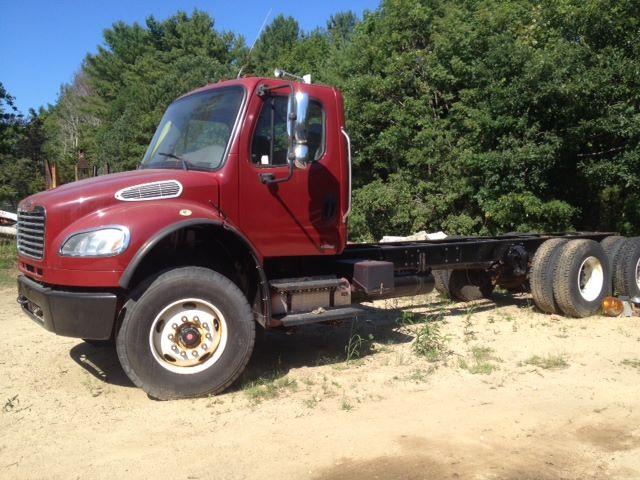
Have commercial truck to sell? List it here to reach thousands of buyers.
Commercial Trucks Near East Falmouth, Massachusetts
Powertrain choices should match duty cycle. Stop and go delivery on Route 28 points to automated manual transmissions with optimized creep modes and rear axle ratios in the 3.21 to 3.90 range, depending on tire size and cruise speed. Regional haul tractors typically run 400 to 500 horsepower with 1,550 to 1,850 lb ft torque for reliable merges onto Route 6 and I 195. Medium duty gas V8 and V10 options can pencil out for lighter, short-haul routes, while diesel remains the standard for higher GVWR and PTO needs. Battery electric trucks are emerging for short, predictable routes, but plan for reduced range in cold weather and ensure charging access on the Cape.
Applications drive body and feature sets. Day cab tractors suit regional freight into Boston and Providence with easier ferry and bridge maneuvering than long sleepers. Sleeper tractors make sense for multi-day New England lanes and benefit from factory idle reduction, bunk heaters, and shore power to meet Massachusetts anti-idling rules. Box and reefer trucks serving seafood, grocery, and healthcare loads should pair insulated bodies with high-efficiency refrigeration units, multi-temp bulkheads if required, and swing or roll-up doors matched to dock profiles. Dump and contractor trucks need high RBM frames, full-locking differentials, PTO provision, and heated mirrors, with plow prep packages and block heaters for winter service.
Condition matters in a coastal market. Salt air and winter de-icing reward aluminum cabs, stainless hardware, sealed electrical connectors, and undercoating. Check for scaly frame rust around crossmembers, spring hangers, and fuel tank straps, verify brake lining thickness and drum or rotor condition, and inspect coolant and charge air systems for leaks that sap power. Tire choices affect traction on sandy sites and wet pavement, so consider open-shoulder drives, automatic traction control, and tire inflation systems. Compliance is straightforward if you match weight and dimension limits. Plan around 13 feet 6 inches legal height, federal 80,000 pounds on interstate with proper axle spacing, and annual Massachusetts safety inspection with diesel opacity testing where applicable.
Frequently Asked Questions about Commercial Trucks Near East Falmouth, Massachusetts
What truck specs work best for East Falmouth and Cape Cod deliveries?
Shorter wheelbases with set-back steer axles improve turning on tight streets and older docks. Automated manual transmissions help in stop and go traffic on Route 28. For box trucks, 16 to 26 foot bodies with low overall height and well-sized liftgates ease mixed residential and commercial deliveries. For tractors, a sliding fifth wheel and compatible ride height simplify tandem placement with 53 foot trailers.
How do I protect a truck from coastal corrosion in Massachusetts?
Prioritize aluminum or composite cabs, stainless fasteners, sealed harnesses, and quality undercoating. Inspect frames for prior rust remediation, look for intact paint on crossmembers, and confirm regular washing, especially the frame rails and brake chambers, after winter storms. Grease kingpins, slack adjusters, and driveline fittings on schedule. Consider coated brake components and aluminum wheels to slow corrosion.
Do I need a CDL for the trucks I am considering?
A CDL is generally required for single vehicles with GVWR of 26,001 pounds or more, combinations with GCWR of 26,001 pounds or more towing over 10,000 pounds, passenger vehicles above certain capacities, or hazardous materials. Air brakes do not by themselves trigger CDL, but if the truck’s GVWR places it in CDL class you will need the appropriate class and air brake qualification. Always verify Massachusetts licensing requirements for your exact configuration and cargo.
What axle and suspension choices suit Massachusetts weight limits?
For highway tractors running 80,000 pounds, tandem drives with legal axle spacing and a sliding fifth wheel cover most needs. Vocational trucks often benefit from lift axles or tri-axle setups, where allowed, to spread weight and increase legal payload under bridge formula limits. Choose suspensions that match the job, such as air ride for freight protection and driver comfort or heavy multileaf or walking beam for dumps and off-road traction.
What should I look for during a used truck inspection in this region?
Review maintenance records, then focus on corrosion hotspots, brake and hub condition, and cooling and charge air integrity. Scan the engine and aftertreatment for fault histories, regen frequency, and DEF system performance. Check transmission clutch life or AMT calibration, verify diff lock operation, and confirm PTO functionality on vocational units. Test heaters, mirror heat, block heater, and battery health for winter readiness.