
Used Volvo Dump Trucks For Sale
Shop used Volvo dump trucks built for vocational hauling, with common specs, axle options, body sizes, and drivetrain choices buyers compare.


Have used volvo dump truck to sell? List it here to reach thousands of buyers.
Used Volvo Dump Trucks
Powertrain choice is one of the biggest decision points on a used Volvo dump truck. Many units are spec'd with the Volvo D13 in the 405 to 435 horsepower range, which is a strong fit for dump applications that need low-end torque without overspending on fuel. Buyers will often compare the Volvo I-Shift automated transmission against Allison automatics such as the 4500RDS. Allison-equipped trucks are popular in stop-and-go, off-road, and paving work because they deliver smooth starts and simple operation. I-Shift trucks can make sense for fleets prioritizing fuel economy and road speed. Rear ratios like 4.56 are common on vocational specs because they support gradeability and loaded starts, and locking differentials are worth confirming if the truck will work in mud, gravel, or unstable jobsite conditions.
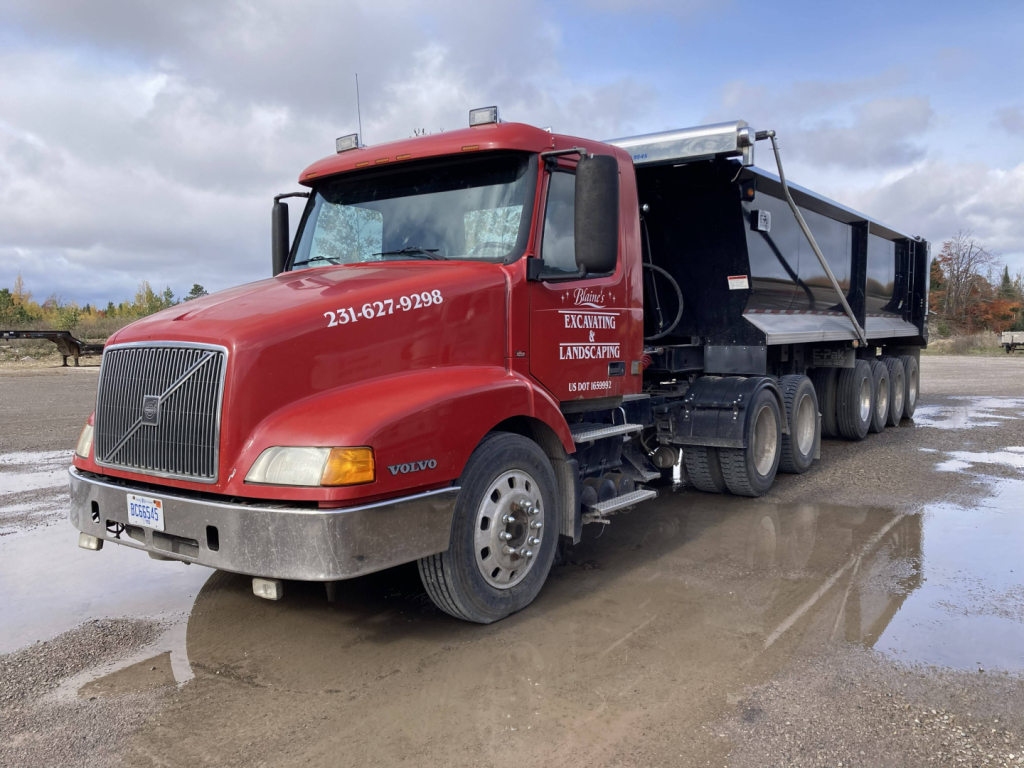
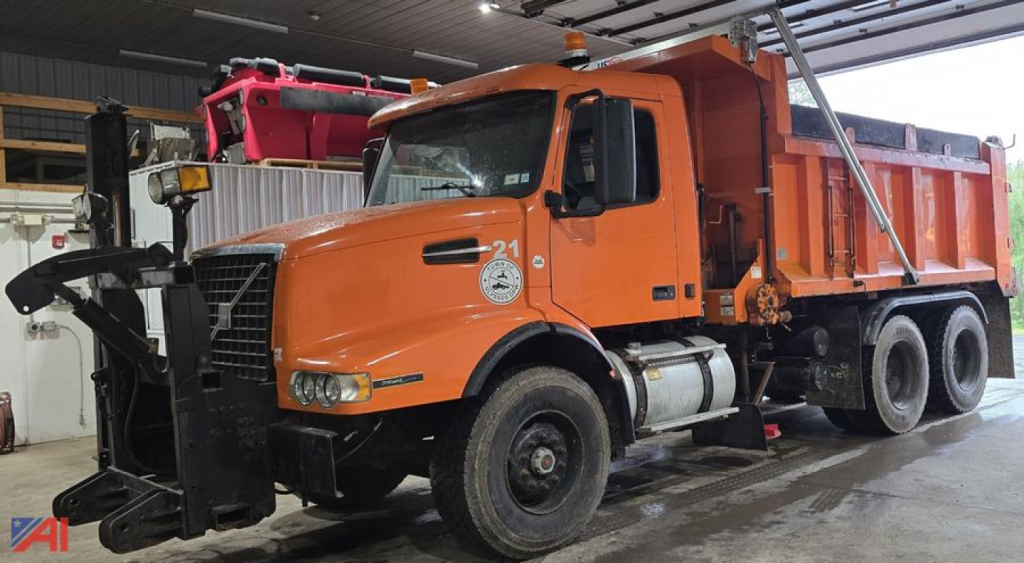
The body and suspension spec matter just as much as the engine. Steel dump bodies in the 15-foot to 16.5-foot range and capacities around 22 cubic yards are common on used Volvo dump trucks. Body brand, hoist condition, floor thickness, side wall design, tailgate style, and liner wear all affect long-term value. On the chassis side, severe-duty suspensions such as Volvo T-Ride are common because they hold up well under heavy vocational service, while air ride rears may appear on lighter or mixed-use applications. Pusher axles and tag axles are important on higher-GVWR trucks because they determine legal payload potential and turning behavior. Buyers should also look closely at frame condition, PTO operation, hydraulic plumbing, crossmember integrity, and signs of body or hinge cracking around high-stress points.
A good used Volvo dump truck should be evaluated as a complete vocational package, not just by model year and mileage. Engine hours, idle time, aftertreatment history, transmission service records, and suspension bushing wear all tell more than the odometer alone. If the truck will stay local, axle capacity and body spec may matter most. If it will see a mix of road and site work, cab comfort, visibility, turning radius, and transmission behavior become more important. Volvo dump trucks are generally well regarded for cab ergonomics, driver visibility, and modern powertrain integration, so the right truck often comes down to matching axle layout, suspension, and dump body spec to the exact material and route cycle it will handle.
Frequently Asked Questions about Used Volvo Dump Trucks
What is the best Volvo dump truck configuration for aggregate or construction hauling?
For aggregate, asphalt, and general construction hauling, most buyers focus on Volvo VHD chassis with tandem or tri-axle setups, a 20,000-pound front axle or heavier vocational front spec, and 40,000 to 46,000-pound rears. A steel body in the 15-foot to 16.5-foot range is common for rock, sand, millings, and demolition material. The best configuration depends on local bridge laws, target payload, and jobsite access. Tri-axle and quint-axle trucks can carry more legal weight in many states, but they also add complexity, tire cost, and maintenance.
Is an Allison automatic or Volvo I-Shift better in a used Volvo dump truck?
Allison automatics are often preferred for heavy stop-and-go work, paving, and off-road conditions because they provide smooth launch characteristics and simple operation for multiple drivers. The Volvo I-Shift automated manual is attractive when fuel economy, road time, and lower driver fatigue are priorities. Neither is automatically better in every application. The right choice depends on how much time the truck spends on the highway, how often it backs into sites, the terrain, and whether the operation values ease of use over drivetrain efficiency.
What should I inspect first on a used Volvo dump truck?
Start with the dump body, hoist, frame, and axle ratings before you get too focused on paint, trim, or even mileage. Confirm the body size and material match the load you plan to haul. Check for cracked welds, uneven hoist lift, tailgate wear, floor bowing, and hinge damage. On the truck itself, review engine hours, PTO function, hydraulic leaks, suspension wear, differential condition, and aftertreatment service history. A clean cab is nice, but the expensive surprises on a dump truck are usually in the structure, hydraulics, and vocational running gear.
Are Volvo dump trucks good for severe-duty vocational service?
Yes, Volvo dump trucks are widely used in severe-duty vocational work, especially when spec'd on VHD chassis with the right suspension, axle package, and body. They are known for strong cab ergonomics, good visibility, and modern integrated powertrains. Their performance in severe-duty service depends heavily on the original spec. A properly built vocational truck with heavy front axle, durable suspension, correct gearing, and a quality body is far better suited to dump work than a lightly converted highway chassis.
How important are axle layout and wheelbase on a used dump truck?
Axle layout and wheelbase directly affect legal payload, turning radius, bridge compliance, and how the truck behaves on the jobsite. A shorter wheelbase can improve maneuverability in tight areas, but it may limit body length or axle spacing options. Tandem, tri-axle, and quint-axle setups each have different advantages depending on state weight laws and the type of material hauled. Buyers should choose axle layout based on route, payload target, and local regulations, not just on gross vehicle weight rating alone.