
Used 1995 Dump Trucks For Sale
Have used 1995 dump truck to sell? List it here to reach thousands of buyers.
Used 1995 Dump Trucks
Powertrain choices on 1995 dump trucks often include mechanical diesel engines from major vocational makes, paired with manual transmissions such as 8-speed, 9-speed, 10-speed, or low-low gear setups. That matters if the truck will spend its life in quarries, transfer stations, or short-haul stop-and-go routes where startability and low-speed control are more important than highway speed. Buyers should pay attention to rear axle ratio, suspension type, and brake configuration because those specs have a direct effect on payload, ride quality, and durability on rough job sites. Vocational suspensions like camelback or heavy multileaf remain common in older dump applications because they handle concentrated loads well, though they ride harsher than air ride.
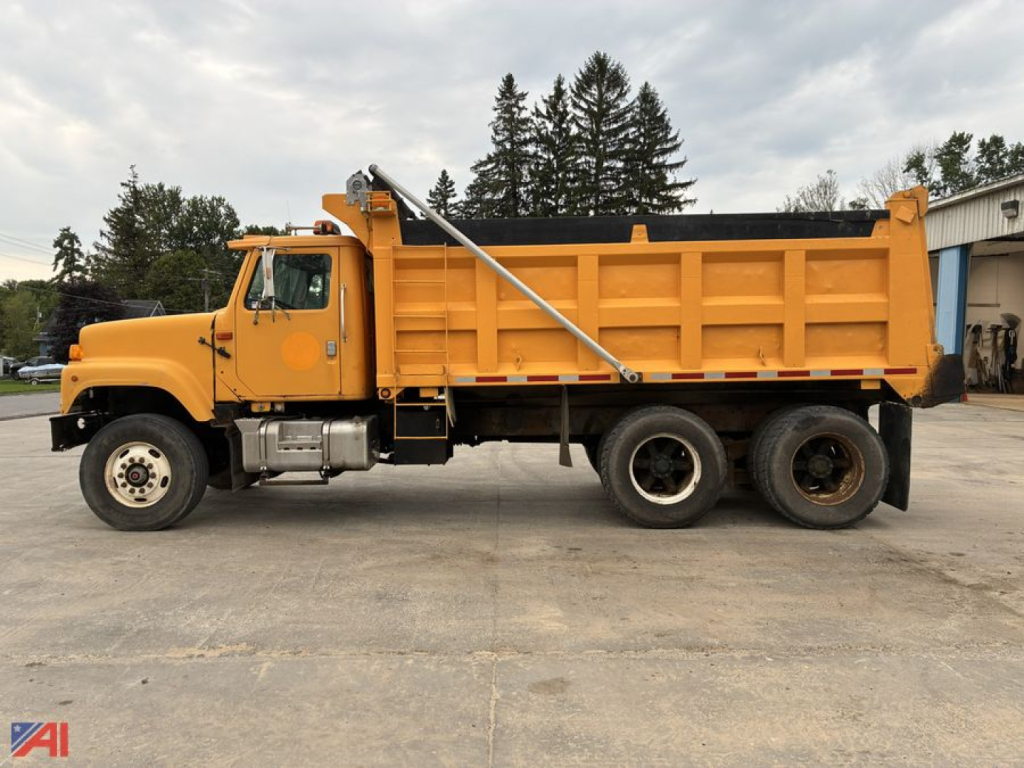
The dump body itself often determines the truck’s best use. Steel bodies are common for aggregate, asphalt, and demolition work because they tolerate abrasion and impact better than lighter material options. Body length and side height affect payload type as much as payload volume. A shorter, heavier-spec body may be better for dense material, while taller sides fit lighter bulk loads. Important details include single-ram or telescopic hoists, air-operated tailgates, coal chutes, tarps, liner condition, floor wear, and hinge integrity. If the truck has a lift axle, check whether it is steerable or non-steerable and how that changes bridge compliance, turning radius, and legal payload in your state.
For a used 1995 dump truck, condition matters more than age alone. Frame rail integrity, hoist performance, PTO engagement, body mount condition, rust around crossmembers, and evidence of past cracking or plating are critical inspection points. Many older dump trucks have spent years in severe-duty service, so maintenance records, engine blow-by, transmission engagement, suspension bushing wear, and hydraulic leaks deserve close attention. A properly spec'd and well-kept 1995 dump truck can still be a practical vocational truck for seasonal work, farm use, local construction support, or municipal duty where durability and simplicity are more valuable than newer emissions-era complexity.
Frequently Asked Questions about Used 1995 Dump Trucks
What should I check first on a used 1995 dump truck?
Start with the frame, body, hoist, and axle ratings. A 1995 dump truck may still have good service life left, but vocational use is hard on crossmembers, body mounts, hinge points, suspension components, and hydraulic systems. Check for frame cracks, repairs, corrosion, cylinder seepage, PTO engagement quality, and body floor wear. Then confirm the truck’s axle and suspension specs actually fit the material and legal payload you plan to haul.
Are 1995 dump trucks mostly manual transmission trucks?
Yes, many 1995 dump trucks were built with manual transmissions, especially in heavy vocational service. Common setups include 8-speed, 9-speed, 10-speed, and deep-reduction transmissions designed for start-and-stop hauling and off-road jobsite work. Buyers who want simple driveline service and direct low-speed control often prefer these older manual setups, but clutch condition, shift quality, and gear ratio should be checked carefully.
Is a tandem-axle 1995 dump truck better than a single-axle model?
It depends on the application. Tandem-axle dump trucks generally offer higher GVWR, better legal payload capacity, and better traction under load, making them better suited for aggregate, demolition, and heavier construction work. Single-axle trucks are often easier to maneuver, lighter, and less expensive to run, which can make them a better fit for landscape supply, municipal service, or local delivery work. The right choice comes down to payload, jobsite access, and state bridge laws.
What type of dump body is common on older dump trucks?
Steel dump bodies are very common on older dump trucks because they hold up well in severe-duty applications. Many 1995 units have heavy steel floors, high sides, air-release tailgates, and telescopic or front-mounted hoists. Steel is preferred for hauling abrasive or impact-heavy material such as gravel, riprap, asphalt, and demolition debris. Buyers should inspect the floor, sidewalls, tailgate pins, hinge points, and any signs of patchwork or distortion from overloading.
Can a used 1995 dump truck still be a good work truck today?
Yes, if the truck has the right spec and has been maintained properly. Many buyers still value 1995 dump trucks for their simpler mechanical systems, familiar drivetrains, and lower acquisition cost compared with newer vocational trucks. They can still perform well in farm work, seasonal snow and salt duty, local construction support, and private fleet service. The key is verifying structural condition, hydraulic function, drivetrain health, and parts support for the make, engine, and transmission.