
New International Dump Trucks For Sale
Shop new International dump trucks built for hauling debris, aggregate, mulch, and equipment with durable bodies, diesel power, and upfit options.
Learn more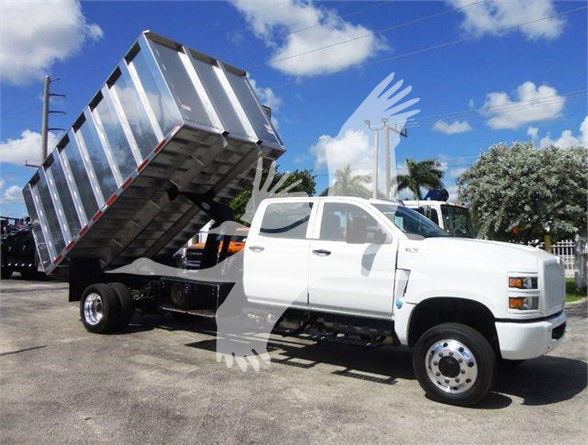
Have new international dump truck to sell? List it here to reach thousands of buyers.
About New International Dump Trucks
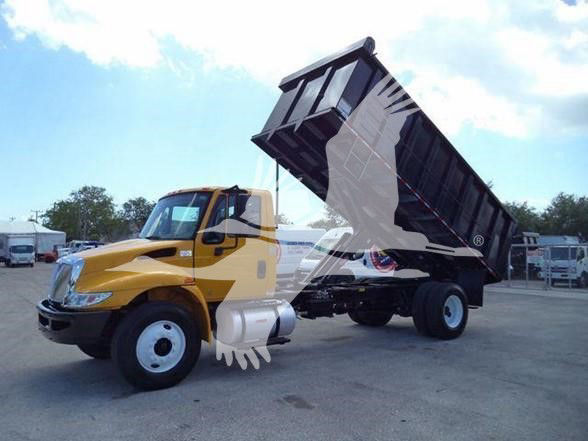
Body specification matters as much as the badge on the hood. Common setups include steel dump bodies for abrasive material and hard daily loading cycles, or aluminum dump bodies when corrosion resistance and lower body weight are priorities. Buyers should compare body length, side height, rear door configuration, hoist type, and tarp system based on the material being hauled. High-side bodies in the 54-inch to 72-inch range are common for landscape, trash, and arborist applications, while chipper dump bodies often add toolbox storage, pintle hitch packages, and electric brake wiring for trailer support. Rear door style also changes how the truck works on the jobsite, especially when dumping loose debris versus unloading equipment or palletized material.
On the chassis side, International dump trucks are typically spec'd with diesel power, automatic transmissions, and either spring or air ride suspension depending on the truck class and intended duty cycle. Light and medium-duty buyers should confirm GVWR, front axle capacity, rear axle rating, brake type, and wheelbase before focusing on cosmetic options. A truck with the right wheelbase and frame layout will accept the proper body without compromising bridge law, turning clearance, or hoist geometry. If towing is part of the operation, look closely at hitch ratings, PTO or electric-over-hydraulic systems, trailer plug configuration, and whether the truck is set up for pintle towing, electric brakes, or both.
International remains a strong fit for buyers who need a vocational truck with straightforward serviceability and familiar medium-duty cab controls. The best spec depends on what the truck will carry every day. Brush, chips, and demolition debris call for different body materials and sidewall heights than stone, sand, or asphalt. New dump truck buyers should compare payload target, legal operating weight, jobsite access, and seasonal traction needs first, then match the International chassis and dump body package to that work. That approach usually leads to a truck that earns better uptime and lower cost per job over the long run.
Frequently Asked Questions
What is the difference between an International CV dump truck and an International 4300 dump truck?
An International CV dump truck is typically a lighter-duty platform, often used for chipper dumps, landscaping, municipal work, and contractor applications where 4x4 availability, maneuverability, and a smaller overall footprint matter. An International 4300 or similar medium-duty chassis is built for higher GVWR ratings, larger dump bodies, and heavier vocational use. The 4300-class truck is a better fit when payload, body length, air brakes, and towing capacity are more important than compact size.
Is a steel or aluminum dump body better on a new International dump truck?
Steel dump bodies are generally preferred for abrasive material, demolition debris, and severe-duty loading because they hold up well to impact and scraping. Aluminum dump bodies reduce body weight and resist corrosion, which can improve payload on lighter chassis and make sense for mulch, brush, chips, and other lower-density materials. The right choice depends on what the truck hauls most often, how it is loaded, and whether durability or weight savings is the higher priority.
What GVWR should I look for in a new International dump truck?
The right GVWR depends on the body size, material density, and whether the truck needs to stay below CDL thresholds in your operating model. A lighter-duty dump truck may be ideal for tree crews, landscape material, and municipal support work, while a 26,000-lb GVWR medium-duty truck is common for larger debris or landscape dump bodies. Buyers should work backward from expected payload, body weight, crew size, trailer use, and local road restrictions to choose the correct rating.
What features matter most on a dump truck for landscape or tree service work?
For landscape and arborist use, buyers usually focus on body length, high sidewalls, rear door function, hoist performance, and storage. Toolboxes, tarp systems, pintle hitches, trailer wiring, and electric brake provisions are especially useful when the truck also pulls equipment or chipper trailers. If the truck will operate on soft ground, in neighborhoods, or on undeveloped jobsites, drivetrain choice such as 4x4 versus 4x2 becomes a major factor.
Do new International dump trucks commonly come with automatic transmissions and diesel engines?
Yes. New International dump truck configurations commonly use diesel engines and automatic transmissions because they are well suited to stop-and-go vocational work, multiple drivers, and trailer operations. Buyers should still verify engine make, horsepower, torque, transmission calibration, and axle ratio so the truck is matched to payload expectations, gradeability, and road speed requirements.