
2006 Ford Dump Trucks For Sale
Shop 2006 Ford dump trucks with details on common chassis, GVWR, body sizes, powertrain options, and vocational use cases.
Learn more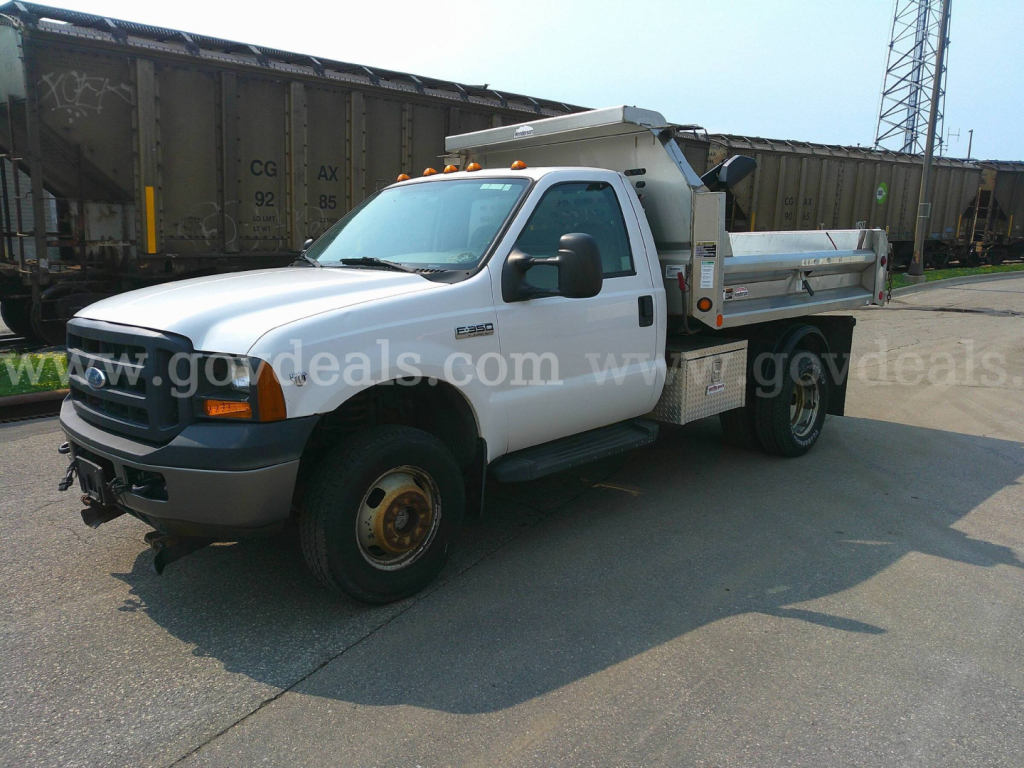
Have 2006 ford dump truck to sell? List it here to reach thousands of buyers.
About 2006 Ford Dump Trucks
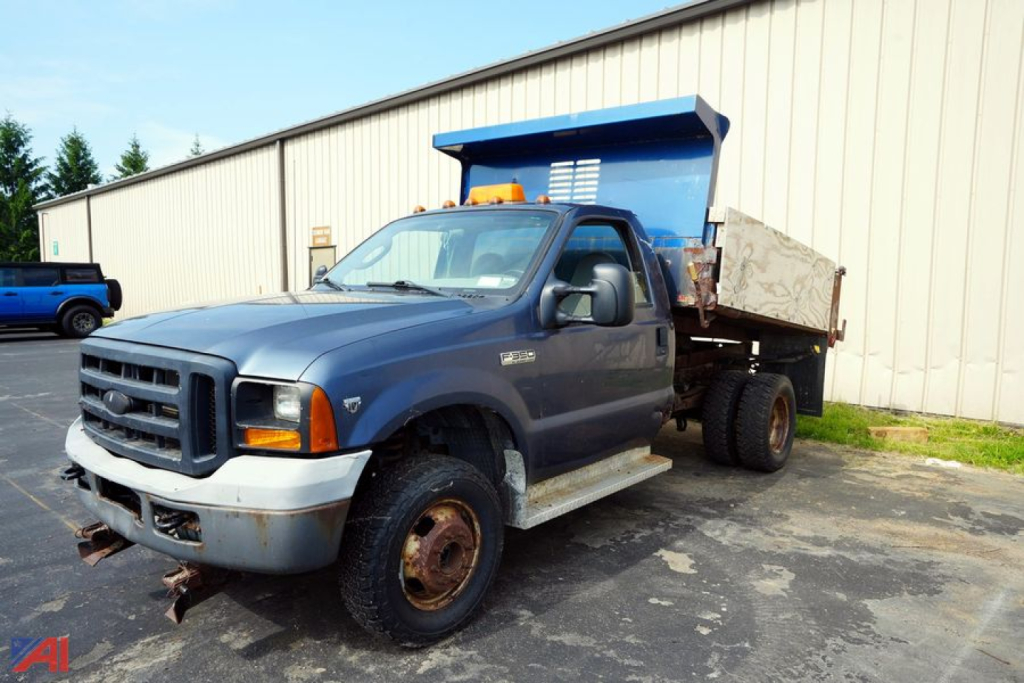
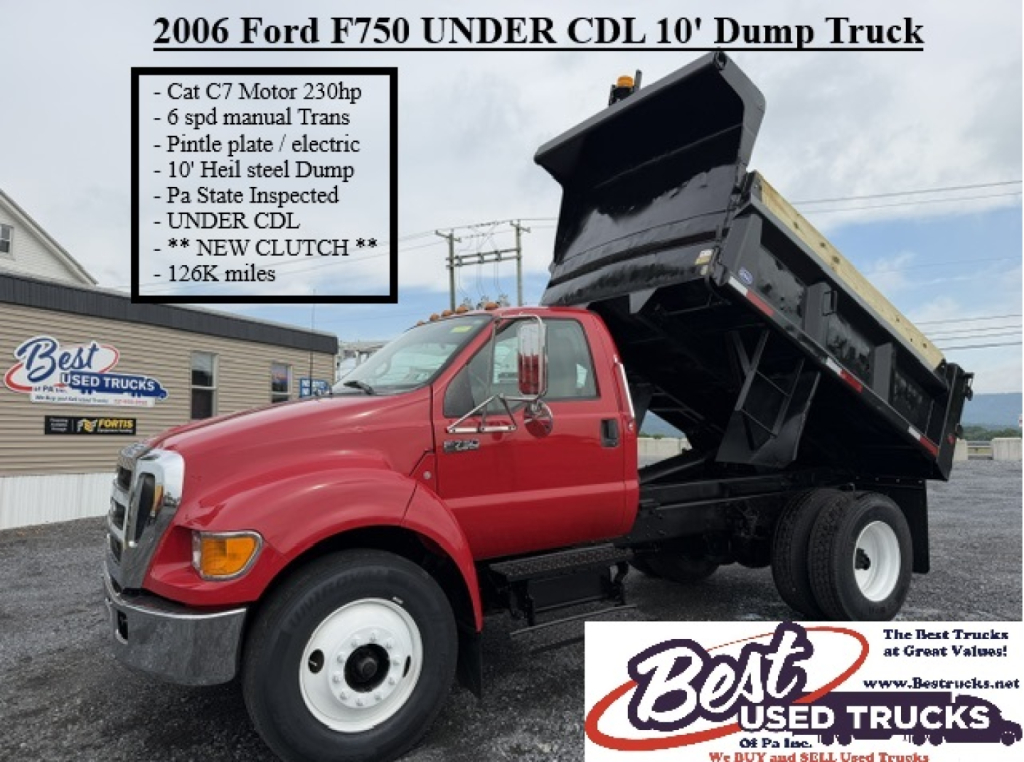
On a 2006 Ford dump truck, start with GVWR, rear axle rating, suspension type, and the actual body spec. Many trucks in this class carry 9 to 12 foot dump bodies, while landscape and light debris setups may run taller sides, barn doors, or combo gates for spreading and bulk material handling. A steel floor and sides are common for gravel, asphalt, and demolition work, while stainless components may matter more in snow and salt service. If the truck has a PTO-driven hydraulic system, inspect pump engagement, hoist lift speed, cylinder seals, and any wet-line plumbing. Buyers should also look closely at frame condition, spring packs, hinge points, scissor or telescopic hoist design, and signs of bed twist from uneven loading.
Powertrain and brake configuration matter just as much as body condition. In this era, Ford dump trucks may be equipped with gas or diesel engines depending on chassis class and original application. For lighter-duty local use, a gas truck can be simpler and cheaper to maintain, especially if annual miles are modest. For heavier payloads or more frequent hauling, diesel torque and durability often make more sense. Check transmission operation under load, PTO function, cooling system condition, and driveline lash. On heavier trucks, buyers should confirm brake type, wheelbase, turning radius, and whether the truck is set up for pintle towing, spreader work, or plow duty. If the truck has lived in municipal service, corrosion around the bed, hoist, cab mounts, and electrical connections deserves extra attention.
A good 2006 Ford dump truck is usually defined by job fit more than mileage alone. A clean single-axle unit with a properly sized body can handle stone, mulch, topsoil, millings, or site debris efficiently if the hoist, frame, and rear suspension are still tight. Buyers comparing listings should verify CDL implications, empty weight, payload capacity, tire size, and any upfit details such as toolboxes, tarp systems, trailer brake controls, or central hydraulics. The best units in this category are the ones with a documented vocational history, solid maintenance records, and a body and chassis combination that matches the work cycle instead of just the purchase price.
Frequently Asked Questions
What should I check first on a 2006 Ford dump truck?
Start with the chassis rating and the dump body. Verify the GVWR, rear axle capacity, suspension, and actual body length before focusing on cosmetic condition. Then inspect the hoist operation, PTO engagement, frame rails, crossmembers, bed hinges, cylinder seals, and any cracking or rust around the mounting points. A dump truck earns its value through structure and hydraulics, not paint.
Are 2006 Ford dump trucks better with gas or diesel engines?
That depends on the duty cycle. Gas-powered trucks can be a practical choice for short-route, seasonal, or lower-mileage work because they are often less expensive to buy and simpler to service. Diesel trucks generally make more sense for heavier payloads, frequent hauling, and applications where low-end torque matters. The better choice is the one that matches the truck's weight class, annual usage, and repair budget.
What size dump body is common on a 2006 Ford dump truck?
Many 2006 Ford dump trucks in the pickup and chassis-cab classes carry bodies in the 9 to 12 foot range. Landscape bodies may have higher sides and larger cubic capacity for mulch, brush, or light debris, while contractor bodies are often lower-sided and built for aggregate, dirt, and asphalt. Body size should always be considered together with payload rating, not by volume alone.
How important is rust on an older dump truck?
Rust is one of the most important value factors on an older dump truck because corrosion affects structure, hydraulics, wiring, and long-term safety. Surface rust is common, but deeper scale on the frame, hoist mounts, cab corners, spring hangers, bed floor, and tailgate hardware can turn a usable truck into a constant repair project. Trucks used for plowing or salt spreading need especially careful inspection underneath and around hydraulic and electrical components.
Can a 2006 Ford dump truck be used for plow or municipal work?
Yes, many trucks in this category are suitable for municipal or winter service if they have the right front axle capacity, hydraulic setup, and electrical controls. Buyers should confirm whether the truck has or had a plow frame, central hydraulics, spreader provisions, upgraded charging capacity, and the proper cooling and suspension for front-mounted equipment. Prior snow-duty use is common, but it also increases the need to inspect for rust and wiring wear.