
Freightliner Crane Trucks For Sale
Shop Freightliner crane trucks for lifting, utility, and service work. Compare chassis, axle ratings, boom specs, and PTO-ready configurations.
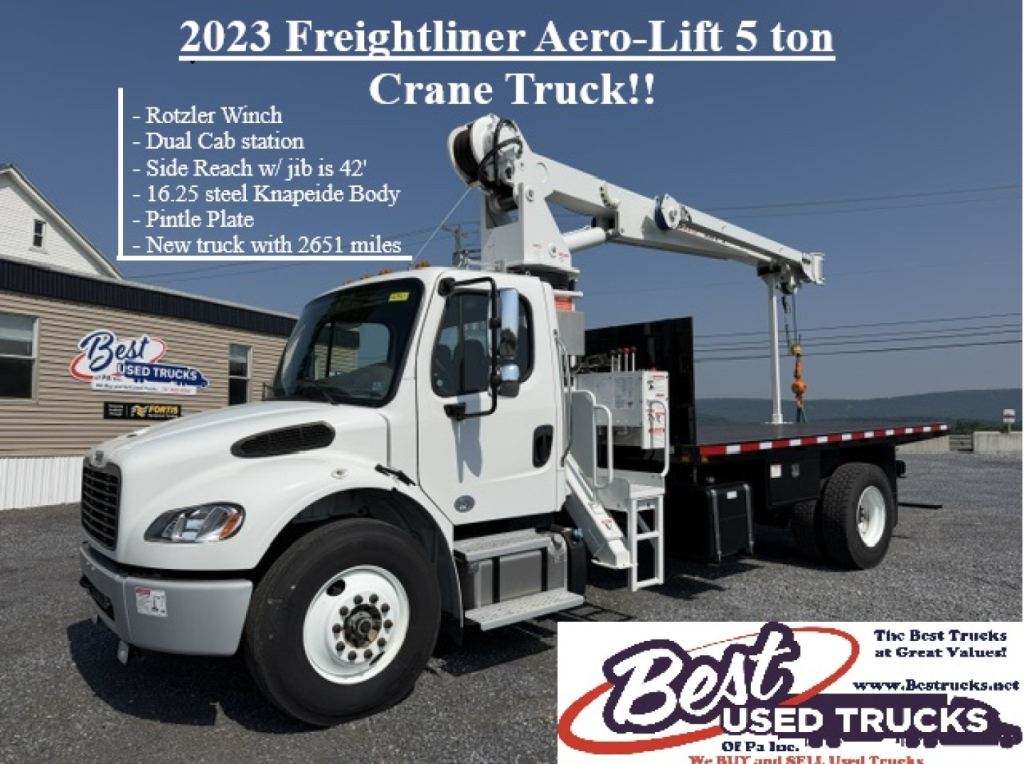
Selling a freightliner crane truck? List your freightliner crane truck for sale and reach thousands of commercial buyers.
Freightliner Crane Trucks
One of the first decisions is matching the Freightliner chassis to the crane’s intended work. A lighter service body with a small telescopic crane for mechanic or field repair work can often be handled by an M2 with a diesel engine in the mid-horsepower range and an automatic or automated transmission. Heavier applications such as utility work, sign installation, material handling, or personnel lifting often move buyers toward the 114SD and similar severe-duty configurations with higher GVWRs, stronger front ends, and more robust suspension options. Key specs to compare include crane manufacturer and model, boom length, maximum lift capacity, outriggers, rotation, winch rating, and whether the unit is set up as a material handler or an aerial device. If the truck includes a personnel platform or bucket, buyers should verify the exact platform height, capacity rating, and certification requirements for that application.
Body and chassis layout can make a major difference in daily usability. Service bodies with enclosed compartments, compressor space, welders, tool storage, and drawer systems are common on mechanic-focused units. Utility and telecom units may include taller bodies, reel setups, or equipment racks. Wheelbase and cab-to-axle dimensions affect body fit and the amount of usable deck or compartment space behind the cab. Buyers should also look closely at axle configuration, especially on trucks carrying larger cranes or operating in off-road and municipal conditions. Tandem or tridem style arrangements, locking differentials, front tire size, and suspension type all influence traction, legal payload, and crane stability. PTO setup, hydraulic reservoir placement, and any idle management or high-idle controls are also worth confirming because they directly affect crane operation and serviceability.
A used Freightliner crane truck should be evaluated as two machines in one: the truck and the lifting system. Engine hours, PTO hours, and any available crane inspection history are just as important as chassis mileage. Review frame condition around body mounts and outrigger areas, look for signs of stress cracking or corrosion, and confirm that the outriggers deploy and hold properly. On aerial or bucket-equipped units, pay attention to dielectric testing records if applicable, boom condition, and any prior structural repairs. Freightliner support is a practical advantage for many fleets because parts availability and service familiarity are generally strong across vocational applications. For buyers comparing multiple listings, the best value usually comes from a truck with the right axle and frame ratings for the crane, a body layout that fits the work, and documented maintenance on both the chassis and the lifting equipment.
Frequently Asked Questions about Freightliner Crane Trucks
What Freightliner models are most common for crane truck applications?
Freightliner M2 106, M2 112, 108SD, and 114SD chassis are common choices for crane truck builds. The M2 series is often used for lighter service crane and mechanic body applications, while the SD models are more common when higher front axle ratings, heavier cranes, or severe-duty use are involved. The right model depends on boom size, body weight, outrigger requirements, and the truck’s target GVWR.
What should I check first on a used Freightliner crane truck?
Start with the chassis and crane ratings together. Confirm GVWR, front and rear axle capacities, wheelbase, PTO setup, and frame condition before focusing on cosmetic items. Then review the crane’s lift chart, boom length, winch capacity, outrigger operation, and any inspection or certification records. If the unit has a bucket or personnel platform, verify test history and compliance requirements for personnel lifting.
Is a Freightliner crane truck the same as a boom truck?
The terms are often used interchangeably, but they do not always mean the exact same thing. A crane truck is a broad category that includes service cranes, telescopic boom cranes, utility cranes, and some aerial-equipped units mounted on a truck chassis. A boom truck usually refers more specifically to a truck with a rotating telescopic crane boom used for lifting materials. Listing terminology can vary, so buyers should rely on the actual crane model and body configuration rather than the label alone.
How important is front axle capacity on a crane truck?
Front axle capacity is critical because crane weight, body weight, and load transfer can put significant demand on the front end, especially on units with larger booms or heavier equipment mounted close to the cab. An underspec'd front axle can limit legal loading, reduce stability margin, and create long-term wear issues. Buyers should compare front GAWR, tire ratings, suspension specs, and the crane manufacturer’s mounting requirements before making a decision.
Are automatic transmissions common in Freightliner crane trucks?
Yes. Many Freightliner crane trucks use automatic or automated transmissions because they simplify operation in stop-and-go vocational work and can help with driver familiarity across mixed fleets. The best choice depends on terrain, jobsite conditions, PTO compatibility, and maintenance preferences. For severe-duty or specialty applications, buyers should confirm that the transmission and PTO arrangement are matched properly to the hydraulic demands of the crane.