
Commercial Trucks For Sale Near Cookeville, Tennessee
Have commercial truck to sell? List it here to reach thousands of buyers.
Commercial Trucks Near Cookeville, Tennessee
Common specs vary widely across this category. On-road tractors often fall into the 400 to 500 horsepower range with automated manual or 10-speed and 13-speed manual transmissions, tandem rear axles, and ratios selected for a balance of fuel mileage and pull. Older long-hood trucks may appeal to buyers who want pre-emissions simplicity, larger displacement engines, or a traditional owner-operator platform. Newer aerodynamic models are typically chosen for linehaul work where fuel burn, idle reduction, and maintenance tracking matter more. On cab and chassis units, buyers should pay close attention to back-of-cab to end-of-frame measurement, suspension type, front axle capacity, and whether the chassis is already drilled or configured for the body they plan to install.
Condition and operating history matter as much as the badge on the hood. Buyers should compare engine family, emissions system type, transmission make, rear axle ratio, and wheelbase against the intended route and payload. A truck spec'd for long interstate runs through Tennessee is different from one built for stop-and-go municipal work, local delivery, or construction support. Service records, rust exposure, frame condition, prior body removal, and tire and brake life can change the true cost of ownership quickly. In hilly areas and mixed regional lanes, horsepower and gearing need to be matched carefully so the truck is not underpowered or over-spec'd for the job.
Cookeville sits in a strong freight corridor, so used truck shoppers here typically compare regional road tractors, vocational setups, and unfinished chassis side by side. The best buying decision usually comes down to matching axle configuration, cab style, suspension, and drivetrain to the work instead of chasing a single make or model. If the truck will be hauling dry van, flatbed, equipment, or bulk freight, focus on GCWR, fifth-wheel setup, and sleeper size. If it will be upfitted for vocational use, focus on frame integrity, body compatibility, PTO provisions, and legal payload capacity once the body is installed.
Frequently Asked Questions about Commercial Trucks Near Cookeville, Tennessee
What is the difference between a sleeper truck and a cab and chassis truck?
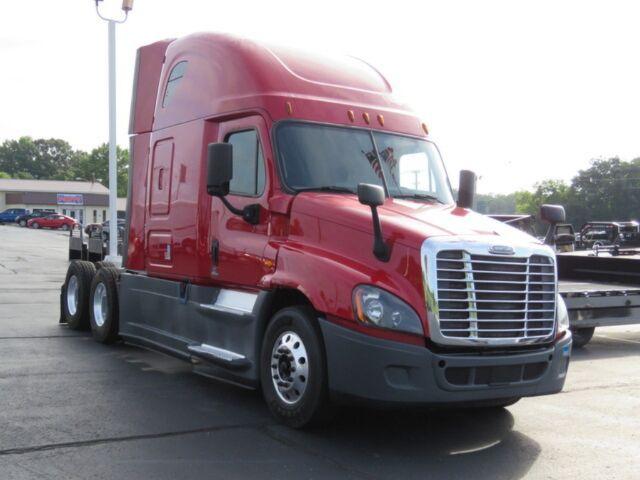
A sleeper truck is a road tractor designed for pulling trailers, usually in over-the-road or regional freight service. It includes a bunk area behind the cab and is commonly spec'd with a fifth wheel, tandem drive axles, and aerodynamic or long-hood styling depending on the application. A cab and chassis truck is an incomplete truck built to receive a body or equipment package, such as a dump body, box, wrecker, crane, or service body. The main buying factors on a cab and chassis are wheelbase, frame dimensions, axle ratings, PTO capability, and body compatibility.
What truck specs matter most when buying used trucks for sale?
The most important specs depend on the job, but several items should always be reviewed closely. Engine make and horsepower, transmission type, rear axle ratio, wheelbase, suspension, axle capacities, and emissions system design all affect performance and operating cost. Buyers should also verify whether the truck's current spec matches the intended load, route, and duty cycle. A truck that is ideal for interstate freight may be a poor fit for local vocational use, and the opposite is also true.
Is an older pre-emissions style truck better than a newer aerodynamic truck?
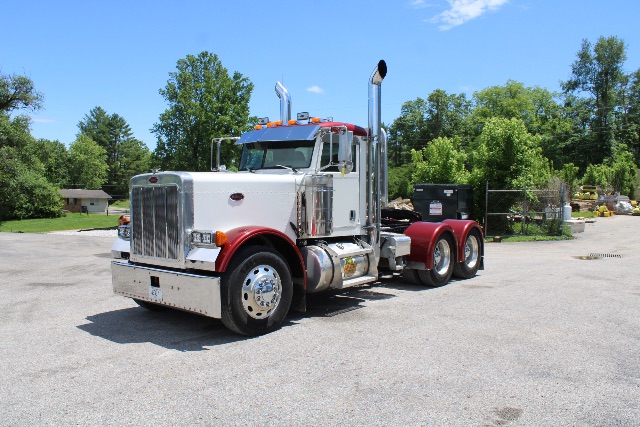
Neither is automatically better. Older trucks are often chosen for mechanical simplicity, classic styling, and engines that some buyers find easier to service. Newer aerodynamic trucks usually deliver better fuel economy, more refined driver features, and improved fleet compatibility for long highway miles. The right choice depends on maintenance capability, annual mileage, parts support, and the buyer's tolerance for emissions-related systems versus higher fuel consumption on older platforms.
How do I choose the right wheelbase on a truck?
Wheelbase should be selected based on the truck's intended body or trailer setup, turning radius needs, bridge law considerations, and ride requirements. On a road tractor, wheelbase affects maneuverability, weight distribution, and how the truck handles with different trailer lengths and kingpin settings. On a cab and chassis, wheelbase directly determines what body can be installed and how that body will balance on the axles. Buyers should confirm back-of-cab to axle and back-of-cab to end-of-frame measurements before making an upfit decision.
What should buyers inspect on a used cab and chassis truck before adding a body?
Frame condition is the first priority, including rust, previous repairs, drilled rails, and any signs of twisting or reinforcement changes from a prior body. Buyers should also inspect axle ratings, suspension condition, tire size, brake life, PTO and hydraulic provisions, and the exact frame dimensions needed for the planned upfit. It is also important to verify electrical readiness, fuel tank placement, exhaust routing, and clearances behind the cab so the new body can be installed without costly modifications.