
2018 International Conventional Daycab Trucks For Sale
Shop 2018 International conventional daycab trucks with specs, common applications, drivetrain options, and buyer tips for regional and local hauling.
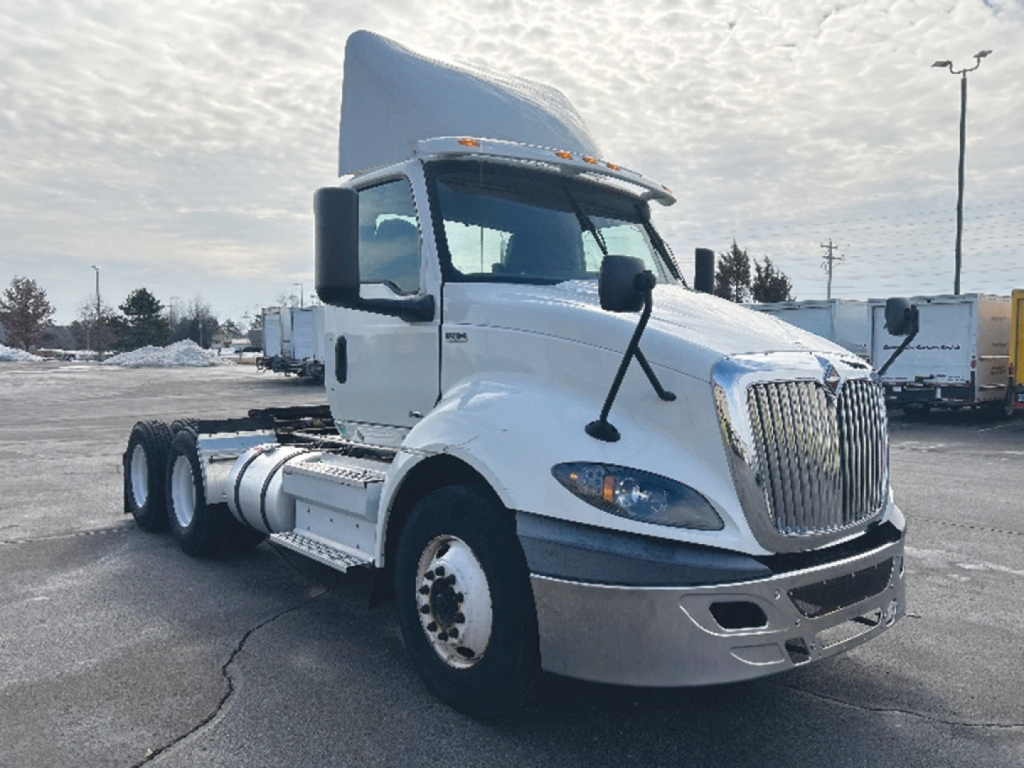
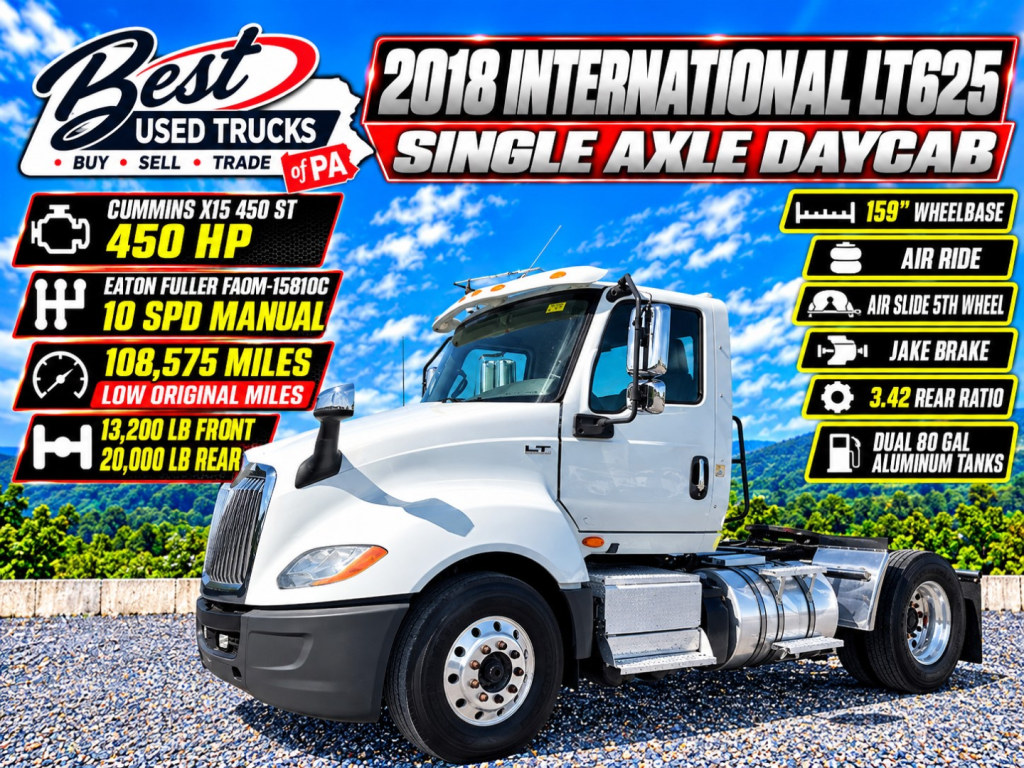
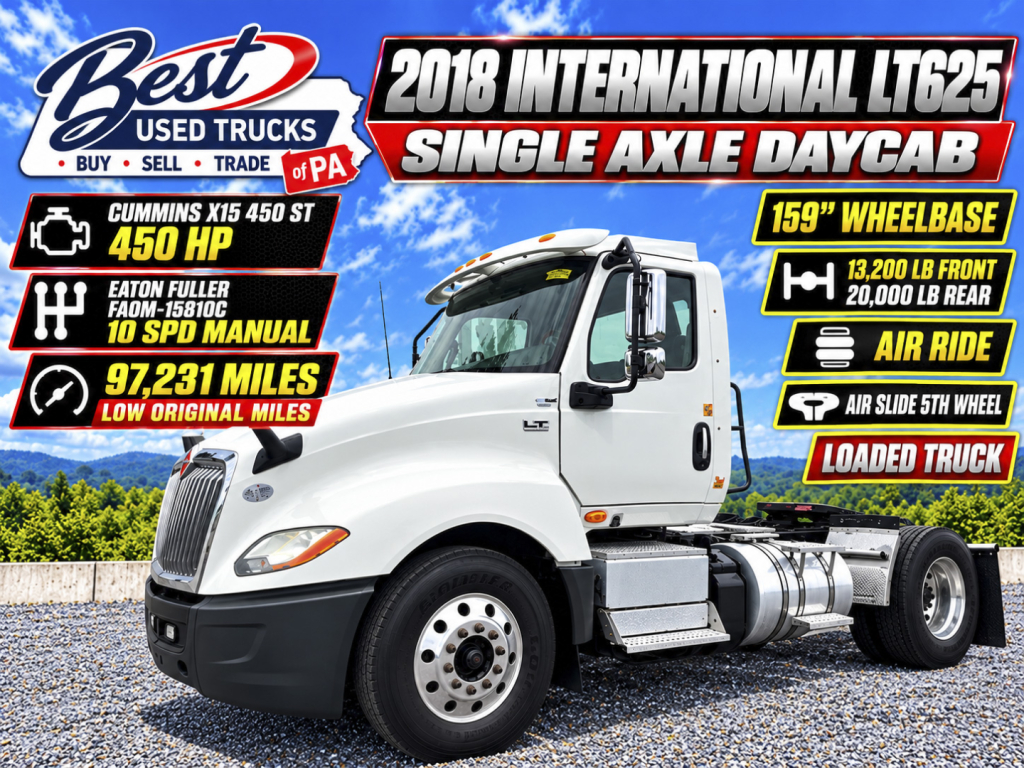

Selling a 2018 international conventional daycab truck? List your 2018 international conventional daycab truck for sale and reach thousands of commercial buyers.
2018 International Conventional Daycab Trucks
The biggest spec decisions usually come down to wheelbase, rear axle ratio, suspension, and fifth wheel setup. Many 2018 International daycabs are tandem axle tractors with around 40,000 lb rear axles, wheelbases in the mid-170 inch range, and ratios such as 3.25 for regional highway work. A shorter wheelbase helps in tight yards and city turns, while a longer wheelbase can improve ride quality and allow better placement for tanks, wet kits, and sliding fifth wheels. Air ride suspension is common and matters for ride quality, traction, and driver retention. If the truck will pull a variety of trailers, an air slide fifth wheel adds flexibility. If it is headed into dump, tanker, or lowboy service, check for a hydraulic wetline kit, PTO compatibility, and the exact frame layout.
Cab and safety equipment matter more on a daycab than many buyers expect because these trucks spend long hours in stop-and-go service. On 2018 International models, features often include air ride cab, air conditioning, cruise, power windows and locks, tilt-telescoping steering, and collision mitigation systems. The LT interior is generally more driver-friendly than older International daycabs, with improved ergonomics and quieter operation. Fuel capacity is another practical checkpoint. Dual tanks in the 80-gallon range are common on highway-oriented specs, while shorter-route trucks may carry less to save weight. Buyers should also verify front axle rating, tire size, and brake type, especially if the truck will see heavy vocational use or frequent curbside maneuvering.
For a used 2018 International conventional daycab, pay close attention to emissions history, transmission calibration, and maintenance records. The A26 can be an efficient engine when it has been serviced correctly, but a buyer should still review fault history, aftertreatment performance, and idle hours alongside odometer mileage. Look at steer tire wear, suspension bushings, kingpins, and cab mounts to judge how the truck handled regional miles and yard work. If the truck is fleet maintained, that can be a strong advantage, especially on newer-spec LT625 tractors with automated transmissions and active safety electronics. The right unit in this class can be a cost-effective regional tractor with modern aerodynamics, a comfortable cab, and the maneuverability daycab operations demand.
Frequently Asked Questions about 2018 International Conventional Daycab Trucks
What engine is common in a 2018 International conventional daycab?
A common engine in a 2018 International conventional daycab is the Navistar A26, often rated around 430 horsepower in regional haul specifications. Some trucks in the broader International daycab market may be Cummins powered, but for 2018 LT models the A26 is one of the most typical factory setups. Buyers should verify horsepower, torque rating, engine brake spec, and service history because those details affect fuel economy, drivability, and application fit.
Is a 2018 International daycab good for regional hauling?
Yes, a 2018 International daycab is well suited for regional hauling when it is spec'd with the right wheelbase, axle ratio, fuel capacity, and suspension. Many of these trucks were built for short to medium length highway runs with frequent trailer swaps and daily home time. A tandem axle LT daycab with an A26 engine, 10-speed automated transmission, air ride suspension, and a 3.25 ratio is a common regional configuration that balances fuel economy with usable pulling power.
What should I inspect before buying a used 2018 International LT daycab?
Focus on emissions system performance, engine fault history, transmission operation, and chassis wear points. Review maintenance records for EGR, DPF, DEF, and aftertreatment service, then inspect suspension components, kingpins, steer axle tire wear, cab mounts, and fifth wheel condition. On automated transmission trucks, check clutch life data and calibration quality. If the truck has collision mitigation or other driver-assist systems, confirm that sensors and dash diagnostics are functioning properly.
What wheelbase is typical on a 2018 International daycab?
A common wheelbase on a 2018 International conventional daycab is around 177 inches, although exact dimensions vary by application. Shorter wheelbases are preferred for city maneuverability, port work, and tighter trailer yards. Slightly longer setups can improve ride quality and allow room for larger fuel tanks, fairings, sliding fifth wheels, or wetline equipment. The best wheelbase depends on trailer length, turning requirements, and how the tractor will be used every day.
Can a 2018 International daycab be used for vocational work like dump or tanker service?
Yes, many 2018 International daycabs can be adapted or factory spec'd for vocational work, but the details matter. Buyers should confirm frame strength, PTO provision, hydraulic wetline kit availability, rear suspension type, axle ratings, and brake configuration. A truck built for dry van regional freight may not be ideal for heavy dump or tanker work without the correct gearing and equipment. Matching the truck's original spec to the intended job is the key step.