
Freightliner Chipper Trucks For Sale
Freightliner chipper trucks with M2 and SD chassis, durable forestry bodies, strong floors, low tare, and corrosion control for arborist work.
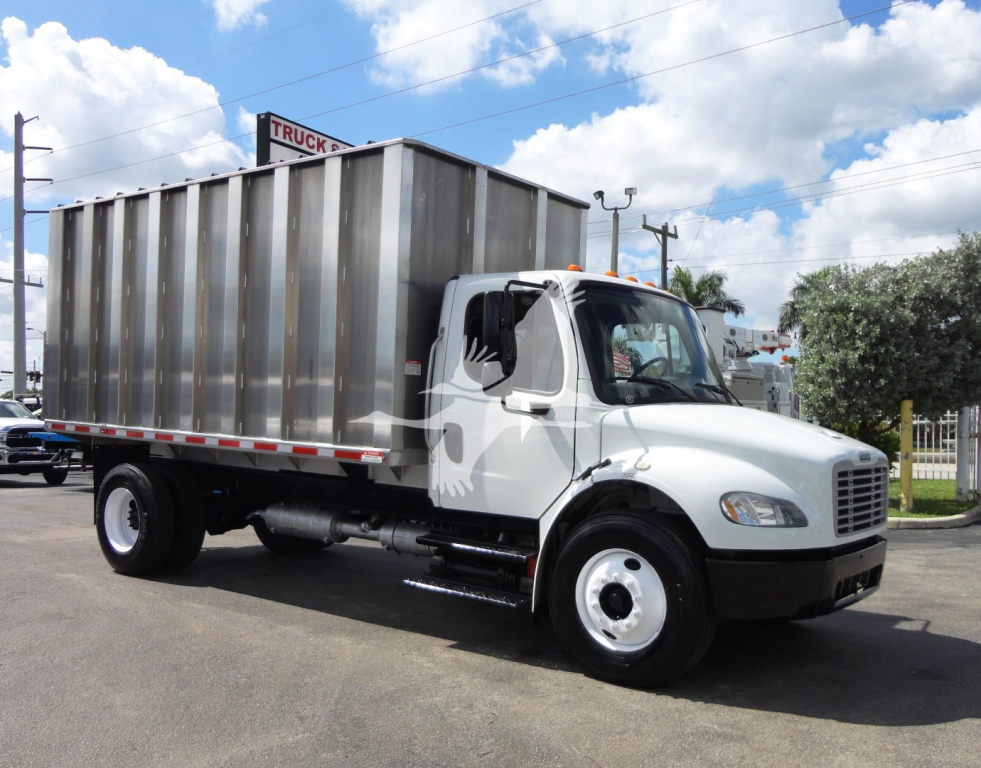
Selling a freightliner chipper truck? List your freightliner chipper truck for sale and reach thousands of commercial buyers.
Freightliner Chipper Trucks
The forestry chip body is the heart of the package, and floor strength matters. Look for 3/16 inch steel floors or heavy 10 gauge sheet with crossmembers on 12 inch centers, reinforced around the hoist saddle and rear sill. UHMW or poly scuff liners reduce hang up from wet chips and protect the shell, while stainless or galvanneal scuff bands resist abrasion where the chip stream hits. Vented or louvered roof panels manage blower pressure from the chipper, and a tight sealing rear barn door or high dump tailgate keeps fines contained. A correctly sized scissor or telescopic hoist with ample tipping angle clears sticky loads and shortens cycle time.
Tare weight and corrosion resistance drive lifecycle cost. Steel bodies deliver maximum dent resistance and easier weld repairs but are heavier, while aluminum shells or hybrid designs can trim 800 to 1,200 pounds and add payload headroom. Wet green chips carry moisture and acids that attack paint and seams, so e coat or epoxy primer, seam sealers, and stainless hinges and hardware are worthwhile. Underbody boxes in aluminum, sealed harness connectors, and well placed drip rails help the truck shed water and grime. On a 33,000 GVWR single axle M2 with a 14 to 18 yard body, realistic tare often lands in the mid to high 16,000s depending on spec, so payload is governed by local bridge laws and axle splits as much as by rated GVWR.
Thermal integrity touches several areas. Exhaust routing with heat shields and a vertical stack keeps DPF and SCR components away from chip debris, and a guarded tailpipe or spark arrestor tip reduces the chance of smolder in the box. If the truck idles and runs PTOs for long periods, add a hydraulic oil cooler, adequate reservoir volume, and return side filtration to control temperature and extend seal life. Air brakes with automatic slack adjusters, engine brake availability on higher power Cummins B6.7 or L9 ratings, LED work lighting, strobes, rear camera systems, safe access ladders, and well placed chip deflectors round out a Freightliner chipper truck that lasts in daily arborist service.
Frequently Asked Questions about Freightliner Chipper Trucks
Which Freightliner chassis work best for chipper bodies?
The M2 106 is the most common thanks to its tight wheel cut, broad wheelbase range, and easy PTO integration. For heavier bodies, loaders, or tandem axles, the 108SD and 114SD add higher axle ratings, deeper frame section modulus, and vocational cooling packages. Most builds are 4x2 single axle, but 6x4 tandems make sense when you need payload margin or are pairing a knuckleboom loader with a large capacity body.
Steel or aluminum chipper body, which is the better choice?
Steel offers superior impact resistance and straightforward field repairs, which is useful when logs or tools hit the walls. Aluminum lowers tare by several hundred pounds and resists rust, but it needs proper reinforcement at hinge posts and rear sill to handle hoist loads. Many buyers pair a steel floor with UHMW liners and stainless hardware to balance durability, clean dumping, and corrosion control. If road salt is severe or chips stay wet, aluminum or galvaneal panels with epoxy primer can pay off.
What GVWR should I target, and can I stay non CDL?
A Class 6 build at 25,999 GVWR can keep you non CDL with smaller 11 to 14 yard bodies and careful axle loading, but you give up brake and payload margin. The most common spec is 33,000 GVWR Class 7 with air brakes for better stopping and durability, especially on hilly routes or when carrying tools and a crew. Tandem axle SD chassis step up when body volume grows or when a loader is installed, improving axle splits and frame longevity.
How much can a Freightliner chipper truck haul in practice?
Capacity is usually volume limited. Fresh chips often weigh 350 to 550 pounds per cubic yard depending on species and moisture, so a 14 yard body might carry 2.5 to 4 tons before you hit volume. Tools, fuel, and crew weight add up, and axle distribution matters, so verify curb weight by axle and match the wheelbase and body placement to keep the rear axle legal. A tandem spreads weight and increases practical payload where routes and permits allow.
What features improve safety and uptime in arborist work?
Look for vented roofs, sealed rear doors, and chip deflectors to manage the chip stream, plus a high tipping angle hoist to clear sticky loads. Vertical exhaust with heat shielding, guarded tailpipes, and proper DPF regen procedures reduce fire risk around dry chips. Allison automatics ease stop and go work, locking differentials aid soft ground traction, and LED work lights, rear cameras, strobes, and safe access ladders improve visibility and crew safety. Corrosion protection, sealed electrical connectors, and stainless hardware extend service life.