
Western Star Cabover Trucks For Sale in Quebec
Browse Western Star cabover trucks with buyer-focused insight on specs, applications, axle setups, engines, and Quebec operating needs.
Have western star cabover truck to sell? List it here to reach thousands of buyers.
Western Star Cabover Trucks in Quebec
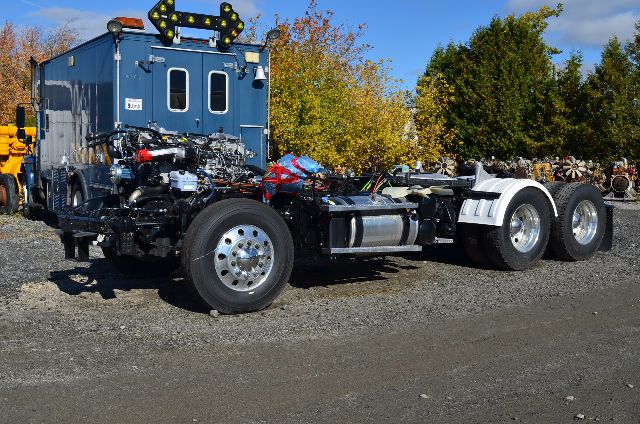
The first decision is usually application and axle layout. A single-axle cabover can make sense for lighter regional hauling, municipal work, or specialized body installations where low tare weight and short wheelbase are priorities. Tandem-axle setups are more common when the truck is expected to handle heavier payloads, vocational upfits, or highway service with higher GCW demands. Common items to review include front axle rating, rear axle rating, suspension type, gear ratio, wheelbase, and tire size. Buyers should also look closely at transmission choice and engine rating, since a cabover with a 12-speed and a higher horsepower Detroit or similar heavy-duty engine will drive very differently than a lower-output local-service spec. On used units, structural condition is critical because cab damage, frame alignment, and front structure repairs can be more consequential on a cabover than on a conventional truck.
Western Star has long been associated with heavy-duty construction, severe-service, and premium vocational equipment, so buyers often expect robust chassis components, heavier front ends, and durable interiors. Even when evaluating a cabover listing, it helps to think in terms of the complete truck package rather than the badge alone. Suspension design, rear ratio, crossmember construction, PTO compatibility, and intended body or fifth-wheel use all matter. If the truck will run in Quebec year-round, check corrosion exposure, cab sealing, heater performance, battery box condition, and how accessible the cooling, charge-air, and electrical systems are for winter service. Visibility from the cab, step height, mirror setup, and serviceability under a tilt cab arrangement also deserve attention because they affect day-to-day uptime.
A good Western Star cabover should match its job before it matches its paint. Buyers comparing listings should focus on turning radius, axle capacity, driveline spec, and cab condition first, then verify engine make, horsepower, suspension, and gearing against the work the truck is expected to do. A shorter truck can be easier to place at docks and in urban delivery environments, but the wrong ratio or axle package can limit payload efficiency or road speed. The best value usually comes from a unit with a clear application history, a sound cab structure, and a spec that supports the body, route, and operating weight it will actually see.
Frequently Asked Questions about Western Star Cabover Trucks in Quebec
What is the main advantage of a Western Star cabover truck?
The main advantage of a Western Star cabover truck is its compact overall length relative to usable chassis or body space. Because the cab sits over the engine, the truck can deliver a tighter turning radius and shorter wheelbase than a comparable conventional model. That makes a cabover especially useful for city work, terminal operations, specialized vocational setups, and any application where maneuverability is more important than long-nose ride characteristics.
What specs matter most when buying a used cabover truck?
The most important specs are axle ratings, wheelbase, suspension type, transmission, rear ratio, engine horsepower, and tire size. On a used cabover, cab structure and collision history are just as important as driveline spec because front-end or cab damage can affect alignment, tilt-cab operation, and repair access. Buyers should also verify frame condition, rust exposure, brake setup, and whether the truck was originally built for highway, vocational, or municipal work.
Are single-axle or tandem-axle cabovers better?
Neither is better in every case. A single-axle cabover is often preferred when low empty weight, shorter wheelbase, and lighter-duty operation are priorities. A tandem-axle cabover is usually the better fit for heavier payloads, body installations, and applications that need more rear axle capacity and stronger traction under load. The right choice depends on legal weight, body type, route conditions, and how the truck will earn its keep.
Are cabover trucks a good fit for Quebec operations?
Cabover trucks can be a strong fit for Quebec operations because they are easier to maneuver in dense urban areas, industrial yards, and tighter roadside work zones. They can also help operators maximize usable chassis length within a compact footprint. For Quebec use, buyers should pay close attention to winter reliability factors such as heating performance, door seals, electrical condition, corrosion, tire spec, and service access for cold-weather maintenance.
What should buyers check if a used cabover truck shows structural damage?
Structural damage on a cabover deserves careful review because the cab and front structure are central to occupant safety, steering geometry, and serviceability. Buyers should inspect cab mounts, tilt mechanism components, frame rails, steering linkage, front axle alignment, radiator support structure, and any signs of previous repair or replacement panels. If damage is described as severe or irrecoverable, the truck may be best suited only for parts, component salvage, or a very specific rebuild project with a full inspection plan.