
Oshkosh Cab and Chassis Trucks For Sale
Shop Oshkosh cab and chassis trucks built for severe-duty municipal, utility, and vocational upfits with heavy frames and proven drivetrain options.
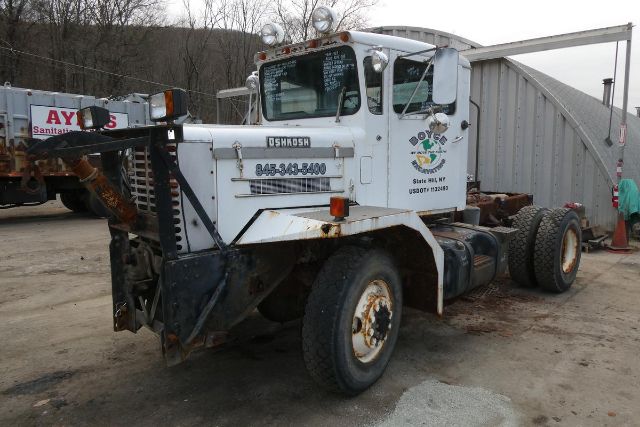
Selling a oshkosh cab and chassis truck? List your oshkosh cab and chassis truck for sale and reach thousands of commercial buyers.
Oshkosh Cab and Chassis Trucks
The cab and chassis format gives the buyer flexibility to mount a body that fits the job. Common upfits include snowplows, sanders, dump bodies, spreaders, service bodies, tank bodies, and other municipal or industrial equipment. Cab-to-axle and wheelbase dimensions matter as much as engine and axle specs because they determine what body length and weight distribution the chassis can support. On Oshkosh units, buyers should pay close attention to front frame condition, PTO provisions, hydraulic plumbing, wetline setup, crossmember integrity, and any evidence of prior plow or spreader use. A truck that has spent years in snow and salt service can still be useful, but corrosion at the frame, cab mounts, wiring, and hydraulic components needs close inspection.
Spec decisions in this category usually center on axle configuration, drivetrain layout, and intended terrain. Single axle Oshkosh cab and chassis trucks are common for plow and municipal support work, especially where maneuverability matters. Many have high GVWR ratings relative to their size, along with heavy front ends built to carry plow gear or other front-mounted equipment. Air brakes, 10-bolt wheels, commercial tire sizes such as 12R22.5, and Rockwell or similar vocational-grade axles are typical on older units. Buyers comparing listings should verify transfer case operation, PTO engagement, steering component wear, brake system condition, and whether the chassis is a single frame or reinforced for a specialized body.
For many buyers, the value in an Oshkosh cab and chassis truck is not just the badge but the platform’s reputation in severe service. These trucks are often kept in operation for decades because they were designed around vocational use rather than general freight. That makes condition and configuration more important than model year alone. A well-matched chassis with the right wheelbase, axle ratings, hydraulic capability, and body-mounting dimensions can be a strong fit for public works, private snow contractors, and specialized fleets that need a purpose-built truck rather than a highway-spec conversion.
Frequently Asked Questions about Oshkosh Cab and Chassis Trucks
What is an Oshkosh cab and chassis truck typically used for?
An Oshkosh cab and chassis truck is typically used as a base for severe-duty vocational equipment. Common applications include snowplows, sanders, municipal maintenance trucks, dump bodies, utility bodies, airport support equipment, and other specialty upfits. Many Oshkosh chassis were designed for demanding environments where traction, front axle strength, and heavy-duty frame construction matter more than highway speed or driver amenities.
What should I inspect first on a used Oshkosh cab and chassis truck?
Start with the frame, drivetrain, and any hydraulic or PTO systems. On older Oshkosh trucks, buyers should closely inspect frame rails, crossmembers, spring hangers, cab mounts, brake components, transfer case operation, front drive components, and corrosion from salt exposure. If the truck previously carried plow or spreader equipment, inspect the front frame horns, hydraulic lines, pump setup, and electrical controls for wear, repairs, or missing components.
Are Oshkosh cab and chassis trucks good for snow and municipal work?
Yes. Oshkosh has a long reputation in snow and municipal service because many of these trucks were built with all-wheel drive or 4x4 capability, heavy front axles, rugged suspensions, and vocational drivetrains. Those features make them well suited for plowing, sanding, and operating in poor weather or low-traction conditions. Buyers should still confirm that the exact truck has the right plow mounts, hydraulic capacity, axle ratings, and wheelbase for the intended setup.
Why do wheelbase and cab-to-axle measurements matter on a cab and chassis truck?
Wheelbase and cab-to-axle dimensions determine what body can be installed and how the finished truck will balance its load. A chassis may have enough GVWR for the job but still be a poor fit if the frame length or axle placement does not match the body requirements. On an Oshkosh cab and chassis truck, these measurements are especially important when planning a dump body, spreader, tank, or service body because severe-duty applications often put extra weight on the front axle, rear axle, or both.
Are older Oshkosh cab and chassis trucks difficult to maintain?
Maintenance depends on the exact engine, transmission, axle, and hydraulic components, but many older Oshkosh trucks use durable mechanical systems that experienced vocational truck shops can service. Parts availability can vary by model and age, so buyers should confirm support for drivetrain, brake, steering, and transfer case components before purchase. The advantage of many older units is their straightforward design, but condition and prior use have a major impact on ongoing maintenance costs.