
Crane Carrier Cab and Chassis Trucks For Sale
Crane Carrier cab and chassis trucks built for severe-duty municipal, refuse, utility, and specialty body applications.
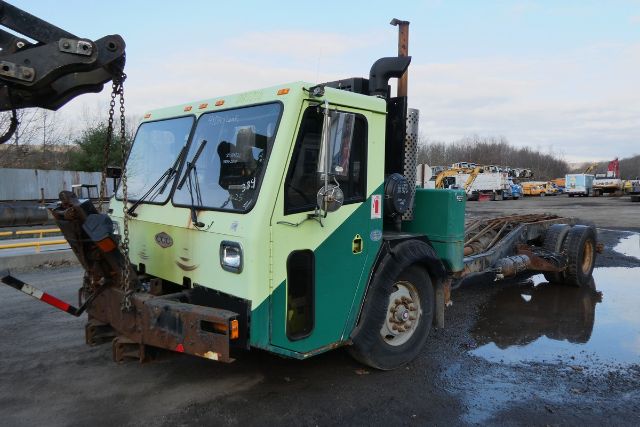
Looking for the easiest place to sell your crane carrier cab and chassis truck? List it here to reach thousands of buyers.
Crane Carrier Cab and Chassis Trucks
A key buying point is chassis compatibility. Many Crane Carrier cab and chassis trucks are spec'd with heavy front axles, tandem rears, and GVWRs suited for packers, hooklifts, sewer cleaners, street sweepers, and other vocational upfits. Common components include Cummins diesel engines, Allison automatic transmissions, double-frame or reinforced rail sections, and suspension options such as rubber block or walking beam depending on the application. Wheelbase, cab-to-axle, and cab-to-end dimensions matter because they determine what body length and weight distribution the chassis can handle. If the truck is being repurposed, verify frame height, PTO setup, steering gear placement, exhaust routing, and any drop-frame configuration before matching a new body.
Crane Carrier trucks are often selected for urban and municipal work because they are built to handle tight routing, high cycle counts, and constant loading conditions. Visibility from the cab, service access, and turning radius can be major advantages over a conventional cab and chassis in the right application. Buyers should still evaluate corrosion on the frame and crossmembers, front axle wear, suspension condition, transmission operation, cooling system performance, and electrical health, especially on older municipal units with low miles but high idle hours. Hour meter readings can be as important as odometer mileage on former refuse or service chassis.
For buyers comparing used Crane Carrier cab and chassis trucks, the smartest approach is to start with the intended body and duty cycle, then work backward to axle capacity, gearing, engine horsepower, and frame dimensions. A truck set up with a 20,000-pound front axle, 40,000-pound rear capacity, vocational gearing, and an Allison automatic may be a strong fit for heavy start-stop service, but not every chassis is ideal for every body style. Also known simply as a cab and chassis truck, this equipment class is best evaluated as a foundation for the final build, so upfit history, remaining frame life, and parts support should carry as much weight as make, model, or model year.
Frequently Asked Questions about Crane Carrier Cab and Chassis Trucks
What are Crane Carrier cab and chassis trucks typically used for?
Crane Carrier cab and chassis trucks are typically used for severe-duty vocational work such as refuse collection, municipal fleet service, utility bodies, sewer and vacuum units, street sweepers, hooklifts, and other specialty upfits. The chassis is designed as a body-ready platform, so the value is in its frame strength, axle capacity, cab layout, and compatibility with PTO-driven equipment rather than over-the-road comfort or long-haul fuel economy.
What specifications matter most when buying a used Crane Carrier cab and chassis truck?
The most important specifications are wheelbase, cab-to-axle, cab-to-end, front and rear axle ratings, GVWR, frame type, suspension, engine, transmission, and rear axle ratio. These numbers determine whether the chassis can legally and practically carry the body you plan to install. On a vocational truck, buyers should also confirm PTO provisions, frame rail condition, brake type, tire size, and any drop-frame or low-entry design features that affect body mounting and service access.
Are miles or engine hours more important on a Crane Carrier municipal chassis?
On many municipal and refuse-spec Crane Carrier trucks, engine hours can be just as important as mileage and sometimes more important. These trucks often spend long periods idling, operating PTO equipment, or working stop-and-go routes that create wear without adding many road miles. A chassis with relatively low mileage may still have significant drivetrain, cooling system, and hydraulic support wear if the hour count is high or the service history is inconsistent.
Can a Crane Carrier cab and chassis be repurposed for a different body?
Yes, many Crane Carrier cab and chassis trucks can be repurposed, but the frame layout has to match the new body and its operating demands. Buyers should check wheelbase, cab-to-axle, frame height, crossmember spacing, rear suspension capacity, PTO location, fuel and DEF tank placement if applicable, and any existing body mounting holes or frame modifications. Repowering or rebodying can make sense on a solid vocational chassis, but only if the structure, drivetrain, and parts support justify the build cost.
Why do many Crane Carrier trucks use Allison automatic transmissions and heavy axle ratings?
Allison automatics and heavy axle specs are common because Crane Carrier trucks are built for high-cycle vocational service. Automatic transmissions improve drivability in stop-and-go routes, reduce driver fatigue, and work well with PTO and body equipment in many applications. Heavy front and rear axle ratings are needed to support concentrated body weight, liquid loads, packer loads, or front-mounted equipment while maintaining durability and legal load carrying capacity.