
CCC Cab and Chassis Trucks For Sale
Shop CCC cab and chassis trucks with heavy-duty specs, tandem axles, diesel power, and body-ready frames for vocational upfit use.

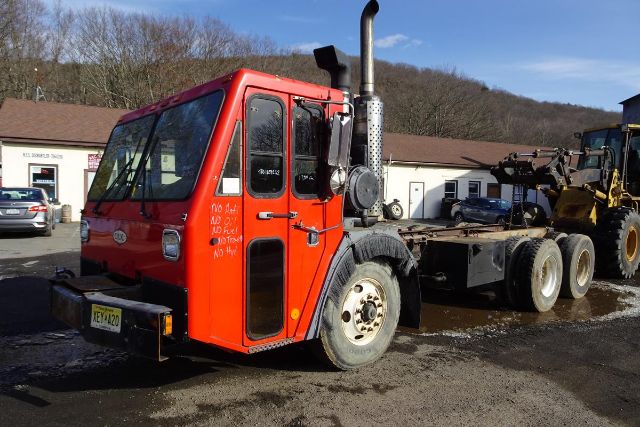
Selling a ccc cab and chassis truck? List your ccc cab and chassis truck for sale and reach thousands of commercial buyers.
CCC Cab and Chassis Trucks
On older CCC cab and chassis trucks, it is common to see Cummins diesel engines paired with Allison automatic transmissions, a combination that fits stop-and-go vocational work well. Sample specs in this category point to ISL-series power in the 310 to 330 horsepower range, tandem rear axles, and heavy rear ratings around 46,000 pounds. Buyers should pay close attention to axle ratio, front axle rating, suspension type, and whether the truck has a single or double frame. A truck with a deep ratio such as 5.25 or 5.43 is generally set up for low-speed pulling power rather than road speed. Hendrickson rubber block suspension is a common vocational choice because it is durable and stable under load, though ride quality will be firmer than air ride.
The most important measurement on a CCC cab and chassis is usually cab-to-axle, followed by wheelbase and cab-to-end. Those numbers tell you if the chassis will accept the body length you need without costly frame work. A 6x4 tandem configuration with 12R22.5 rubber, 20,000-pound front capacity, and a 46,000-pound rear setup is typical of trucks intended for heavy local work. Buyers should also verify PTO compatibility, transmission model, frame rail condition, crossmember integrity, and any evidence of prior upfit removal. If the truck came out of municipal or utility service, inspect for corrosion around body mounts, wiring modifications, hydraulic plumbing, and drilled frame sections.
Condition matters more than badge alone in this segment. Many cab and chassis trucks are purchased for repower, rebody, or specialty conversion, so practical inspection points include engine hours if available, steering system condition, brake type, tire match, and whether missing components affect total reconditioning cost. On used CCC chassis, it is smart to confirm running condition, title status, and what is included with the bare chassis, especially tanks, lines, mounting hardware, and electronic controls. The right truck in this category is the one with the correct dimensions, usable vocational drivetrain, and enough frame and axle capacity to support the body and payload you plan to put to work.
Frequently Asked Questions about CCC Cab and Chassis Trucks
What is a CCC cab and chassis truck used for?
A CCC cab and chassis truck is used as a foundation for vocational equipment such as dump bodies, utility bodies, service trucks, water tanks, and other job-specific upfits. Instead of buying a factory-complete truck body, the buyer starts with the cab, frame, axles, and drivetrain, then installs the body and hydraulic or PTO equipment needed for the application. This makes the category especially important for municipal, construction, and heavy local-service work.
What specs matter most when buying a used cab and chassis?
The most important specs are cab-to-axle, wheelbase, frame type, axle ratings, suspension, and drivetrain compatibility. Cab-to-axle and wheelbase determine whether the truck can accept the body you need. Axle ratings and GVWR determine payload potential. The transmission, PTO setup, and rear axle ratio affect how well the truck will perform once the body is installed. Buyers should also inspect the frame rails, crossmembers, and any signs of prior body removal or frame modification.
Why do many CCC cab and chassis trucks have Allison automatic transmissions?
Allison automatics are common in vocational chassis because they perform well in stop-and-go service, are easier to operate in mixed fleets, and work well with PTO-driven equipment. They are a practical choice for dump, utility, and municipal applications where the truck sees frequent starts, short runs, and repeated low-speed maneuvering. For many buyers, that transmission choice reduces driver fatigue and simplifies operation compared with a manual gearbox.
How do axle ratio and suspension affect a cab and chassis truck’s job fit?
Axle ratio has a direct effect on launch power, gradeability, and road speed. Ratios in the 5.25 to 5.43 range are typically chosen for heavy vocational work where low-speed pulling power matters more than highway efficiency. Suspension choice also matters. Rubber block suspensions such as Hendrickson setups are valued for durability and stability under load, but they ride firmer than air ride systems. Together, gearing and suspension help determine whether the chassis is best suited for construction, municipal, or other severe-duty work.
Can an older CCC cab and chassis still be a good platform for a new body?
Yes, if the dimensions, frame condition, and mechanicals are right for the intended build. Many older chassis remain useful because vocational buyers often care more about axle capacity, frame strength, and drivetrain layout than model-year cosmetics. The key is to verify frame integrity, check for corrosion or poor modifications, confirm the engine and transmission condition, and calculate the full cost of putting the chassis back into service with the desired body and equipment.