
Bucket Trucks For Sale in Minnesota
Browse bucket trucks for sale in Minnesota, including insulated and non-insulated aerial lift trucks for utility, telecom, tree and municipal work.


Have bucket truck to sell? List it here to reach thousands of buyers.
Bucket Trucks in Minnesota
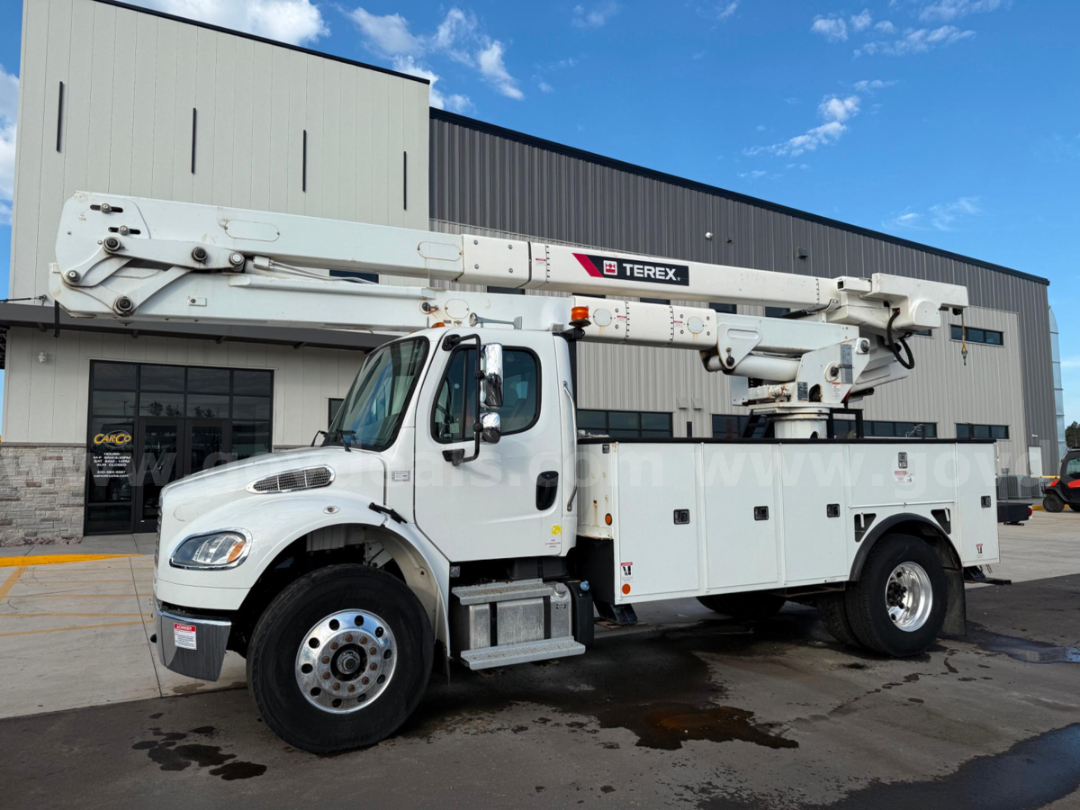
Boom configuration matters as much as height. Insulated bucket trucks are the standard choice for electric utility and line-clearance work where dielectric protection is required, while non-insulated units are common in telecom, lighting, sign service, and general maintenance. Platform capacity can range from roughly 350 pounds on smaller Versalift-style units to 700 pounds or more on larger Terex and Dur-A-Lift applications. Buyers should also look closely at side reach, stowed travel height, outrigger design, and PTO hours in addition to chassis miles and engine hours. A truck with moderate road miles but heavy aerial hours may show a different wear pattern than a unit used mainly for transportation between job sites.
The truck underneath the boom is a major part of the buying decision. Ford F-550, Freightliner M2 or Business Class, and GMC medium-duty platforms are common because they balance service access, body upfit options, and parts support. Diesel engines are typical on larger bucket trucks, while gasoline engines still appear on lighter-duty municipal and contractor units. Automatic transmissions, air brakes on heavier models, trailer hitches or pintle hitches, locking differential, and crew cab configurations are all worth comparing based on your work mix. Minnesota buyers should pay extra attention to frame and body corrosion, outrigger condition, hydraulic hose age, and cold-weather starting performance, especially on trucks that have spent years in snow, road salt, and municipal service.
Inspection should focus on both the chassis and the aerial device. Review annual dielectric and ANSI inspection records, confirm boom function at full extension, check for structural repairs, and verify that the platform rotator, lower controls, and emergency descent systems operate correctly. Outriggers should deploy smoothly and hold pressure, and any signs of boom damage, weld repair, or salvage history deserve careful review. A well-matched bucket truck should fit the actual jobsite requirement, not just the maximum listed height. For many buyers, the best value comes from choosing the right combination of working height, material handling capability, insulation rating, storage layout, and chassis weight class rather than simply buying the tallest boom available.
Frequently Asked Questions about Bucket Trucks in Minnesota
What size bucket truck is most practical for Minnesota utility and municipal work?
For mixed municipal, streetlight, and general maintenance work, trucks with 35 to 45 foot platform height on a Class 5 or Class 6 chassis are often the most practical because they are easier to maneuver and may stay at or below a non-CDL GVWR threshold. Electric utility and heavier contractor applications often move into 50 to 60 foot units on medium-duty chassis for added side reach, platform capacity, and stability. The right size depends on the actual pole height, tree canopy, and roadside access conditions your crews face most often.
Do I need an insulated bucket truck?
An insulated bucket truck is typically required when the work involves exposure to energized lines or utility applications where dielectric protection is part of the operating requirement. Non-insulated aerial lifts are commonly used for telecom, fiber, signs, traffic signals, lighting, and building maintenance where electrical contact protection is not the primary need. Buyers should confirm the insulation rating, test history, and compliance documentation rather than assuming every bucket truck is suitable for line work.
What should I check besides miles when buying a used bucket truck?
Miles only tell part of the story on an aerial truck. Engine hours, PTO hours, boom hours if available, annual inspection records, hydraulic condition, outrigger function, and structural integrity of the boom are all critical. It is also important to inspect the body compartments, subframe, turntable, pins, bushings, and lower boom areas for corrosion, damage, or prior repairs. In northern climates, rust on the frame, outriggers, and body can be just as important as drivetrain wear.
Is a 26,000 GVWR bucket truck a good choice?
A 26,000 GVWR bucket truck can be a strong choice for fleets trying to avoid CDL requirements while still getting useful aerial reach for sign, telecom, and municipal service work. The tradeoff is usually less payload, smaller body capacity, and lower boom and platform ratings than a heavier medium-duty unit. If crews carry transformers, reels, or heavy tools, or if the truck needs a taller insulated boom, a Class 7 platform may be the better long-term fit.
How important are annual boom inspections and test records?
They are essential. Aerial devices are specialized safety equipment, and documented ANSI inspections, dielectric testing on insulated units, and maintenance history help verify that the truck has been serviced correctly and remains suitable for work at height. Missing records do not always mean the truck is bad, but they increase the need for a detailed third-party inspection before purchase.