
Bucket Trucks For Sale in Illinois
Shop bucket trucks for utility, telecom, sign, and lighting work. Compare working height, side reach, chassis class, body style, and lift type.
Learn more
Have bucket truck to sell? List it here to reach thousands of buyers.
About Bucket Trucks in Illinois
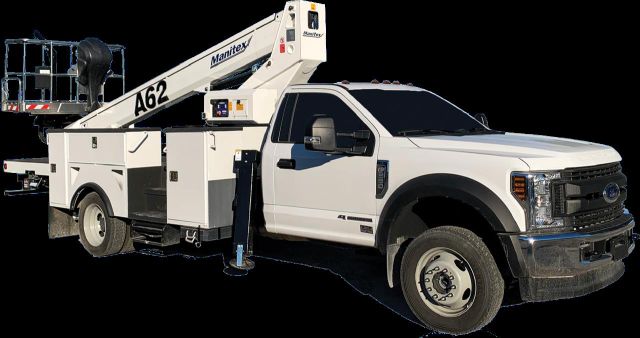
In Illinois, buyers often need a truck that can handle municipal street work, utility maintenance, and commercial service routes in tight urban areas as well as rural county roads. That makes chassis size, outrigger footprint, and body configuration especially important. Class 5 and 6 bucket trucks on Ford F-550, Ram 5500, or similar chassis are popular when operators want easier maneuverability and, in some configurations, operation below CDL thresholds. Heavier International, Freightliner, and similar medium-duty chassis are common when the application calls for more storage, more stability, higher GVWR, or a larger aerial device. Service bodies with enclosed compartments suit electrical contractors and municipal fleets, while flatbed or combo bodies make more sense when hauling reels, conduit, or bulky materials alongside the lift.
Common specs in this category range from roughly 35 to 75 feet of working height, with side reach often becoming the limiting factor in real-world use. Insulated booms are a key requirement for utility and line-clearance work, but insulation ratings, test status, and dielectric certification should always be verified. Buyers should also review platform capacity, upper and lower controls, emergency lowering systems, hydraulic condition, PTO operation, and the age of the boom relative to the truck chassis. On used bucket trucks, maintenance records for boom inspections, structural repairs, hydraulic hoses, outriggers, and turret components are just as important as engine hours and mileage. Rust in the body, subframe, and outrigger mounts deserves close attention in Midwest climates where road salt is a factor.
A good bucket truck match comes down to access, payload, and duty cycle. Tight city work may favor compact outriggers, short wheelbase setups, and non-overcenter booms with strong side reach. Utility and contractor fleets may prefer overcenter articulation, material handling capability, and insulated configurations. For any buyer comparing listings, the most important step is to measure the jobs the truck must perform, then compare true working height, outreach, stowed travel height, body storage, and chassis GVWR against that workload. A bucket truck that is slightly smaller but correctly configured often performs better than a taller unit with poor reach, limited storage, or an oversized footprint.
Frequently Asked Questions
What is the difference between working height and platform height on a bucket truck?
Platform height is the height of the bucket floor from the ground, while working height usually adds about 6 feet to account for the operator's reach above the platform. Buyers should compare listings carefully because some sellers advertise platform height and others advertise working height. If two trucks are listed at similar boom lengths, the actual usable reach can still differ based on boom design, articulation, and side outreach.
Do I need an insulated bucket truck for electrical or utility work?
An insulated bucket truck is typically required when the application involves energized lines or utility work where dielectric protection is part of the operating standard. Insulation is not just a boom material issue. Buyers should confirm the insulation rating, recent dielectric testing, and whether the unit is configured for the specific voltage class and work practice involved. For sign, lighting, and general facility maintenance, a non-insulated unit may be sufficient and often costs less.
Can a bucket truck be operated without a CDL?
Some bucket trucks can be operated without a CDL if the truck's GVWR stays below the applicable CDL threshold and the job does not trigger other licensing requirements. Many compact units mounted on Class 5 chassis are selected for that reason. Buyers still need to verify state rules, employer policies, and whether towing, air brakes, or crew size changes the licensing requirement. The truck's registered weight and actual use matter as much as the chassis badge.
What should I inspect first on a used bucket truck?
Start with the aerial device inspection history, structural condition of the boom and turret, outrigger operation, and any signs of repair around the subframe or body mounts. Then review hydraulic leaks, hose age, PTO engagement, lower and upper controls, emergency descent systems, and basket condition. Chassis mileage matters, but on bucket trucks the maintenance record for the lift is often the deciding factor because boom repairs and certification issues can be expensive and time-consuming.
What body style is best for a bucket truck?
A service body is the most common choice for contractors, utilities, and municipalities that need lockable compartments for tools, parts, and safety gear. A flatbed bucket truck makes more sense when the truck also needs to carry poles, conduit, signs, reels, or palletized material. Combo bodies split the difference by offering both storage and open deck space. The right choice depends on how much material the crew carries versus how much enclosed storage the job requires.