
Commercial Trucks For Sale Near Brownsboro, Alabama
Have commercial truck to sell? List it here to reach thousands of buyers.
Commercial Trucks Near Brownsboro, Alabama
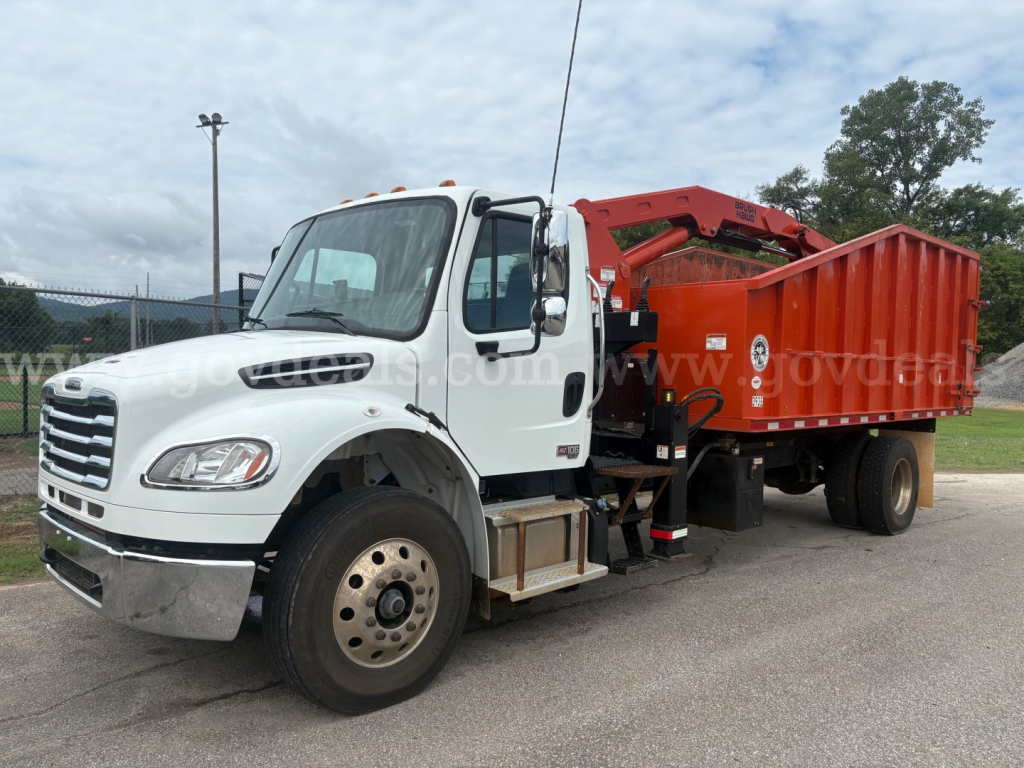
For many commercial applications, a truck’s usefulness comes down to how the chassis was spec’d. A Class 6 or Class 7 truck may be the right fit for local hauling, utility work, dump bodies, flatbeds, service bodies, or boom-equipped setups, while heavier Class 8 trucks are typically chosen for higher payloads, severe-duty work, or highway tractor use. Buyers should look closely at engine families from makers like Cummins, Detroit, Paccar, or International, along with Allison automatic, automated manual, or manual transmission options. Suspension type, rear-end ratio, brake configuration, and fuel tank capacity all affect how the truck performs in stop-and-go municipal work versus regional road miles.
Condition matters, but spec alignment matters more. A newer truck with the wrong wheelbase or axle spread can be less practical than an older truck already matched to the intended body and route. Service body and equipment buyers should confirm PTO provisions, frame space, upfit clearance, and front axle capacity, especially on trucks carrying cranes, buckets, compressors, or other mounted equipment. Cab style also changes the truck’s value in use. Regular cabs keep overall length down, extended cabs add storage, and crew cabs support multi-person utility and field crews. In Alabama, buyers also tend to pay attention to cooling performance, corrosion level, and tire condition because local and regional work can mean a mix of paved roads, gravel access, and hot-weather idle time.
When comparing trucks for sale, it helps to think in terms of total operating fit rather than just year and mileage. A well-matched truck should have enough legal payload, the right gearing for its route, and a chassis layout that supports the body or equipment it carries. Maintenance history, emissions system condition, brake and suspension wear, and any signs of frame modification should all be reviewed carefully. For vocational buyers, it is also smart to verify body manufacturer information, lift or boom service records, and any inspection documentation tied to the truck’s mounted equipment.
Frequently Asked Questions about Commercial Trucks Near Brownsboro, Alabama
What should I check first when buying a used truck for commercial work?
Start with the truck’s intended application and compare that to its chassis specs. GVWR, axle ratings, wheelbase, cab-to-axle measurement, engine, transmission, and PTO capability should all match the work you plan to do. After that, review maintenance records, engine hours if applicable, tire and brake condition, suspension wear, frame condition, and any fault codes or emissions-related issues.
How do I know if I need a medium-duty or heavy-duty truck?
Medium-duty trucks, typically Class 5 through Class 7, are common for local delivery, utility service, landscaping, municipal work, and many straight-truck applications. Heavy-duty trucks, usually Class 8, are better suited for higher payloads, severe-duty jobs, long-haul tractor use, and applications that require larger axles, stronger frames, and more robust driveline components. The right choice depends on legal weight, body type, route conditions, and how often the truck will operate under load.
Why do wheelbase and cab-to-axle measurements matter on a truck?
Wheelbase and cab-to-axle dimensions determine what body or equipment can be installed on the chassis and how the truck balances weight across its axles. If these measurements are wrong, the truck may not accept the body you need or may carry weight poorly once upfitted. These dimensions are especially important for dump trucks, flatbeds, service trucks, rollbacks, and boom or bucket truck applications.
Are automatic transmissions common in commercial trucks?
Yes. Allison automatic transmissions are widely used in medium-duty and vocational trucks because they perform well in stop-and-go work, reduce driver fatigue, and are well suited for utility, municipal, and construction applications. Automated manual transmissions are also common, especially in heavier trucks where fuel economy and highway operation matter more. The best transmission depends on route type, driver experience, and whether the truck will power PTO-driven equipment.
What matters most on a truck with mounted equipment like a boom or utility body?
The chassis under the equipment is just as important as the equipment itself. Buyers should verify front axle capacity, frame condition, PTO setup, suspension rating, and whether the truck was originally spec’d for the mounted body. It is also important to review inspection and service records for the boom, lift, or hydraulic system, because the truck’s value and safety depend on both the chassis and the upfit working together properly.