
Box Trucks For Sale in Utah
Browse box trucks for sale in Utah. Compare cargo lengths, GVWR, liftgates, diesel power, and delivery-ready specs for local or regional work.
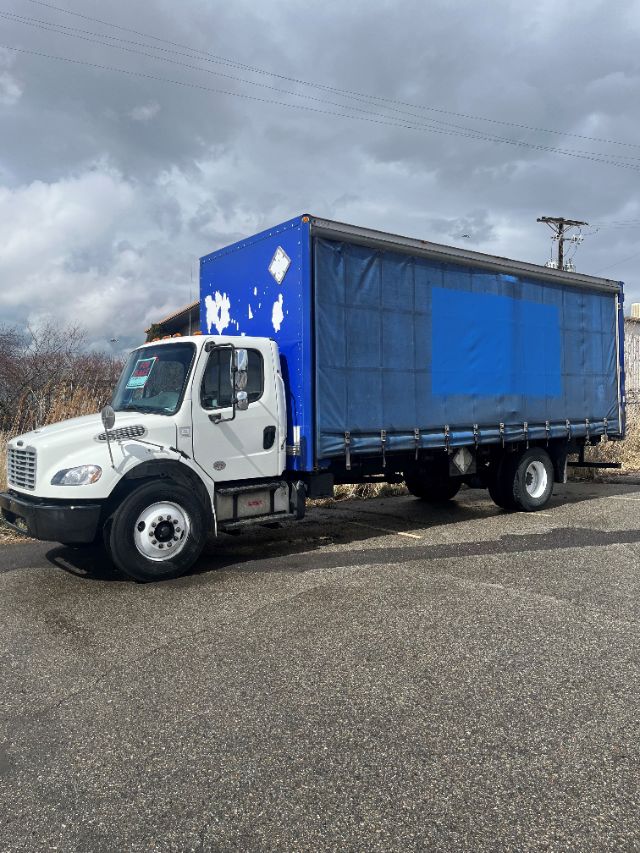

Have box truck to sell? List it here to reach thousands of buyers.
Box Trucks in Utah
Frequently Asked Questions about Box Trucks in Utah
What size box truck is best for local delivery work?
The right size depends on freight density, stop frequency, and route access. A 14- to 18-foot box truck is often easier to maneuver in city streets, alleys, and residential areas, while a 22- to 26-foot body gives more cube for furniture, retail, and multi-stop commercial deliveries. Buyers should compare inside box dimensions, door opening height, and payload capacity instead of looking at body length alone. A longer body is useful only if the axle ratings and GVWR still support the loads you plan to carry.
Should I buy a box truck with a liftgate?
A liftgate is a major advantage when freight is heavy, palletized, or delivered to locations without a dock. It improves loading efficiency and reduces manual handling for appliances, office equipment, vending products, and general final-mile freight. Common liftgate ratings range from around 2,500 to 4,000 pounds, so capacity should match the heaviest routine item, not just average shipments. It is also worth checking platform size, gate style, and whether the truck's rear frame and suspension are well matched to frequent liftgate use.
What engine and transmission setups are common in medium-duty box trucks?
Many medium-duty box trucks use diesel engines in the Cummins B6.7 class paired with an Allison automatic transmission. That combination is popular because it is easy to operate in stop-and-go work and widely supported for service. Horsepower ratings often fall in the 200- to 260-hp range, which is usually sufficient for urban and regional routes when gearing is matched to the load. Buyers in Utah should also pay attention to cooling system condition, emissions system service history, and how well the truck performs on grades if routes include mountain corridors.
What should I inspect on a used box truck besides the cab and engine?
The body matters as much as the chassis. Check the box structure for roof leaks, front wall impact damage, floor soft spots, crossmember corrosion, and door seal wear. Look closely at the roll-up door or swing doors, scuff liners, E-track, and any signs that forklifts have damaged the interior. On the chassis side, review tire wear, brake condition, spring or air suspension components, axle ratings, and maintenance records. If the truck has a reefer unit, curtain-side body, or liftgate, those systems should be tested under load rather than inspected visually only.
Is a non-CDL box truck always the better choice?
Not always. A box truck under 26,001 lb GVWR can widen the driver pool for some operations, but staying below the CDL threshold may limit payload once the body, liftgate, fuel, and cargo are factored in. If your freight is bulky but light, a non-CDL configuration can make sense. If loads are dense or routes involve regular palletized shipments, a higher-GVWR truck may be the better fit even if it requires a CDL-qualified driver. The best choice comes from matching legal weight, body volume, and daily freight profile.