
Kenworth Box Trucks For Sale
Learn about Kenworth box trucks for P&D and regional delivery. Compare T280, T380, K270 and K370 specs, GVWR, body sizes, powertrains and liftgates.
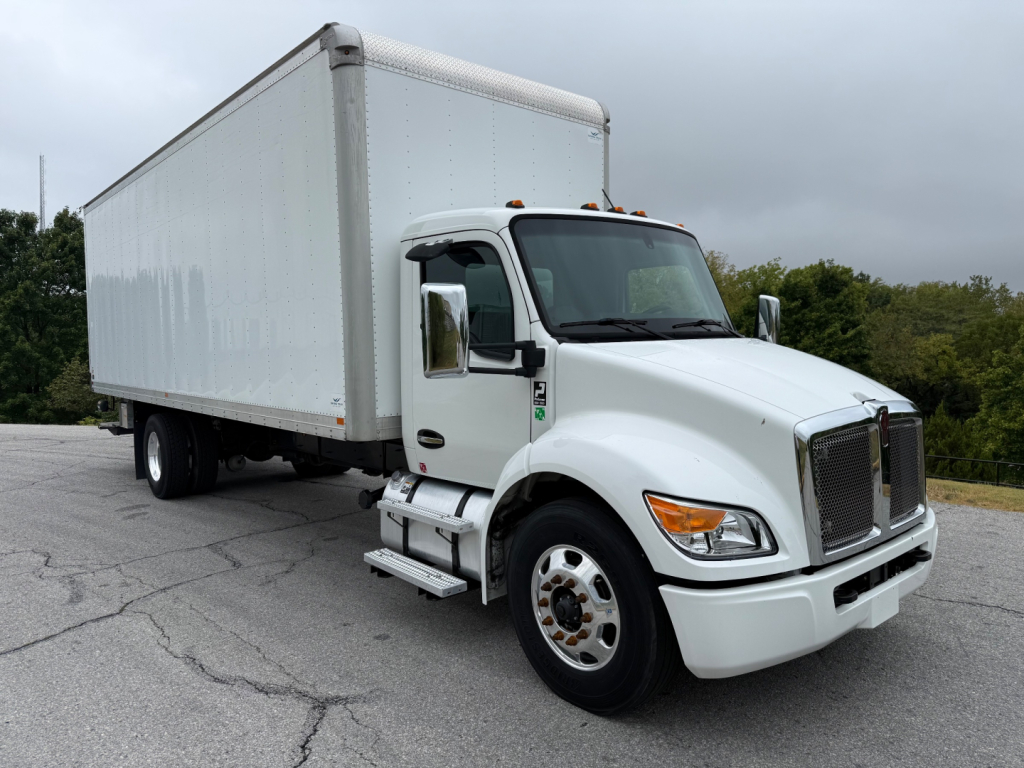
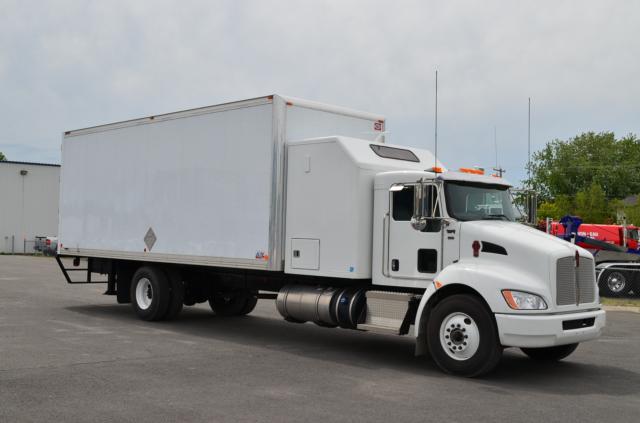
Selling a kenworth box truck? List your kenworth box truck for sale and reach thousands of commercial buyers.
Kenworth Box Trucks
Powertrains are proven and serviceable. Most medium-duty Kenworth box trucks run PACCAR PX-7 or PX-9 engines, which are Cummins B6.7 and L9 based, typically 200 to 350 hp with 520 to 1,100 lb-ft. Allison 2200, 2500, or 3000 series automatics dominate for durability in stop-start work. Choose rear axle ratios that fit the duty cycle. Short-haul city routes benefit from deeper ratios for launch with frequent stops, while mixed highway favors taller gearing for fuel economy. Hydraulic brakes are common in Class 6, with air brakes and air dryers more typical on Class 7. Air disc brakes, stability control, and automatic traction control are increasingly available and reduce stopping distances while cutting maintenance.
Chassis layout impacts maneuverability and driver experience. The K270 and K370 cabover models shorten overall length for a given body size, sharpen the turning circle, and improve curbside visibility in dense urban work. Conventional T-series like the T180, T280, and T380 deliver a quieter ride, more cab space, and better high-speed cooling for regional lanes and hilly terrain. Kenworth cabs are known for stout construction, ergonomic dashes, and low NVH. Many units include factory telematics such as TruckTech+ for remote diagnostics, along with collision mitigation, lane departure alerts, and adaptive cruise on newer builds to cut risk and downtime.
Upfit details separate a good box truck from a great one. Dry van bodies from builders like Morgan or Supreme typically run 96 or 102 in wide with 90 to 110 in interior height, hardwood or aluminum floors, logistics posts, e-track, scuff liners, LED interior lighting, and translucent roofs. Roll-up doors speed dock work, while swing doors maximize opening size and weather seal. Curbside doors help multi-stop routes. Liftgate choices include tuck-under, rail, and column types, commonly 2,000 to 3,500 lb capacity, with integrated chargers and dual batteries to reduce no-lift situations. For temperature-sensitive freight, look for insulated bodies, reinforced floors, standby power, and air chutes. Spec mirrors, grab handles, steps, and camera systems to protect equipment and speed deliveries in tight alleys and at busy docks.
Frequently Asked Questions about Kenworth Box Trucks
Which Kenworth models are most common for box truck applications and how do they differ?
The T180 and T280 cover most Class 6 specs, while the T380 handles heavier Class 7 payloads and air brake packages. The K270 and K370 are low cab forward models that improve maneuverability and visibility in urban routes. Conventional T-series cabs ride quieter on regional runs and allow higher cooling capacity, while K-series cabovers fit the same body length on a shorter overall chassis for tight city streets.
How do I choose the right GVWR and payload for a Kenworth box truck?
If you want to avoid a CDL, target 25,999 lb GVWR and calculate real payload after body, fuel, driver, liftgate, and options. Expect net payload in the 7,000 to 10,000 lb range on many non-CDL builds depending on spec. Moving to 33,000 lb GVWR in Class 7 increases legal payload and enables air brakes and larger axles, which is helpful for heavy freight, pallet counts above 12, or reefer bodies that add weight.
What transmissions and axle ratios work best for P&D versus mixed highway routes?
Allison 2200 or 2500 automatics are common for P&D with frequent stops, while the Allison 3000 suits heavier Class 7 or hilly terrain. Urban routes benefit from deeper rear axle ratios for strong launch and low-speed control. Mixed highway service often uses taller gearing to keep cruise RPM down and improve fuel economy. Tire size and rear axle ratio should be chosen together to hit your target road speed and gradeability.
What should I know about liftgates on Kenworth box trucks?
Liftgates come in tuck-under, rail, and column designs. Tuck-under units keep dock access clear and are popular for general freight. Rail or column gates offer larger platforms and higher capacities for bulky loads, typically 2,000 to 3,500 lb. Verify platform size, bed height compatibility, and charging provisions. Dual batteries, a dedicated liftgate charger, sealed wiring, and proper rear frame reinforcement reduce failures and speed turnarounds.
Are there alternative-fuel or electric Kenworth box trucks available and what are the trade-offs?
Yes. Certain K270 and K370 variants have been offered as battery-electric with route-friendly ranges and zero tailpipe emissions, ideal for city delivery and compliance zones. Trade-offs include higher upfront cost, charging infrastructure needs, and potential payload impact from battery weight. Some chassis also support natural gas. Evaluate route length, dwell time for charging, utility access, and total cost of ownership before committing to an alternative-fuel spec.