
Used Freightliner Boom Trucks For Sale
Used Freightliner boom trucks for lifting, loading, and material handling. Compare M2 and 108SD chassis, crane types, capacities, and specs.
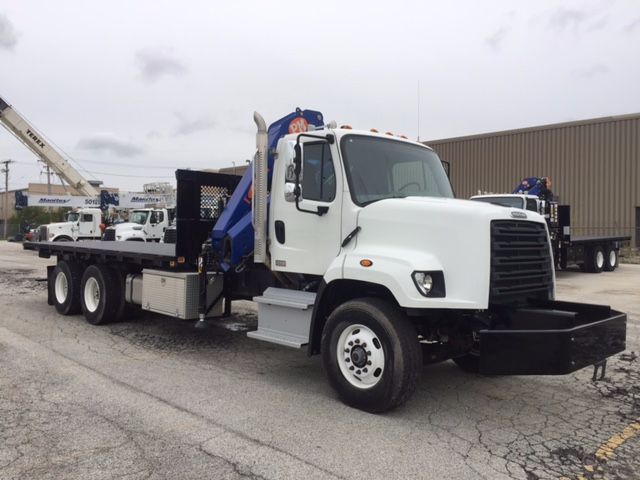
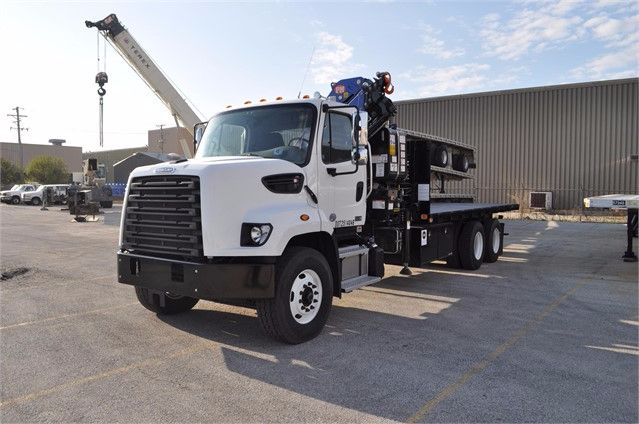
Selling a used freightliner boom truck? List your used freightliner boom truck for sale and reach thousands of commercial buyers.
Used Freightliner Boom Trucks
The chassis matters as much as the crane. Freightliner M2 and SD-series boom trucks are popular because parts support is strong, cab ergonomics are familiar to most fleets, and the trucks can be spec'd for medium-duty to severe-duty work. Common used specs include Cummins diesel power, Allison automatic transmissions, 4x2 or 6x4 drivetrains, and hydraulic outriggers for stability during lifts. On crane-equipped trucks, buyers should confirm lift capacity, hydraulic reach, deck length, body style, outrigger spread, and whether the truck has a load moment indicator, radio remote, PTO hours, and any interlocks or stow alarms. A 32,000 lb or 42,000 lb published crane rating can sound straightforward, but real-world lifting depends on radius, boom angle, outrigger position, and payload remaining on the deck.
Condition assessment on a used Freightliner boom truck needs to go beyond the engine and transmission. The crane system should be checked for smooth function, hose condition, cylinder leaks, turntable play, remote control operation, and proper operation of the LMI or overload protection system. Look closely at outriggers, subframe mounting, frame reinforcement, and any signs of cracking around the crane base. If the truck is carrying a flatbed or mechanics-style body, inspect deck wear, tie-down points, headache rack integrity, and overall corrosion, especially on units that have worked in snow-belt or coastal regions. Service records for annual crane inspections, dielectric testing if applicable, and PTO or hydraulic maintenance can be as important as chassis mileage.
A good used Freightliner boom truck should match the lift profile of the job, not just the headline capacity. Buyers hauling shingles, trusses, HVAC units, generators, pipe, or jobsite materials should compare reach and deck payload together, because a stronger crane can reduce available legal payload if the body and subframe are heavy. Fleets working in urban delivery or tight jobsites often prefer knuckle boom setups with radio remotes and compact folded dimensions, while utility or general construction applications may prioritize heavier front axles, tandem rears, and more robust outriggers. Freightliner remains a common choice in this category because the chassis are widely understood, easy to support, and flexible enough for many crane and body combinations.
Frequently Asked Questions about Used Freightliner Boom Trucks
What is the difference between a Freightliner straight boom truck and a knuckle boom truck?
A straight boom uses a telescoping boom design and is often chosen for higher vertical lift and simpler operation in open areas. A knuckle boom folds at one or more pivot points, making it easier to stow compactly and place loads in tight spaces or around obstacles. On used Freightliner chassis, knuckle booms are common for building materials, equipment handling, and urban delivery because they offer strong versatility without taking up as much deck space when folded.
What should I check first on a used Freightliner boom truck?
Start with the crane and stabilizer system, not just the chassis. Confirm the crane model, rated capacity, reach chart, PTO engagement, outrigger operation, remote functionality, and the condition of hydraulic hoses, cylinders, and the turntable. After that, inspect frame reinforcement, subframe attachment points, and signs of stress cracking around the crane mount. Chassis items like engine hours, transmission performance, axle ratings, and brake condition still matter, but crane condition usually drives the biggest repair risk.
Are Freightliner M2 106 and 108SD good chassis for boom truck applications?
Yes. The M2 106 is widely used in medium-duty and regional applications where maneuverability, service access, and driver comfort matter. The 108SD is typically favored when the application is heavier or more severe-duty, especially when buyers want tandem rears, stronger vocational specs, and a chassis better suited for larger crane packages. The right choice depends on crane size, legal axle distribution, body length, and the type of material being handled.
How do crane capacity ratings work on a used boom truck?
The published rating is not the amount the truck can lift in every situation. Crane capacity changes with boom extension, lift radius, boom angle, and outrigger deployment. A crane rated at 32,000 lbs or 42,000 lbs may only lift a fraction of that at longer reach. Buyers should review the actual load chart and compare it to their heaviest routine lift, typical placement distance, and jobsite setup limitations. This is more useful than comparing maximum rating alone.
Do I need to worry about payload on a boom truck if the crane is already rated for the lift?
Yes. Crane rating and truck payload are separate issues. A heavier crane, body, and subframe package can reduce how much material the truck can legally carry on its deck. Buyers should verify GVWR, front and rear axle ratings, body weight, crane weight, and expected cargo weight together. This is especially important for roofing supply, masonry, pipe, and equipment delivery operations where the truck must both transport and place the load efficiently.