
Commercial Trucks For Sale Near Berne, Indiana
Have commercial truck to sell? List it here to reach thousands of buyers.
Commercial Trucks Near Berne, Indiana
On used trucks, the core decisions are GVWR, axle configuration, engine rating, transmission type, and suspension. Common setups include single axle and tandem axle trucks, with 4x2 and 6x4 configurations depending on payload, terrain, and off-road use. Buyers hauling heavier loads or running vocational routes often focus on double frame construction, front axle capacity, rear axle ratings, and ratio selection. A truck with an Allison automatic may suit stop-and-go municipal or utility work, while manual and automated manual transmissions are more common where gradeability, fuel economy, and driver preference matter. Wheelbase and cab-to-trunnion dimensions are especially important on chassis trucks because they determine what body can be installed without expensive frame changes.
Regional use matters in northern Indiana. Suspension type, brake condition, tire size, and corrosion history deserve close attention, especially on vocational trucks that may have seen seasonal road salt, short-trip service, or PTO-driven work. Buyers should look at frame condition, crossmembers, steering components, spring or air suspension wear, and whether the truck has the rear air and electric connections, pintle hitch, wet kit, or hydraulic provisions needed for the intended body or trailer. Engine brake, cruise, air ride cab, and driver seat features also affect daily usability more than many buyers expect, particularly on trucks that split time between local work and highway miles.
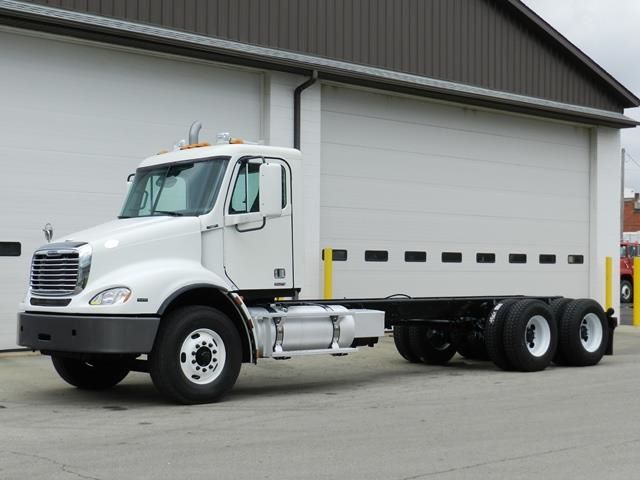
A strong truck listing should give enough detail to confirm fit before you make the trip. That includes engine make and model, horsepower, rear end, gearing, wheelbase, tire sizes, axle ratings, and title status. If the truck is a chassis, buyers should also confirm frame rail dimensions, PTO compatibility, fuel tank placement, exhaust routing, and any existing upfit holes or frame modifications. The right truck is not just about make and model. It is about matching the chassis to payload, body length, route profile, and maintenance expectations over the next several years.
Frequently Asked Questions about Commercial Trucks Near Berne, Indiana
What should I check first when buying a used truck chassis?
Start with the intended application and confirm the truck’s wheelbase, cab-to-axle or cab-to-trunnion measurement, GVWR, and axle ratings. Those numbers determine whether the chassis can legally and practically carry the body, equipment, or trailer setup you need. After that, review frame condition, drivetrain specs, suspension type, PTO provisions, and any existing modifications that could affect body installation or future maintenance.
Is an automatic transmission a good choice for a vocational truck?
An automatic transmission is often a strong fit for stop-and-go work, municipal service, utility fleets, refuse routes, and other operations with frequent starts, low-speed maneuvering, and multiple drivers. Allison automatics are common in these roles because they are easy to operate and reduce driver fatigue. Buyers should still compare transmission model, torque capacity, service history, and rear axle ratio to make sure the drivetrain matches the truck’s payload and duty cycle.
Why do wheelbase and cab-to-axle dimensions matter so much?
Wheelbase and cab-to-axle dimensions determine what body length can be installed and how the finished truck will balance weight across the axles. If those measurements are wrong, the body may not fit correctly, the load may not distribute properly, or the truck may require expensive frame changes. On a cab and chassis truck, these dimensions are as important as engine horsepower because they directly affect upfit cost and legal payload.
What axle configuration is best for a truck in this category?
The best axle configuration depends on payload, terrain, and how the truck will be used. A single axle truck can be lighter, simpler, and easier to maneuver for moderate loads and local work. A tandem axle 6x4 truck is more common when higher GVWR, better traction, and heavier body or trailer combinations are required. Buyers should also compare front axle capacity, suspension design, and ratio selection rather than choosing based on axle count alone.
What matters most on a truck used in Indiana and the Midwest?
Corrosion history, frame condition, suspension wear, brake condition, and tire condition are especially important in the Midwest because winter road treatment can accelerate rust and underbody deterioration. Trucks from dry climates may show cleaner frames and less hardware corrosion, but they still need a full inspection for drivetrain wear, leaks, and component age. In this region, buyers should pay close attention to crossmembers, wiring, air lines, spring hangers, and any rust around body mounts or frame modifications.