
Commercial Trucks For Sale Near Beauceville, Quebec
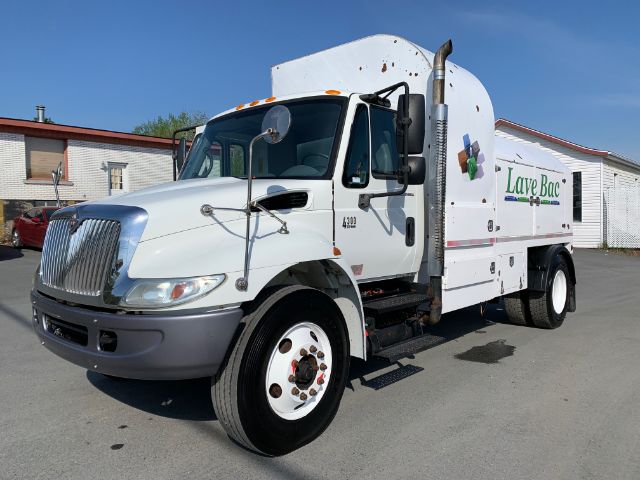
Have commercial truck to sell? List it here to reach thousands of buyers.
Commercial Trucks Near Beauceville, Quebec
For heavier applications, buyers should focus on engine and driveline specs that support payload, terrain, and daily cycle demands. A Detroit DD16 paired with an Eaton-Fuller 18-speed is a very different operating package than a medium-duty diesel with an Allison automatic. Manual transmissions still make sense for certain severe-duty and off-road environments where ratio control matters, while automatic transmissions are common in refuse, municipal, and urban stop-and-go work. Front axle ratings in this class can range from around 12,000 lbs on medium-duty trucks to 18,000 lbs or more on severe-service models, with rear axle ratings moving into 40,000 lbs-plus territory on tandem trucks. Suspension choice also matters. Air suspension supports ride quality and some specialized bodies, while spring suspension remains common for durability and simplicity in hard vocational service.
Body and upfit condition can be as important as the truck itself. A tank truck should be evaluated for compartment layout, capacity, pump and hose systems, product compatibility, and current inspection status. A garbage truck needs close attention on packer operation, hydraulic condition, hopper wear, and route suitability. Buyers in Quebec also need to think about corrosion exposure, winter traction, cold-weather starting performance, and parts support for the engine, transmission, and body manufacturer. Tire size, wheel type, locking differentials, rear axle ratio, and brake setup all affect how the truck performs under load and how expensive it will be to keep productive.
A good used truck in this category is one that fits the route, the payload, and the body application without forcing expensive rework. Odometer reading matters, but service history, frame condition, idle time, hydraulic function, and legal operating configuration matter just as much. Look closely at PTO operation, differential specs, suspension wear points, and any provincial inspection dates or compliance documentation tied to the chassis or body. For buyers comparing multiple trucks for sale, the smartest approach is to compare complete working specifications, not just model year and price.
Frequently Asked Questions about Commercial Trucks Near Beauceville, Quebec
What should I look at first when buying a used truck in this category?
Start with the intended application and confirm the truck's axle ratings, suspension, wheelbase, and body configuration match the work. A truck built for tank service, refuse collection, or general vocational use will have very different operating requirements. After that, review engine horsepower, transmission type, PTO setup, rear axle ratio, and the condition of the body or equipment mounted on the chassis.
Is a manual or automatic transmission better for a vocational truck?
It depends on the duty cycle. Manual transmissions, especially multi-speed Eaton-Fuller setups, are common in heavy vocational work where gradeability, off-road control, and driver-selected gearing are important. Automatic transmissions, often from Allison, are popular in refuse, municipal, and urban service because they reduce driver fatigue and perform well in constant stop-and-go operation.
How important are axle ratings on a used truck?
Axle ratings are critical because they determine how much weight the truck can legally and safely carry on the steer and drive axles. A medium-duty truck with a 12,000 lb front axle and 21,000 lb rear axle serves a very different purpose than a tandem-axle vocational truck with an 18,000 lb front and 44,000 lb rear rating. Buyers should match axle capacity to payload, body weight, and local operating regulations.
What extra checks matter on specialized trucks like tank or garbage trucks?
Specialized trucks need both chassis and body inspection. On tank trucks, check tank capacity, compartment count, lining or material compatibility, valves, pumps, and current inspection or certification status. On garbage trucks, inspect hydraulic systems, packer cycles, hopper wear, tailgate seals, and any structural cracking around high-stress areas. The body can represent a major share of the truck's value and repair cost.
Are trucks from Quebec worth evaluating differently than trucks from other regions?
Yes. Quebec operating conditions can mean more exposure to winter roads, de-icing chemicals, and cold-weather starts. Buyers should inspect frame rails, crossmembers, cab mounts, brake and fuel lines, wiring, and body substructures for corrosion. It is also smart to confirm heater performance, battery condition, tire suitability, and the availability of service support for the chassis and body in the local market.