
Commercial Trucks For Sale Near Ann Arbor, Michigan
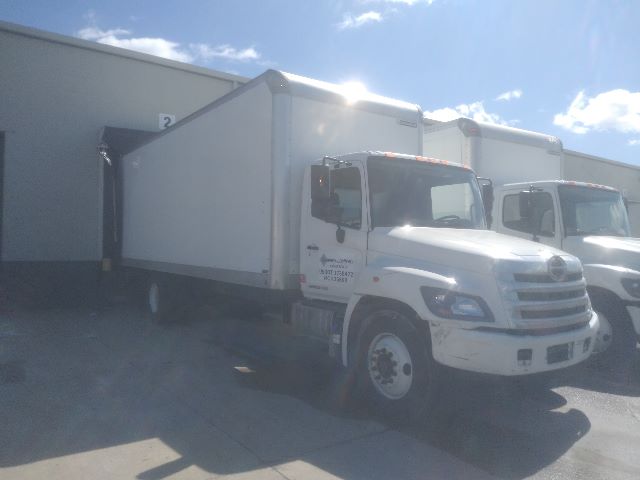

Have commercial truck to sell? List it here to reach thousands of buyers.
Commercial Trucks Near Ann Arbor, Michigan
For vocational trucks, common buying decisions center on GVWR, front axle capacity, rear axle ratio, PTO setup, and body integration. Dump trucks are a good example. Buyers often compare body size in cubic yards, hoist type, tailgate design, plow or spreader prep, and whether the truck has an automatic or manual transmission. Municipal and snow-spec trucks may include underbody scrapers, front plow hitches, belly plows, salt spreaders, tank sprayers, or auxiliary hydraulic controls. On trucks built for mixed-duty work, engine hours can matter as much as mileage because idle time and PTO operation affect wear differently than highway use.
On-road commercial trucks should be evaluated around wheelbase, suspension type, brake configuration, fuel capacity, and engine-emissions system history. Medium-duty and severe-duty platforms from builders like Freightliner, International, Kenworth, Peterbilt, Mack, Ford, and Chevrolet are often selected based on service access and parts support as much as raw spec. Buyers comparing used trucks should look for maintenance intervals, documented repairs, tire condition, transmission performance, steering play, driveline vibration, and any signs of hydraulic leaks or electrical issues. If the truck carries a body or auxiliary equipment, confirm that controls, PTO engagement, lights, and safety interlocks function correctly.
A good truck listing should give enough detail to match the unit to the job. Important specs include engine make and horsepower, transmission model, axle ratings, suspension, wheelbase, body manufacturer, and current operating condition. For trucks used in municipal, construction, landscaping, paving, or utility work, it is also worth checking title status, previous service environment, and whether attachments are included or removed. Buyers who stay focused on total operating fit, not just purchase price, usually make the better long-term decision.
Frequently Asked Questions about Commercial Trucks Near Ann Arbor, Michigan
What should I look for first when buying a used truck?
Start with the job the truck needs to perform, then match that requirement to GVWR, axle ratings, wheelbase, engine power, transmission type, and body or equipment setup. A truck can look clean and still be wrong for the work if the gearing, suspension, PTO, or body capacity does not fit the application. After confirming the basic spec, inspect maintenance records, frame and rust condition, tires, brakes, steering, hydraulics, and any emissions-related service history.
Are mileage and engine hours equally important on used trucks?
Yes. Mileage shows road use, but engine hours reveal total run time, including idle time and PTO operation. This is especially important on dump trucks, municipal trucks, utility trucks, and other vocational units that may spend long periods idling or powering auxiliary equipment. A lower-mile truck with very high hours can have more wear than the odometer suggests, so both numbers should be evaluated together.
What makes a dump or municipal truck different from a standard commercial truck?
Dump and municipal trucks are built around vocational work rather than long highway runs. They often have heavier front axles, PTO-driven hydraulics, automatic transmissions, severe-duty suspensions, and equipment such as plow hitches, spreaders, belly plows, underbody scrapers, or tank sprayers. Buyers need to inspect not only the truck chassis but also the body, hoist, hydraulic lines, controls, and attachment points because those systems drive the truck's real work value.
Why does rust matter so much on trucks in Michigan?
Michigan trucks are commonly exposed to road salt, freeze-thaw cycles, and wet seasonal conditions that accelerate corrosion. Rust can affect frames, crossmembers, brake lines, hydraulic components, spring hangers, cab mounts, dump bodies, and electrical connections. Surface corrosion is common on working trucks, but structural rust, scaling, and corrosion around mounting points can become expensive repairs and should be checked carefully before purchase.
Which specs matter most when comparing trucks for different jobs?
The key specs depend on the application, but the most important are GVWR, axle configuration, wheelbase, horsepower, torque, transmission, rear axle ratio, suspension, brake type, and body or attachment setup. A truck for paving, snow work, hauling aggregate, landscaping, or utility service may require very different combinations of payload capacity, turning radius, PTO capability, and auxiliary hydraulics. Matching those specifications to the actual work is more important than choosing by make or model alone.