
Trailers For Sale Near White Plains, Maryland
Have trailer to sell? List it here to reach thousands of buyers.
Trailers Near White Plains, Maryland
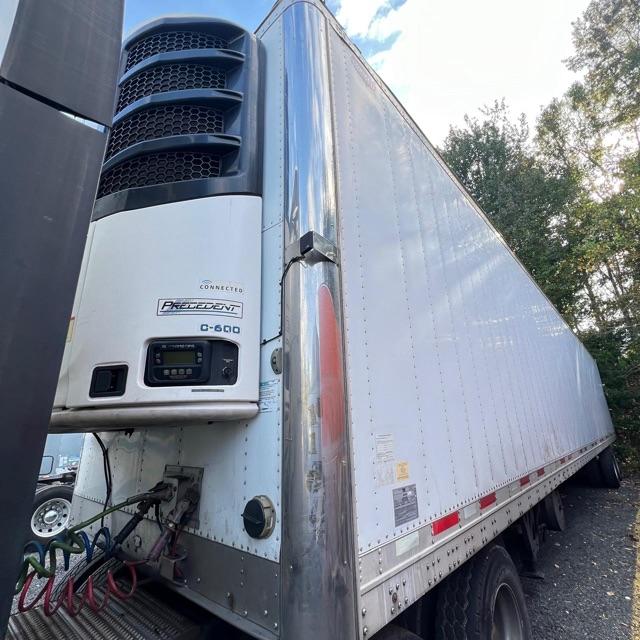
For enclosed trailers, the biggest divide is usually dry van versus reefer. Dry vans are built for palletized freight, consumer goods, and general dock-to-dock service, with common buying points including roof condition, crossmember spacing, logistics posts, swing or roll doors, and scuff liner wear. Refrigerated trailers, also known as reefers, add a second layer of evaluation because the box and the refrigeration unit both have to pencil out. Buyers should look closely at unit hours, service records, multi-temp capability, chute configuration, fuel tank condition, door seals, and insulation integrity. In food-grade and cold-chain service, air leaks, floor damage, and poor temperature recovery can be more important than appearance.
Open-deck and vocational trailer buyers usually focus first on loading method and legal payload. Flatbeds and step decks are suited for machinery, building materials, steel, and oversized freight, with deck length, deck height, coil package, winch track, and aluminum versus steel construction driving value. Dump trailers and other vocational bodies need careful inspection around hoists, hinges, subframes, liners, and tub or body cracks, especially if they have seen asphalt, demolition, or aggregate service. Across all trailer types, check kingpin wear, landing gear operation, ABS status, lights, hubs, wheel ends, frame rust, and signs of prior collision or weld repair. A trailer that matches the lane and loading environment will usually outperform a cheaper unit that is spec'd wrong for the work.
Frequently Asked Questions about Trailers Near White Plains, Maryland
What should I inspect first when buying a used trailer?
Start with the frame, suspension, brakes, tires, wheel ends, floor, and rear structure because those items drive both safety and near-term repair cost. On van and reefer trailers, inspect the roof, sidewalls, crossmembers, door frame, and floor wear. On flatbeds and dumps, pay close attention to deck condition, main rails, hoist components, and signs of cracking or reinforcement welds. Kingpin wear, landing gear function, and ABS fault status should also be checked early because they can indicate how the trailer was maintained.
What is the difference between a dry van trailer and a refrigerated trailer?
A dry van is designed for general freight that does not require temperature control, while a refrigerated trailer has an insulated body and a reefer unit to maintain cargo temperature. Dry vans are typically simpler and less expensive to maintain. Reefers add operating and service costs, but they are necessary for frozen, chilled, and other temperature-sensitive loads. Reefer buyers should evaluate both the trailer body and the refrigeration unit, including unit hours, temperature performance, and maintenance history.
How do I choose the right trailer length and axle setup?
The right combination depends on freight, route, and state bridge and weight requirements. A 53-foot trailer is common for van, reefer, and many over-the-road applications because it maximizes cubic capacity. Shorter trailers can be useful in urban delivery, tighter yards, or specialized hauling. Tandem axles are standard on many trailer types, while spread axle configurations can help with weight distribution and stability on certain flatbed and specialized applications, though they can also affect maneuverability and tire scrub.
Are reefer unit hours important on a refrigerated trailer?
Yes, reefer unit hours are one of the main indicators of use and potential service exposure. Higher hours do not automatically mean a bad trailer, but they should be considered alongside service records, engine condition, temperature pull-down performance, and the condition of the insulated box. A well-maintained unit with documented service can be a better buy than a lower-hour unit with poor maintenance history. Buyers should also confirm whether the unit is single-temp or multi-temp and check chute and bulkhead setup if load segregation matters.