
New Wabash Van Trailers For Sale
Have new wabash van trailer to sell? List it here to reach thousands of buyers.
New Wabash Van Trailers
A lot of the buying decision comes down to how the trailer is equipped inside and underneath. Logistics posts in 24-inch or 50-inch spacing change how easily carriers can secure mixed freight and maximize load versatility. Composite swing doors are a common choice for durability and lower repair exposure compared with some traditional configurations, while an aluminum roof helps control empty weight. Buyers also pay attention to suspension packages such as Hendrickson air ride, especially for operations hauling palletized consumer goods, packaged food, and other freight that benefits from a smoother ride. Features like an auto pin puller can improve yard efficiency, and PSI tire inflation systems can reduce irregular tire wear and roadside downtime.
Aerodynamics and corrosion protection matter on a new Wabash van trailer because they directly affect long-term operating cost. Side skirts are now a common spec for fleets focused on fuel savings at highway speed, and galvanized landing gear braces or a galvanized rear frame and ICC bumper can add service life in regions where trailers see road salt, wet freight docks, and heavy year-round use. Tire and wheel package choices also deserve attention. Low-profile 22.5-inch tires on steel wheels are a familiar fleet spec because they balance replacement cost, availability, and standardization across larger trailer groups.
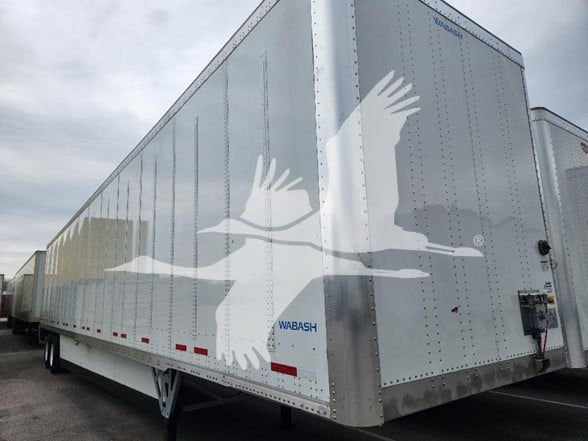
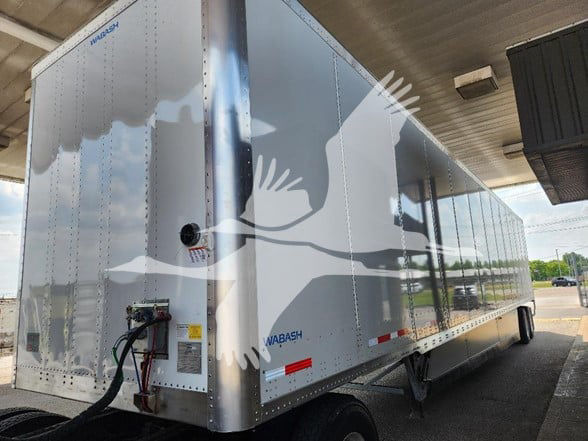
For most buyers, the right Wabash van trailer is the one that matches freight profile and trade cycle. A higher-density logistics package makes sense for multi-stop and mixed commodity work. A cleaner, lighter spec may fit long-haul drop-and-hook applications where payload and fuel economy carry more weight. If the freight is non-temperature-controlled and loaded through standard docks, a dry van trailer like this remains one of the most versatile and lowest-hassle trailer types on the road. It is also commonly referred to as a dry van trailer, box trailer, or enclosed van trailer, and it remains a core asset in general freight transportation.
Frequently Asked Questions about New Wabash Van Trailers
What is the typical use for a new Wabash van trailer?
A new Wabash van trailer is typically used for dry freight that needs weather protection and secure enclosed transport. Common applications include retail goods, palletized consumer products, paper products, packaged food, and general truckload freight. Because the trailer is enclosed and dock-compatible, it works well for linehaul, dedicated contract freight, and drop-and-hook operations.
Why do logistics posts matter on a dry van trailer?
Logistics posts determine how freight can be secured along the trailer walls. A 24-inch logistics pattern usually gives more tie-off flexibility for mixed freight and load bars, while a 50-inch pattern may be sufficient for more uniform freight. Buyers hauling a wide range of pallet counts, stack patterns, or partial loads usually place a high value on a denser logistics package because it improves cargo control options.
Are side skirts and tire inflation systems worth it on a new van trailer?
For many highway fleets, yes. Side skirts can improve aerodynamic performance and help reduce fuel consumption on longer runs. A tire inflation system such as PSI can help maintain proper tire pressure, which supports tire life, fuel efficiency, and roadside reliability. These features are especially valuable in high-mileage operations where small operating-cost improvements add up quickly across the trailer fleet.
What suspension is common on Wabash dry vans?
Air ride suspension is a common spec on Wabash dry vans, including Hendrickson systems frequently seen in fleet applications. Air ride helps reduce cargo shock compared with some mechanical setups and is often preferred for palletized freight, packaged goods, and higher-value dry cargo. It can also support better trailer tracking and ride quality in linehaul service.
What should buyers look for in corrosion-resistant trailer specs?
Buyers operating in northern climates or heavy year-round service often focus on galvanized components such as landing gear braces, rear frame sections, and ICC bumpers. These parts are exposed to water, road salt, dock impact, and general abrasion, so corrosion-resistant materials can extend service life and reduce repair frequency. On a new dry van, these specs are practical long-term value items rather than cosmetic upgrades.