
Doepker Traveling Axle Trailers For Sale
Browse Doepker traveling axle trailers built for heavy equipment hauling, with slide axle loading, air ride options, and durable steel construction.
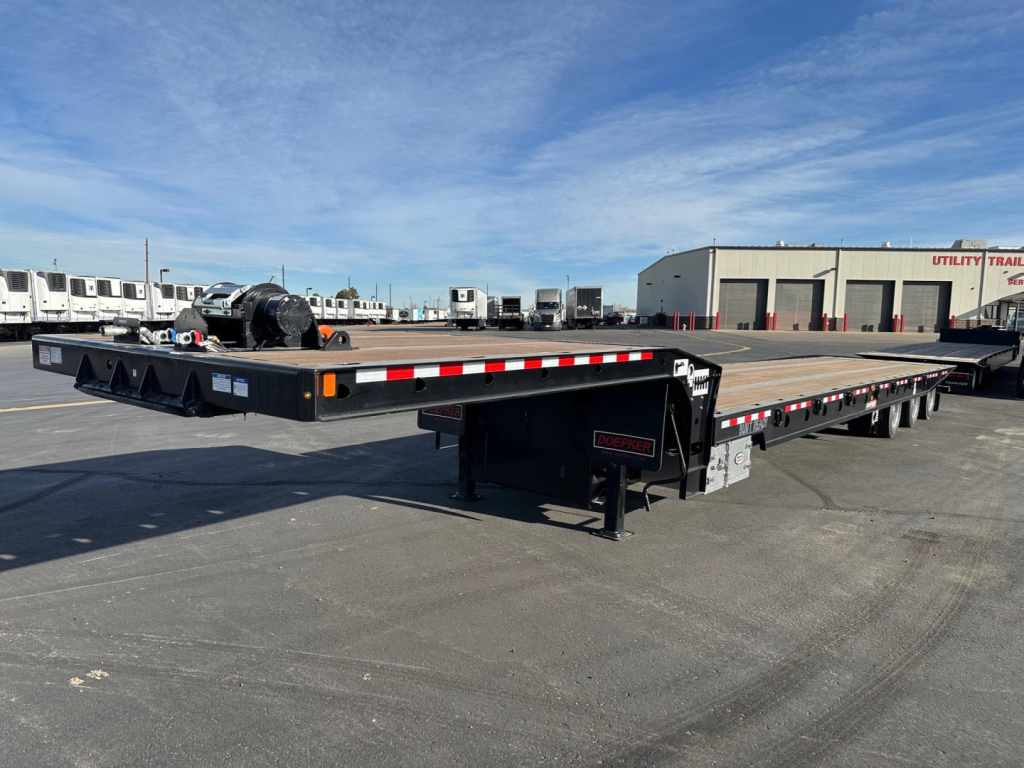
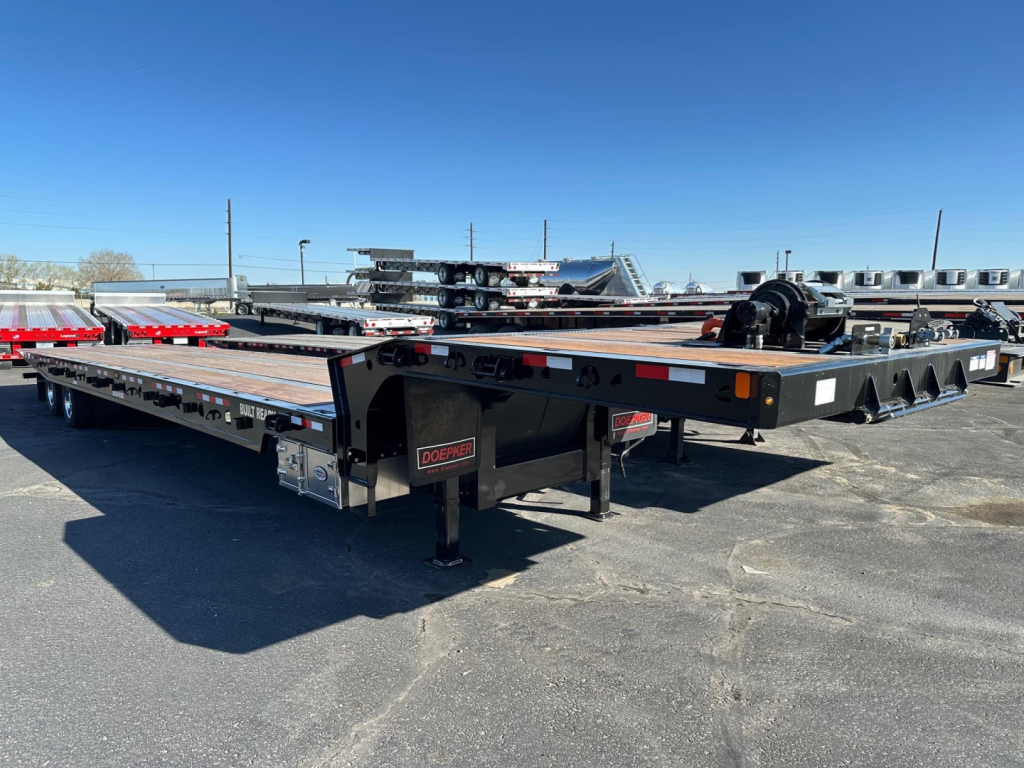
Selling a doepker traveling axle trailer? List your doepker traveling axle trailer for sale and reach thousands of commercial buyers.
Doepker Traveling Axle Trailers
Doepker traveling axle trailers are commonly spec'd in steel construction with a full-width 102-inch deck, an upper deck section, and a lower deck sized for heavier iron. Typical details on this class include Apitong flooring, chain slots, stake pockets, J-hooks, fixed winches, tool storage, and knife-edge steel tails for smoother machine loading. Suspension choice matters. Air ride is popular for protecting the trailer structure and improving ride quality under varying loads, while tire inflation systems can reduce tire-related downtime on multi-stop jobs. Buyers should also pay attention to deck roller design at the neck, slider pad material such as UHMW, landing gear, PTO hookups, and whether the trailer includes manual and remote controls for slide axle operation.
Capacity on a Doepker traveling axle trailer is often discussed in ton rating, such as 35 ton or 40 ton classes, but the real buying decision should come back to legal payload, axle spacing, and the dimensions of the machines being hauled. A 40 ton trailer may be the right fit on paper, yet deck concentration, attachment weight, and regional bridge laws can still limit what the combination can carry. Tire size, wheel material, tandem configuration, and kingpin setting all affect how the trailer scales with different tractors. If the work involves frequent loading on uneven job sites, look closely at tail geometry, deck height, ground clearance, and how well the sliding axle system holds alignment under repeated use.
For buyers comparing listings, the practical questions are durability, loading efficiency, and serviceability. A well-spec'd Doepker slide axle trailer should offer a strong deck, predictable axle travel, secure tie-down points, and components that can be maintained without excessive downtime. This trailer category fits contractors, equipment rental fleets, paving crews, utility work, and agricultural operations that need heavy-haul capability in a format that loads faster than many tag trailers and with less setup than a detach. When the trailer is matched correctly to machine weight, deck length, and route conditions, a traveling axle can be one of the most versatile equipment-hauling trailers in a fleet.
Frequently Asked Questions about Doepker Traveling Axle Trailers
What is a Doepker traveling axle trailer used for?
A Doepker traveling axle trailer is used to haul heavy equipment that benefits from a lower loading angle and easier deck access. Common loads include skid steers, mini excavators, compact track loaders, rollers, pavers, trenchers, tractors, and similar construction or agricultural machines. The sliding axle design allows the rear deck to lower for loading, which helps reduce setup time compared with some other heavy equipment trailer types.
How is a traveling axle trailer different from a detachable gooseneck or a tag trailer?
A traveling axle trailer sits between those two trailer styles in terms of loading method and complexity. Compared with a tag trailer, it usually offers heavier capacity and a more favorable loading angle for larger machines. Compared with a detachable gooseneck, it generally has fewer moving systems and less setup involved, but it may not match a full detach for the lowest possible loading approach. Buyers usually choose a slide axle when they want heavy equipment capability with straightforward operation and strong day-to-day versatility.
What specs matter most when buying a Doepker slide axle trailer?
The most important specs are ton rating, deck length, loaded deck height, axle configuration, suspension type, and the design of the sliding axle system. Buyers should also review flooring material, tie-down options, tail style, tire size, and legal axle spacing. Features like air ride suspension, tire inflation systems, winches, PTO hookups, remote controls, and toolboxes can add real value depending on the application and how often the trailer is loaded in the field.
Is a 40 ton traveling axle trailer enough for most equipment hauling?
A 40 ton class trailer covers a wide range of construction and agricultural equipment, but the answer depends on more than the published rating. Actual usable payload is affected by tractor setup, concentrated machine weight, attachments, axle spacing, and local bridge regulations. Buyers should compare the trailer's capacity to the heaviest machine they expect to move, including buckets, blades, or other attachments, and then confirm how that load scales legally in their operating region.
Why do features like Apitong flooring, air ride, and UHMW slider pads matter?
These features affect both durability and operating cost. Apitong flooring is valued for strength and wear resistance under repeated machine loading. Air ride suspension can improve load stability and reduce harshness transmitted into the frame and cargo. UHMW slider pads help the traveling axle mechanism move smoothly and reduce friction-related wear. Together, those details can improve service life, loading consistency, and overall fleet uptime.