
Travel Trailers For Sale
Browse travel trailers with practical guidance on length, weight, floorplans, tanks, towing requirements, and popular camping features.
Looking for the easiest place to sell your travel trailer? List it here to reach thousands of buyers.
Travel Trailers
Floorplan drives long-term satisfaction. Rear living layouts, rear kitchen models, bunkhouse travel trailers, couples coaches, and toy-hauler-style hybrids all serve different needs. A family-focused travel trailer often prioritizes sleeping capacity, double-over-double bunks, convertible dinettes, larger freshwater and gray-water capacity, and outside kitchen options. A couple may care more about walk-around queen beds, pass-through storage, theater seating, wardrobe space, and a larger bathroom. On larger units, slide-outs add elbow room but also add weight, mechanical complexity, and maintenance points. Look closely at tank sizes, refrigerator capacity, ducted versus non-ducted A/C, tankless or standard water heater design, insulation package, and 50-amp versus 30-amp service if you expect to camp in hotter climates or stay off-grid for longer periods.
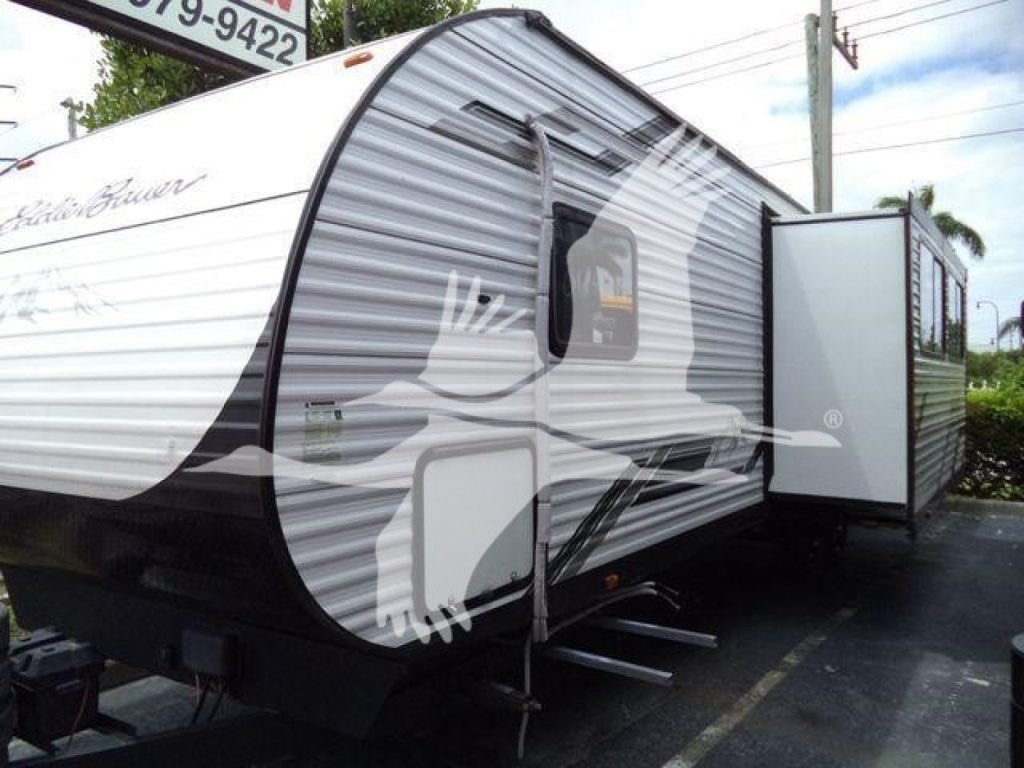
Construction quality separates one travel trailer from another faster than décor ever will. Common build details include aluminum or wood framing, laminated fiberglass sidewalls or corrugated aluminum skin, walkable roofs, enclosed underbellies, heated tanks, upgraded suspension components, and solar prep or factory solar packages. Buyers in humid, cold, or high-use conditions should pay attention to roof material, sealant condition, wall construction, delamination risk, window quality, and the serviceability of plumbing and electrical systems. Tandem-axle travel trailers generally track better on the highway and offer more stability, but tire age, brake condition, axle ratings, and suspension wear still deserve a close inspection. Power tongue jacks, power stabilizers, backup camera prep, tire pressure monitoring, and anti-sway equipment can make a noticeable difference in everyday ownership.
A good travel trailer purchase comes down to matching floorplan, weight, and build quality to the way it will actually be used. Frequent campground travel calls for easy setup, practical storage, durable furniture, and tank capacities that fit your trip length. Seasonal or extended use puts more value on insulation, kitchen workspace, shower size, sleeping comfort, and service access. If the trailer will see mountain grades, crosswinds, or long interstate miles, prioritize braking, suspension, and realistic loaded towing numbers. Also known simply as a camper trailer or RV travel trailer, this category covers everything from compact towable campers to family-size units with private bedrooms and bunk rooms, so the best choice is the one that fits your tow vehicle, camping style, and maintenance expectations.
Also known as: Camper Trailer, Camping Trailer
Frequently Asked Questions about Travel Trailers
What is the difference between dry weight and GVWR on a travel trailer?
Dry weight is the trailer's approximate weight before cargo, water, propane, batteries, and dealer-installed options are added. GVWR is the maximum allowed operating weight of the trailer when fully loaded. Buyers should use GVWR, hitch weight, and expected cargo load when matching a travel trailer to a tow vehicle because real camping weight is usually much higher than the published dry weight.
What size truck or SUV is needed to tow a travel trailer?
The correct tow vehicle depends on the trailer's loaded weight, hitch weight, frontal area, and the vehicle's payload and tow ratings. Smaller travel trailers may work behind properly equipped SUVs or half-ton pickups, while longer bunkhouse or slide-out models often require a half-ton truck with strong payload numbers or a three-quarter-ton truck for better stability and margin. Payload is often the limiting factor because it must absorb tongue weight, passengers, cargo, and hitch equipment.
Are tandem-axle travel trailers better than single-axle models?
Tandem-axle travel trailers usually provide better highway stability, higher weight capacity, and more confidence if a tire issue occurs on the road. They also tend to support larger floorplans and more cargo. Single-axle units are lighter, simpler, and easier to maneuver in tight campsites, but they generally offer less storage, lower tank capacity, and less margin for heavy loading.
What features matter most for family travel trailers?
Family buyers usually focus on sleeping capacity, bunkhouse layout, bathroom access, refrigerator size, holding tank capacity, and durable seating and flooring. Outside kitchens, power awnings, pass-through storage, and private master bedrooms are also common priorities. For longer trips, look closely at freshwater and gray-water capacity, climate control, and enough cargo carrying capacity to handle bedding, food, chairs, and outdoor gear.
What should I inspect before buying a used travel trailer?
Start with signs of water intrusion because roof leaks and soft floors can become expensive structural repairs. Inspect the roof membrane, sealants, corners, windows, slide seals, underbody, tires, brakes, suspension, and frame condition. Test appliances, A/C, furnace, water heater, plumbing fixtures, electrical outlets, converter, battery system, and awning operation. On used models, tire age, brake service history, and any evidence of delamination or previous leak repairs are just as important as the interior condition.