
Trailers For Sale Near Romulus, Michigan
Have trailer to sell? List it here to reach thousands of buyers.
Trailers Near Romulus, Michigan
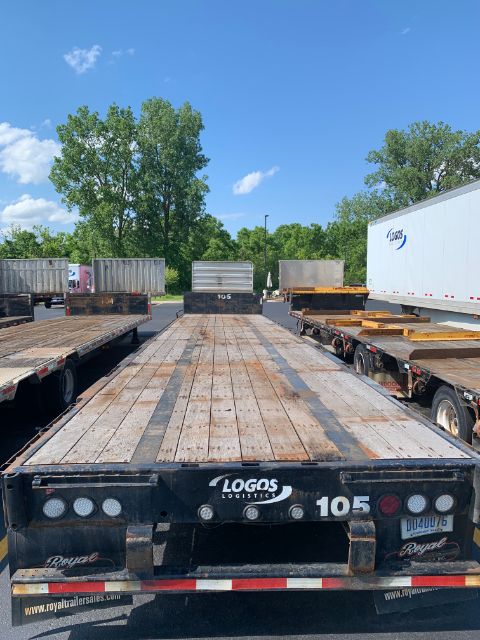
Flatbed and drop deck trailers are especially common in industrial markets because they handle machinery, steel, building products, and palletized freight that cannot be loaded through a rear door. Buyers usually look closely at deck length, loaded deck height, concentrated load rating, crossmember spacing, apitong or hardwood floor condition, winch track layout, and the condition of the rub rail, stake pockets, and sliding winches. Tire size also matters because low-profile 17.5-inch rubber is often used on certain drop deck applications to keep deck height down, while standard 22.5-inch tires may be preferred for broader parts availability and highway service. On any open-deck trailer, frame condition, prior repairs, and signs of overload stress around the neck, suspension hangers, and rear impact guard deserve a careful inspection.
For enclosed trailers such as dry vans and reefers, the key buying decisions are usually cubic capacity, door opening dimensions, floor rating, and how the trailer fits dock operations. A logistics-heavy market like Romulus often favors 53-foot trailers with 102-inch width, swing or roll-up doors, logistics posts, scuff liners, and air ride suspension for freight protection. Reefer buyers should go deeper into unit hours, maintenance records, bulkhead condition, insulation integrity, chute condition, and whether the unit meets the temperature range required for food or pharmaceutical freight. Dry van buyers often focus on roof integrity, floor wear from forklifts, sidewall damage, and the condition of the ICC bumper, lights, ABS system, and slider assembly.
Across trailer types, the best value is rarely just the lowest purchase price. A buyer should weigh brake and tire life, bushing wear, wheel-end condition, current DOT compliance, and how easily replacement parts can be sourced for the make and model. In Michigan, corrosion exposure is a real consideration, so it pays to inspect wiring, air lines, crossmembers, landing gear, and the underside for rust scale or past patchwork. A trailer that matches the freight, axle laws, and loading routine of the operation will usually outperform a cheaper unit that needs immediate tire, brake, floor, or structural work.
Frequently Asked Questions about Trailers Near Romulus, Michigan
What should I inspect first when buying a used trailer?
Start with the structure, because frame damage and corrosion are more expensive to correct than routine wear items. Inspect the main rails, crossmembers, suspension mounts, landing gear supports, rear frame, and kingpin area for cracks, rust loss, poor weld repairs, or signs of overloading. After that, check brakes, tires, wheel ends, air lines, lights, ABS function, and the condition of the floor or deck surface. A clean inspection process usually tells you quickly whether the trailer needs normal service or major repair.
Is a flatbed or drop deck better for industrial freight?
It depends on freight height, loading method, and securement needs. A flatbed is simpler and often better for standard palletized freight, steel, lumber, or building products that fit legal height limits. A drop deck, also called a step deck, gives you lower deck height and more flexibility for taller equipment or machinery without moving into specialized heavy haul territory. Buyers hauling mixed industrial freight often compare deck height, tire size, axle placement, and load transition area before deciding.
Why does tire size matter on a trailer?
Tire size affects deck height, replacement cost, parts availability, and how the trailer performs in its intended service. Smaller 17.5-inch tires are common on some drop decks because they help keep the loaded deck lower for taller freight. Standard 22.5-inch tires are often easier to source and may be preferred for broader highway use and fleet standardization. The right choice depends on the trailer design, expected mileage, and whether low deck height or service convenience matters more to the operation.
What features matter most on a dry van or reefer trailer?
For a dry van, focus on floor condition, roof integrity, door seal condition, sidewall damage, and suspension type. For a reefer, add refrigeration unit hours, maintenance records, temperature performance, insulation condition, and the state of the chute and bulkhead. In both cases, dock-friendly dimensions, 102-inch width, 53-foot length, air ride suspension, and a sound slider assembly are common priorities for freight efficiency and resale value.
How important is corrosion when buying a trailer in Michigan?
Corrosion is a major factor because road salt and winter moisture can shorten the life of structural and running gear components. Surface rust is common, but deeper scale on crossmembers, brake hardware, suspension components, landing gear, and electrical connections can lead to higher repair costs and downtime. Buyers in Michigan should spend extra time under the trailer and around the rear frame, axle area, and wiring runs to separate cosmetic corrosion from structural deterioration.