
2027 Utility Refrigerated Trailers For Sale
Shop 2027 Utility refrigerated trailers with common reefer specs, suspension, tire, and floor options for food-grade and temperature-sensitive freight.


Showing 1 to 28 of 88 results
Selling a 2027 utility refrigerated trailer? List your 2027 utility refrigerated trailer for sale and reach thousands of commercial buyers.
2027 Utility Refrigerated Trailers
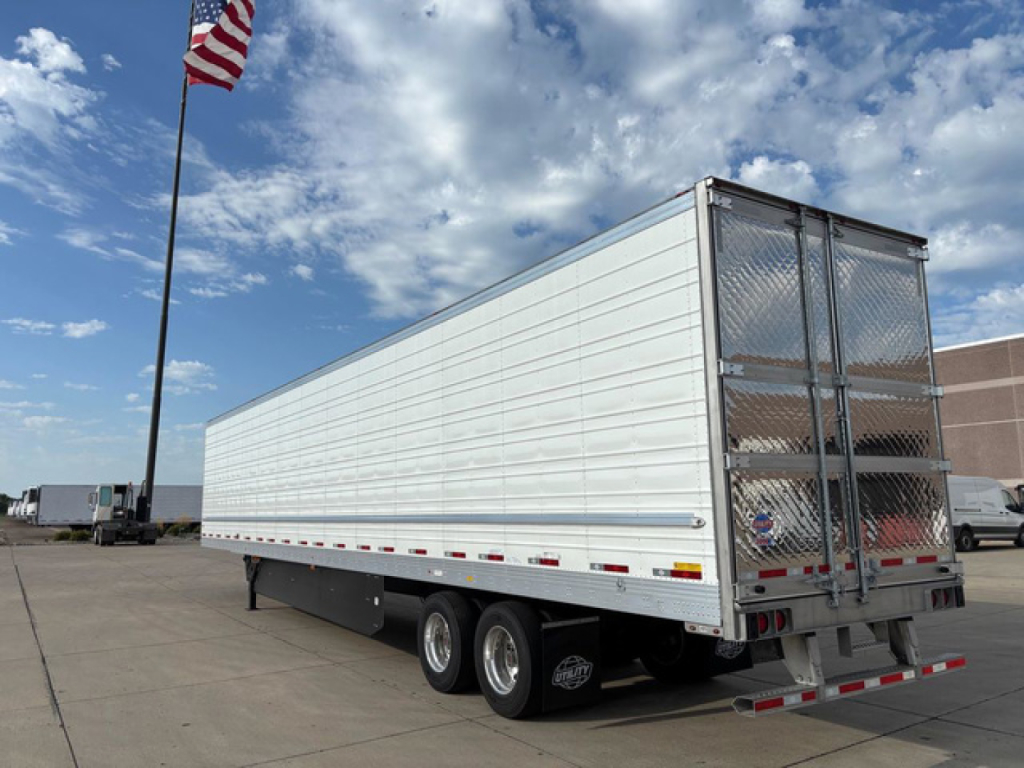
Utility reefer trailers are typically spec'd as 53-foot vans, though shorter lengths exist for specialized operations. Common features include aluminum roofs, 22.5-inch tires, aluminum wheels, air ride suspension, and sliding tandem axles, all of which show up regularly in market listings. Interior details matter just as much as the running gear. Buyers should look at ducted airflow design, insulation package, scuff liners, wall lining, floor type, and rear door seal condition. A flat aluminum floor may suit certain bulk liquid tote or specialized freight applications, while a deep-rail or duct floor is often preferred for consistent air circulation under pallets in food service work. If dock frequency is high, rear frame reinforcement, threshold condition, and door hardware durability deserve close attention.
The reefer unit itself drives operating cost more than almost any other component. It is worth checking unit brand, engine hours, electric standby if required, fuel tank size, telematics capability, and service history. For produce and frozen operations, pull-down performance and temperature hold are more important than headline spec alone. Fleets running dense regional freight may prioritize low maintenance and fast washout features, while long-haul carriers may focus on fuel efficiency, lighter tare weight, and tire wear under loaded tandem settings. Sliding axle spacing can also affect bridge compliance and loading flexibility across different states.
A strong Utility reefer spec is not just about keeping freight cold. It is about matching the trailer to the lane. Food-grade operators may want smooth interior liners, sanitary-friendly construction, and dependable door seals. High-cube freight may require careful attention to interior dimensions and evaporator placement. Multi-stop distribution can benefit from side door configurations or specific interior protection packages, although standard swing-door rear access remains the most common setup. When comparing 2027 models, pay close attention to the relationship between tare weight, payload capacity, reefer unit spec, suspension, and floor design. That combination usually tells you more about real-world performance than the model year alone.
Frequently Asked Questions about 2027 Utility Refrigerated Trailers
What should I look for first when comparing Utility refrigerated trailers?
Start with the reefer unit specification, trailer length, floor design, insulation package, and axle configuration. Those items determine whether the trailer fits your freight and lanes. After that, review suspension type, tire and wheel setup, interior lining, scuff protection, door configuration, and any available service records. On a refrigerated trailer, small specification differences can have a major effect on payload, temperature consistency, and maintenance cost.
Are Utility reefer trailers commonly equipped with sliding tandems and air ride suspension?
Yes. Many Utility refrigerated trailers are spec'd with sliding tandem axles and air ride suspension because that combination gives carriers better bridge-law flexibility, dock positioning, and ride quality for sensitive freight. Sliding tandems are especially useful for fleets that run across multiple states or handle varying load distributions. Air ride suspension also helps reduce cargo shock compared with harsher suspension setups.
Why does floor type matter on a refrigerated trailer?
Floor type affects airflow, washout efficiency, cargo handling, and the kind of freight the trailer can haul efficiently. A ducted or channel-style floor supports airflow beneath pallets, which is important for maintaining even temperatures across food loads. A flat aluminum floor may be preferred in certain specialized applications where rolling carts, totes, or custom freight handling matter more than under-pallet airflow. The best floor depends on your commodity mix and loading pattern.
What freight is a Utility refrigerated trailer typically used for?
Utility refrigerated trailers are commonly used for frozen foods, fresh produce, dairy, meat, beverages, floral products, and other temperature-controlled freight. They are also used in some pharmaceutical and specialty distribution applications where cargo protection and stable temperatures are required. The exact freight profile depends on the reefer unit capacity, interior dimensions, and whether the trailer is configured for truckload, regional distribution, or multi-stop delivery.
Does the reefer unit matter more than the trailer itself?
The reefer unit is critical, but it should be evaluated together with the trailer body. A strong refrigeration unit cannot overcome poor insulation, damaged door seals, weak airflow design, or an unsuitable floor. Likewise, a well-built trailer body will not perform well if the refrigeration unit is undersized, poorly maintained, or inefficient for the route. The best buying decision comes from matching the refrigeration system and trailer construction to the freight, climate, and delivery schedule.