
2019 Utility Reefer Trailers For Sale
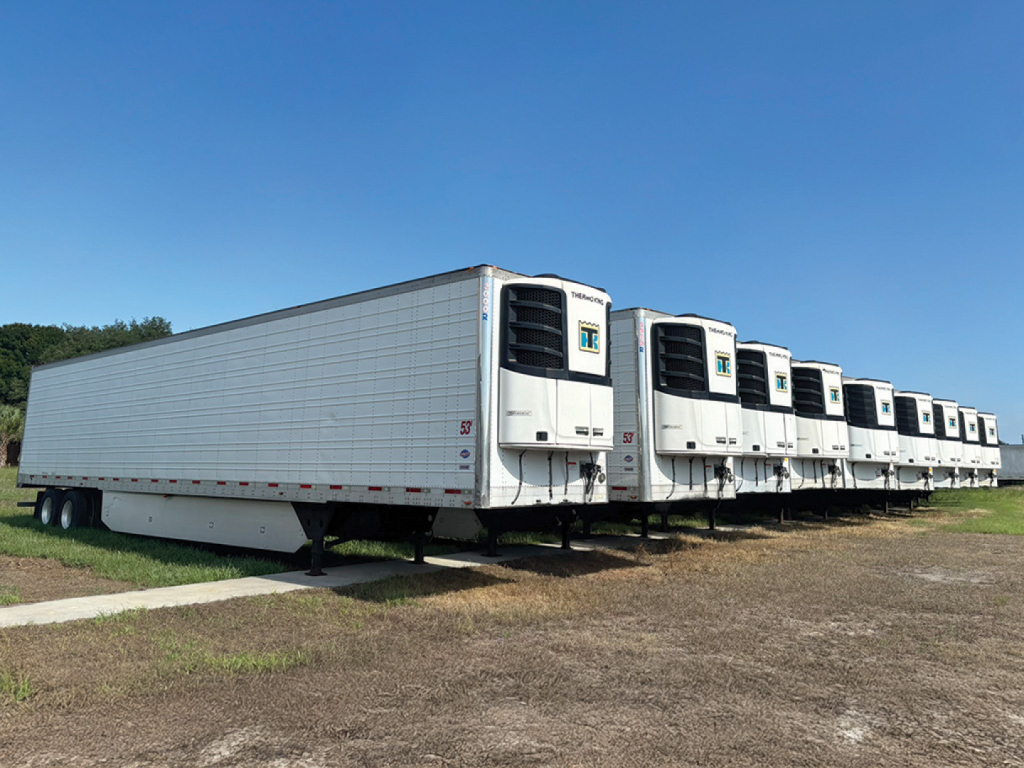

Have 2019 utility reefer trailer to sell? List it here to reach thousands of buyers.
2019 Utility Reefer Trailers
Utility reefers from this period are known for aluminum construction, stainless front corners or front radius panels, stainless rear frames, and heavy-duty aluminum duct floors designed to maintain airflow under palletized freight. A buyer should pay close attention to floor wear, groove condition, and the height of the wearband or scuff liner, especially if the trailer spent time in multi-stop foodservice or heavy grocery work. Rear doors, door seals, quilted door construction, rear vents, and anti-dock-walk protection all affect temperature retention and daily usability. Corrugated side panels, underbody support condition, and signs of patchwork around the lower sidewall can tell you a lot about prior dock damage and overall trailer life.
Suspension and running gear matter because a reefer is rarely judged on box condition alone. Many 2019 Utility reefer trailers were spec'd with air ride suspension, sliding tandems or air-pin sliders, 22.5 low-profile tires, and tire inflation systems such as PSI or TireMaax. Disc brakes show up on some units and can be a major plus for fleets focused on stopping performance and maintenance intervals. Wheel material, closed tandem layout, kingpin setting, and axle spread all need to match the freight network and bridge law requirements you run. Side skirts may also be present on fleet-spec trailers and can improve fuel economy on longer regional and over-the-road routes.
For a buyer comparing several 2019 Utility reefer trailers, the best units usually stand out in a few measurable areas: reefer unit hours, documented maintenance, floor and door condition, suspension spec, and evidence of airtight temperature control. This equipment class is commonly used for frozen food, fresh produce, dairy, meat, and other temperature-sensitive freight where stable airflow and insulation integrity are critical. Utility reefers hold strong market acceptance because parts support is broad, body specs are familiar to most shops, and the 3000R design is well known across grocery, distribution, and dedicated contract carriage operations.
Frequently Asked Questions about 2019 Utility Reefer Trailers
What should I look at first on a 2019 Utility reefer trailer?
Start with the refrigeration unit and the trailer floor. The reefer unit determines temperature performance, emissions compliance, and repair cost, so buyers should review engine hours, service records, and major component replacements. After that, inspect the aluminum duct floor, chute, door seals, and interior lining because airflow problems and insulation leaks can hurt load integrity just as much as a weak unit.
Are 2019 Utility reefer trailers usually California compliant?
Some are and some are not, so this should never be assumed from the trailer year alone. Compliance depends on the refrigeration unit spec and its emissions status, not just the box. If the trailer may run California or other strict emissions jurisdictions, verify the reefer unit model, CARB status, and any retrofit or replacement documentation before purchase.
Why is the Utility 3000R so common in reefer fleets?
The Utility 3000R is common because it has a widely accepted body design, strong parts availability, and specs that fit grocery, food distribution, and over-the-road refrigerated freight. Many shops already know the platform, which helps with maintenance and resale. Buyers also tend to like the combination of aluminum construction, stainless wear areas, and proven floor and door configurations.
How important are reefer unit hours on a 2019 trailer?
Reefer unit hours are one of the most important comparison points because they give a quick view of how heavily the refrigeration system has been used. Higher hours do not automatically mean a bad trailer, but they do increase the importance of maintenance records, engine rebuild history, and inspection of the compressor, evaporator, and controls. A lower-hour unit with poor service history can still be a worse buy than a higher-hour unit that was maintained correctly.
What trailer specs matter most for refrigerated freight operations?
The most important specs are trailer length, insulation package, floor type, door design, suspension, tandem configuration, tire size, and refrigeration unit capacity. In practice, many buyers also focus on tire inflation systems, disc versus drum brakes, side skirts, rear vent configuration, and kingpin setting because those details affect uptime, fuel economy, and how well the trailer fits specific docks, lanes, and payload requirements.