
Used Reefer Trailers For Sale in New York
Browse used reefer trailers for sale in New York, including 48- and 53-foot refrigerated trailers with Carrier or Thermo King units.
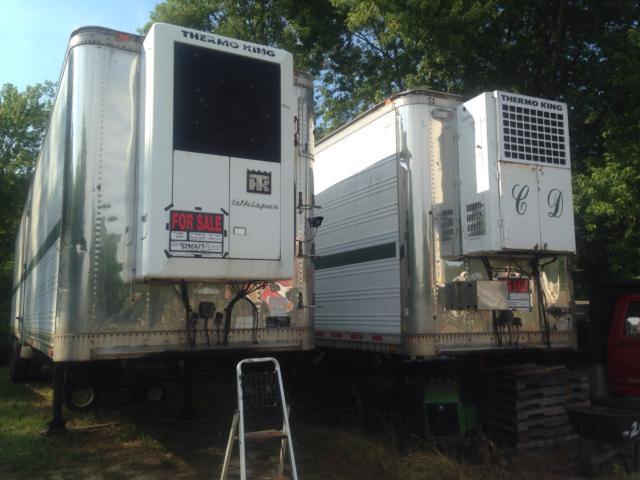

Have used reefer trailer to sell? List it here to reach thousands of buyers.
Used Reefer Trailers in New York
The refrigeration unit is the first thing to evaluate on a used reefer. Carrier Vector, Carrier X4, and Thermo King Precedent units are common in fleet service, and the right choice depends on your freight profile, service network, and maintenance history. Buyers should look closely at engine hours, electric standby if needed, temperature pull-down performance, multi-temp capability, and the condition of the evaporator and bulkhead setup. In New York, where trailers may run everything from city grocery routes to long-haul Northeast corridors, a unit that starts clean in cold weather and holds setpoint through frequent door openings is critical.
Trailer body specs matter just as much as the reefer unit. Aluminum flat floors are common for mixed freight and palletized loads, while aluminum duct floors help maintain airflow under cargo for better temperature consistency. Features like scuff liners or scuff plates, stainless steel door frames, front radius panels, cold chutes, and E-track all affect durability and load securement. Roll-up rear doors, swing doors, curbside doors, and liftgates can make a major difference depending on the delivery environment. Urban and foodservice applications around New York City, Long Island, and the Hudson Valley often benefit from liftgates and side access, while linehaul grocery work may favor straightforward rear loading and maximum cube.
Suspension, brake spec, and trailer condition deserve a hard look on any used reefer trailer. Air ride suspension is often preferred for ride quality on sensitive freight, while spring suspension can simplify maintenance in some operations. Disc brakes, tire inflation systems, side skirts, and sliding tandem setups can improve stopping performance, tire life, and fuel economy. Buyers should inspect the floor for rot or damage, check door seal condition, confirm the insulation has not been compromised, and review any reefer service records, PM history, and unit downloads. A used reefer trailer with a sound box, dependable refrigeration unit, and the right delivery spec can still be a strong revenue trailer in regional or long-haul refrigerated service.
Frequently Asked Questions about Used Reefer Trailers in New York
What should I check first on a used reefer trailer?
Start with the refrigeration unit and the trailer box condition. Engine hours, service records, temperature performance, and alarm history tell you a lot about the reefer unit’s remaining life. On the trailer itself, inspect the floor, insulation, door seals, interior liner, front wall, and roof for damage or moisture intrusion. A reefer trailer can look acceptable outside and still have expensive issues if the box no longer holds temperature efficiently.
What is the difference between a flat floor and a duct floor on a reefer trailer?
A flat floor is common on reefer trailers used for mixed freight and frequent loading because it is easier to work with forklifts and pallets. A duct floor is designed to improve airflow under the load, which helps maintain more even temperature distribution throughout the trailer. For produce, frozen freight, and other temperature-sensitive cargo, duct floors are often preferred because airflow is a key part of cargo protection.
Is a multi-temp reefer trailer worth it?
A multi-temp reefer trailer is worth considering if your operation hauls freight with different temperature requirements in the same load. These trailers can use bulkheads and zone controls to separate frozen, chilled, and fresh product. They are more complex than single-temp reefers, so maintenance and operating costs can be higher, but they add flexibility for grocery distribution, foodservice, and dedicated retail routes.
Are 48-foot or 53-foot reefer trailers better for New York operations?
That depends on the route and delivery environment. A 53-foot reefer is the standard choice for maximum cube and linehaul refrigerated freight, especially for grocery and warehouse distribution. A 48-foot reefer can be a better fit for tighter urban areas, older facilities, and regional work where maneuverability is more important than maximum trailer capacity. In New York, buyers often balance dock access and street conditions against payload and cubic capacity.
How important are liftgates, side doors, and roll-up doors on a reefer trailer?
These options are highly important if the trailer is being used for route delivery or locations without dock access. A liftgate supports direct-to-store and foodservice deliveries, a curbside door can speed up stop-and-go unloading, and a roll-up door may be useful in high-frequency delivery applications. For pure dock-to-dock freight, these features may add cost and weight without much benefit, so the right spec depends on how the trailer will actually be worked.