
Trailmobile Reefer Trailers For Sale
Shop Trailmobile reefer trailers for cold-chain freight, grocery, produce, and dock storage with guidance on specs, insulation, doors, and reefer setups.
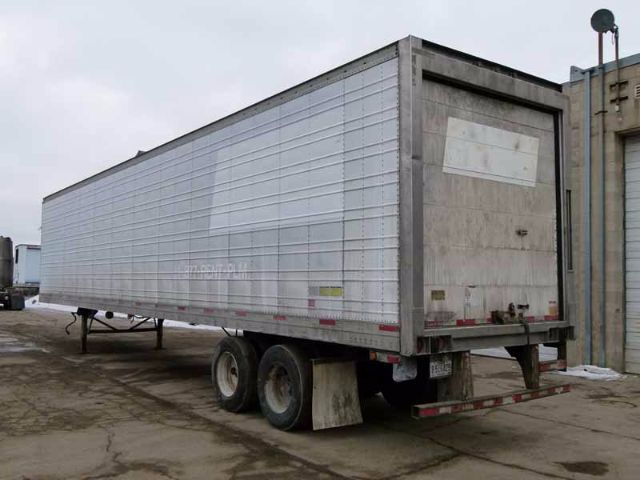
Selling a trailmobile reefer trailer? List your trailmobile reefer trailer for sale and reach thousands of commercial buyers.
Trailmobile Reefer Trailers
Trailmobile refrigerated trailers are commonly used for produce, meat, dairy, frozen foods, pharmaceuticals, floral loads, and any freight that needs stable temperature control in transit or at the dock. Some units are equipped with swing doors, while others have roll-up doors for frequent dock work or stationary storage applications. Buyers comparing used reefer trailers should pay attention to interior width and height, ducting, scuff liners, floor type, and bulkhead setup if they plan to run multi-temp loads. If the trailer is going to serve as cold storage, the reefer unit's electric standby capability can be a major advantage, especially on units designed to operate on 208V, 220V, or 460V shore power.
Reefer unit brand and service history matter, but trailer condition matters just as much. Check the front wall for stress cracks, inspect the roof and seams for prior repairs, and look at the floor for soft spots, deep wear, or moisture intrusion. Landing gear, suspension, brakes, tires, air lines, and lights should be evaluated like any other van trailer, but refrigerated equipment also needs close inspection of the evaporator area, drains, and insulation envelope. On older Trailmobile reefer trailers, a clean interior and tight body can be more valuable than cosmetic appearance outside because product protection and temperature pull-down are what affect daily usability.
A good Trailmobile reefer trailer can serve both over-the-road and storage duty if the spec matches the application. Fleets moving palletized grocery freight may prioritize a durable floor, dependable unit hours, and easy dock access. Regional operators may focus on lower operating cost, simple maintenance, and legal axle settings. Buyers using a reefer trailer for stationary warehouse overflow should pay special attention to electric standby, door style, and how well the trailer holds temperature when cycling. The best choice is the trailer that fits the freight, loading environment, and service plan without forcing compromises on temperature control.
Frequently Asked Questions about Trailmobile Reefer Trailers
What should I inspect first on a used Trailmobile reefer trailer?
Start with the refrigeration system, body integrity, and floor condition. A reefer trailer can look acceptable outside and still have weak insulation, poor door seals, or hidden moisture damage that hurts temperature control. Check the reefer unit hours, maintenance records, and pull-down performance, then inspect the roof, front wall, floor, interior lining, drains, and doors for damage or air leaks.
Are Trailmobile reefer trailers suitable for stationary cold storage?
Yes, many Trailmobile reefer trailers are used as stationary cold storage or dock-side warehouse overflow. This is especially practical when the trailer has electric standby capability, which allows the refrigeration unit to run on site power instead of diesel. For storage use, buyers should focus on insulation condition, door access, floor durability, and the available voltage such as 208V, 220V, or 460V.
What length reefer trailer is best, 48 foot or 53 foot?
The best length depends on freight density, dock space, lane requirements, and state bridge laws. A 53 foot reefer gives more cube and is common in grocery and distribution work, while a 48 foot reefer can still fit many regional and storage applications and may be easier to maneuver in tighter yards. Length should be matched to payload, customer docks, and loading pattern rather than chosen on cube alone.
What door style is better on a reefer trailer, swing doors or roll-up doors?
Swing doors are common on over-the-road reefer trailers because they usually provide a tighter seal and full rear opening for loading pallets. Roll-up doors can be useful for frequent dock work and some storage applications where quick access matters. The tradeoff is that buyers should inspect seal condition, clearance, and maintenance needs closely because door performance directly affects temperature retention.
How important is the reefer unit's electric standby feature?
Electric standby is very important if the trailer will spend time at a dock, yard, or facility as stationary refrigerated storage. It allows the unit to operate from external power, which can reduce fuel use, lower noise, and support continuous cooling without idling a diesel engine. For buyers considering storage duty, confirming the unit's compatible voltage and the condition of the standby components is a key step.