
Reefer Trailers For Sale in Minnesota

Have reefer trailer to sell? List it here to reach thousands of buyers.
Reefer Trailers in Minnesota
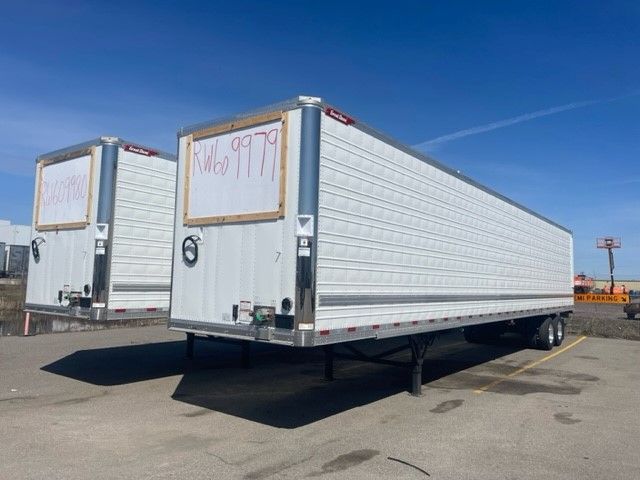
Sidewall construction, floor design, and interior protection make a big difference in long-term operating cost. Many refrigerated trailers use aluminum floors, corrugated or smooth side panels, and extended scuff liners to handle pallets, carts, and repeated dock contact. Quilted stainless rear doors, stainless front corners, stainless headers, and rub rails are common on higher-spec trailers because they hold up better in heavy distribution work and frequent loading cycles. Buyers should pay close attention to floor wear, crossmember spacing, roof condition, and water tightness at the rear frame and door openings. If the freight mix includes produce, dairy, meat, frozen food, or pharmacy-related loads, interior cleanliness and consistent box temperature recovery are just as important as the reefer unit brand.
Brake and suspension spec also matter more on a reefer than some buyers expect. Disc brakes are increasingly common on newer refrigerated trailers because they improve stopping performance and reduce maintenance variability in hard regional service. Air ride suspension helps protect temperature-sensitive freight and reduces trailer shock on rough roads. Sliding tandem axles give better flexibility for bridge laws and axle scaling, while low-profile 22.5 tires, aluminum wheels, tire inflation systems, and aerodynamic packages such as roof fairings or trailer top kits can improve uptime and fuel economy. In northern climates, it is smart to inspect wiring, LED lighting, ABS function, mud flap brackets, and corrosion around the rear sill, slider assembly, and suspension hangers.
Used reefer trailer buyers should look closely at reefer unit hours, service records, evaporator condition, bulkhead area, and the trailer’s ability to hold setpoint under load. A clean pre-owned trailer with sound insulation, tight doors, good brakes, and a well-maintained unit can be a strong value, but deferred maintenance gets expensive fast in refrigerated service. Newer trailers often add roll-stability systems, disc brakes, telematics readiness, and improved thermal efficiency, which can matter for private fleets, grocery distribution, and for-hire carriers trying to control claims and downtime. The best reefer trailer spec depends on lane length, commodity type, dock frequency, and how strict the shipper is about temperature compliance.
Frequently Asked Questions about Reefer Trailers in Minnesota
What is the most common reefer trailer size and configuration?
The most common reefer trailer on the market is a 53-foot by 102-inch tandem axle trailer with sliding tandems and air ride suspension. That setup fits standard truckload refrigerated freight, works well with most dock operations, and gives carriers flexibility for axle compliance and load distribution. Many buyers also look for aluminum wheels, low-profile 22.5 tires, swing rear doors, and either a Carrier or Thermo King nose-mounted refrigeration unit.
What should I inspect first on a used reefer trailer?
Start with the refrigeration unit, the box, and the rear doors. Unit hours, maintenance history, start-run performance, and temperature pull-down matter just as much as the trailer structure. On the trailer itself, check door seals, rear frame water tightness, floor wear, scuff liners, roof condition, suspension, brakes, and the slider assembly. A reefer can look clean outside and still have expensive issues in insulation performance or unit reliability.
Are disc brakes worth it on a reefer trailer?
Disc brakes are often worth the added cost for fleets running refrigerated freight in regional or high-stop service. They generally provide stronger, more consistent braking, shorter stopping performance, and easier visual inspection than drum brakes. On a reefer trailer carrying high-value or temperature-sensitive freight, better brake response can help reduce risk and improve maintenance planning, especially in congested traffic and winter weather.
Which reefer unit brand is better, Carrier or Thermo King?
Both Carrier and Thermo King are widely accepted in refrigerated trucking, and both have strong support networks. The better choice often comes down to dealer coverage on your lanes, technician familiarity, parts availability, and the service history of the specific unit. A well-maintained unit from either manufacturer is usually more valuable than a neglected unit with a preferred badge.
What features matter most for reefer trailers operating in Minnesota?
Cold-weather reliability, insulation integrity, and corrosion resistance should be near the top of the list. Buyers in Minnesota should pay close attention to battery and starting performance on the reefer unit, door seals, trailer floor condition, moisture intrusion, LED lighting, ABS operation, and corrosion around the rear frame and suspension. Stainless rear components, aluminum wheels, tire inflation systems, and a sound air ride suspension setup can also help support uptime in harsh seasonal conditions.