
Great Dane Reefer Trailers For Sale in Georgia
Shop Great Dane reefer trailers for sale in Georgia. Compare 53-foot refrigerated and multi-temp specs, reefer units, floors, doors, and tandems.

Selling a great dane reefer trailer? List your great dane reefer trailer for sale and reach thousands of commercial buyers.
Great Dane Reefer Trailers in Georgia
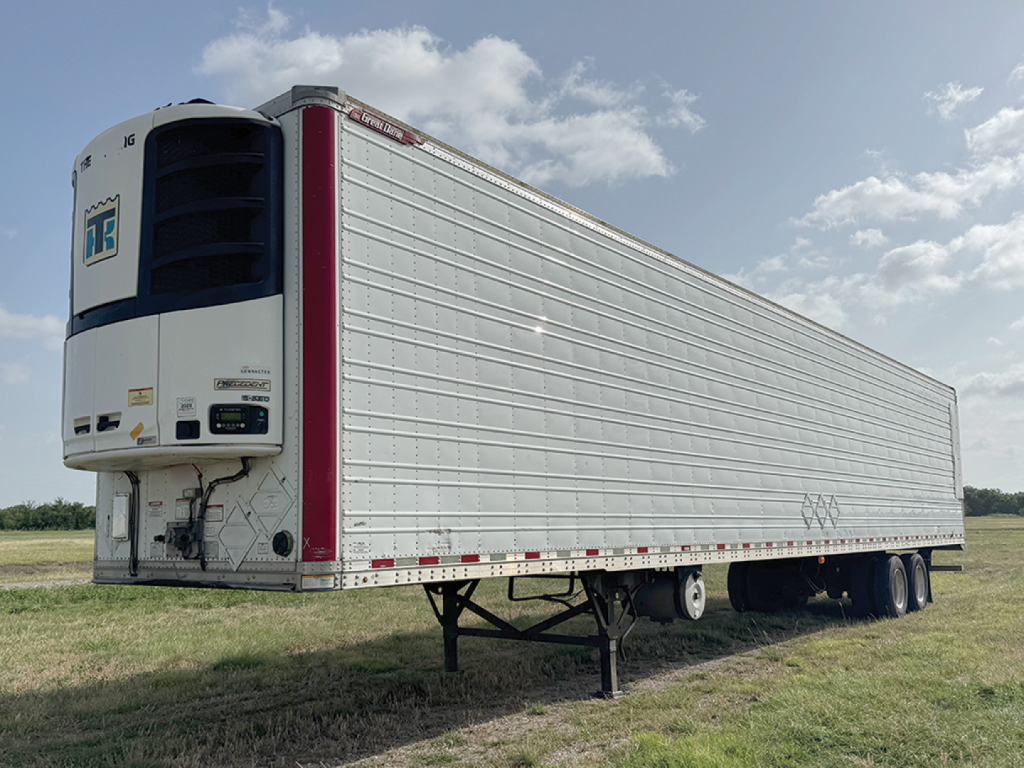
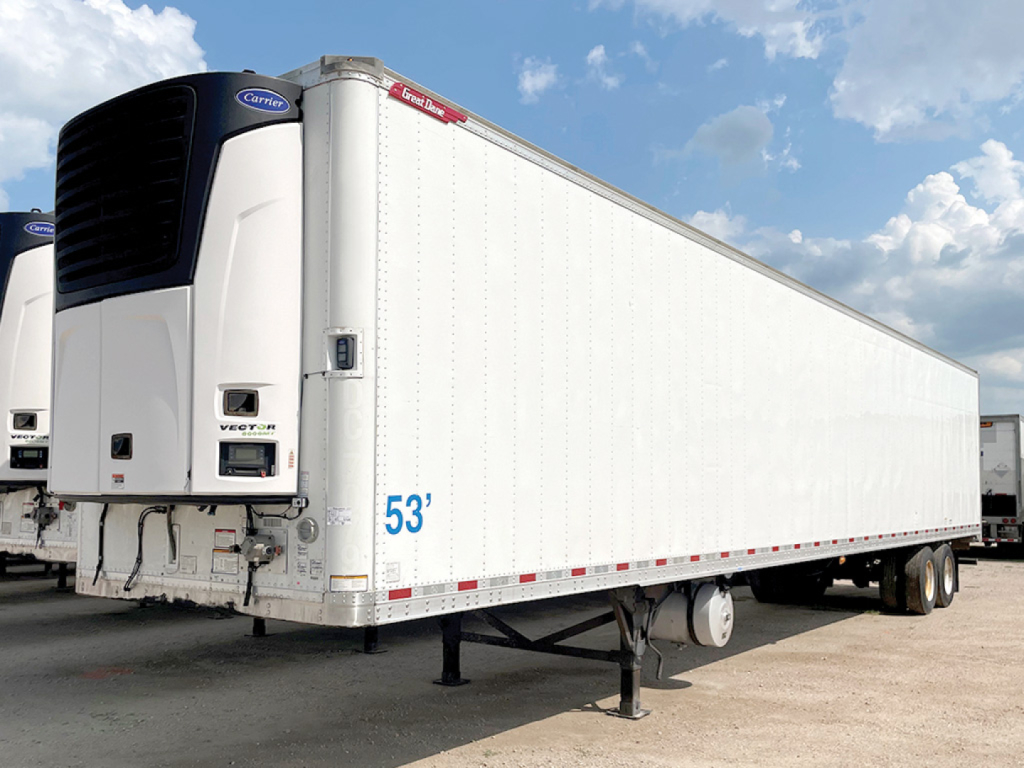
The reefer unit deserves as much scrutiny as the trailer itself. Great Dane reefers are commonly paired with Thermo King or Carrier units, including multi-temp configurations such as Thermo King Precedent or Carrier Vector systems. For route work, grocery distribution, and foodservice, multi-temp capability can be more valuable than raw cooling capacity because it lets one trailer handle frozen, chilled, and fresh product in the same trip. Buyers should verify total engine hours, run hours, maintenance history, evaporator setup, defrost performance, and controller operation. If the trailer has a roll-up rear door, check that against your application. Roll-up doors can be useful in stop-and-go delivery work, but swing doors may seal differently and affect rear opening clearance, cube use, and serviceability.
Inside the box, floor and wall condition matter because they directly affect sanitation, airflow, and forklift durability. Aluminum flat floors are common on Great Dane reefers and hold up well in heavy dock traffic, but they need to be inspected for wear, patches, and any damage that could affect load handling or drainage. Scuff plates, scuff liners, threshold plates, and E-track are strong indicators that the trailer was spec'd for repeated loading cycles and cargo securement flexibility. Stainless steel rear door frames are another worthwhile detail because they tend to hold up better around high-impact rear openings. On used multi-temp trailers, inspect bulkheads, chute hardware, drain channels, and return-air pathways, since those components have a big effect on temperature recovery and zone consistency.
Running gear and aero specs can also tell you a lot about the intended duty cycle. Sliding tandems remain a practical spec for bridge-law compliance and dock positioning, especially in regional freight. Spring suspension is still common and straightforward to maintain, while disc brakes and tire inflation systems can reduce maintenance headaches and improve uptime on higher-mileage operations. Side skirts may help fuel economy on linehaul lanes, but they should be checked for damage if the trailer has spent time in urban delivery service. For Georgia buyers, it also makes sense to think about ambient heat, humidity, and long idle periods at distribution centers. A reefer trailer that looks similar on paper can perform very differently depending on insulation condition, door seal integrity, unit service records, and how it was previously used.
Frequently Asked Questions about Great Dane Reefer Trailers in Georgia
What should I inspect first on a used Great Dane reefer trailer?
Start with the reefer unit, the box integrity, and the floor. Confirm the refrigeration unit brand, model, hours, and service records, then check that it pulls down to temperature correctly and cycles as it should. After that, inspect the front wall, roof, sidewalls, and rear frame for damage or repairs that could affect insulation performance. Floor condition is critical on reefers because heavy forklift traffic, patches, or wear can affect sanitation, drainage, and long-term durability.
Are Great Dane multi-temp reefer trailers a good fit for grocery and foodservice work?
Yes. Great Dane multi-temp reefers are commonly used in grocery distribution and foodservice because they can support separate temperature zones within one trailer. That makes them useful for mixed loads carrying frozen, chilled, and fresh product on the same route. The value depends on the reefer unit configuration, bulkhead condition, evaporator setup, and how well the trailer maintains temperature during frequent stops and door openings.
What reefer unit brands are commonly found on Great Dane reefer trailers?
Thermo King and Carrier are the most common unit brands found on Great Dane reefer trailers. In multi-temp service, buyers often see Thermo King Precedent and Carrier Vector series units. The best choice depends less on the nameplate alone and more on local service support, parts availability, maintenance history, and whether the unit is properly matched to the trailer's intended route profile and temperature requirements.
Why do sliding tandems matter on a 53-foot reefer trailer?
Sliding tandems give the operator flexibility to adjust axle position for bridge compliance, weight distribution, and dock approach. On a 53-foot reefer, that matters because refrigerated freight can be dense, and axle placement can determine whether a load scales legally. Sliding tandems also help when working with different warehouse layouts, uneven yards, or regional regulations that affect kingpin-to-rear-axle dimensions.
Is a roll-up door better than swing doors on a reefer trailer?
It depends on the application. Roll-up doors can be efficient for route delivery because they reduce door swing clearance at crowded docks and in city deliveries. Swing doors can offer a larger clear opening and may be preferred in some warehouse operations. The key is to evaluate door seal condition, ease of operation, and how the door style fits your loading pattern, cube requirements, and stop frequency.