
Unknown Lowboy Trailers For Sale
Browse lowboy trailers for heavy equipment hauling, with key details on deck height, capacity, axle setup, ramps, and hauling applications.
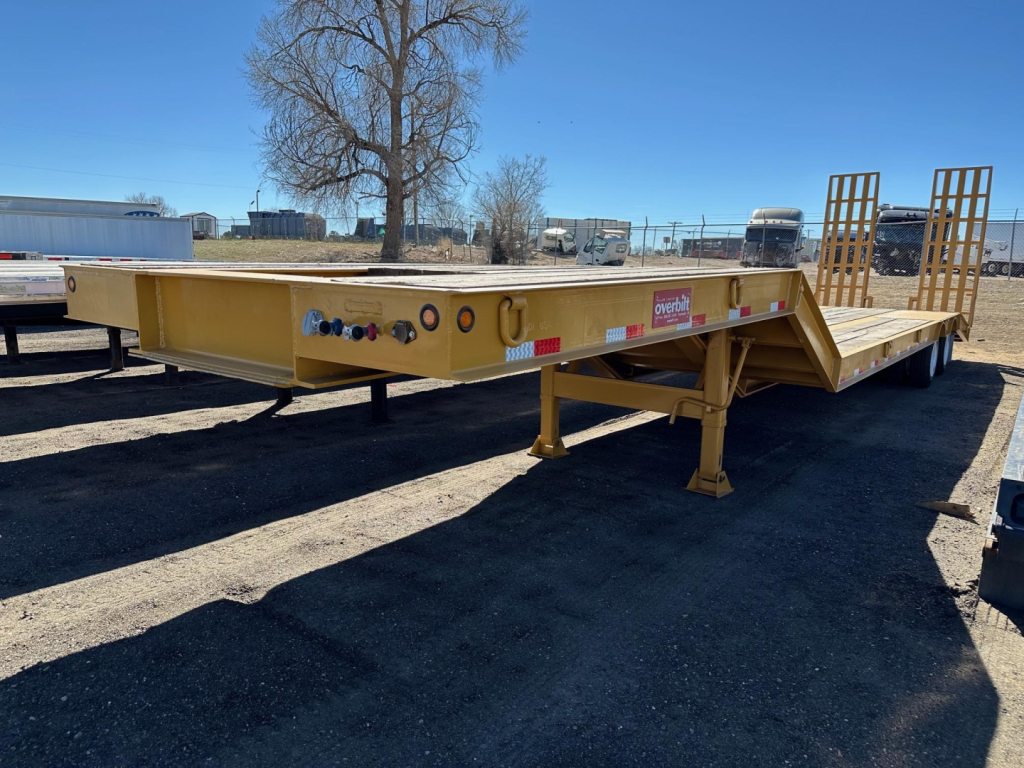
Selling a unknown lowboy trailer? List your unknown lowboy trailer for sale and reach thousands of commercial buyers.
Unknown Lowboy Trailers
Capacity and deck configuration are usually the first things to compare. Many equipment-style lowboys in this class use tandem axles and fixed neck construction, often with a wood or apitong floor over a steel frame. Buyers should look closely at lower deck length, overall deck length, width, and gross vehicle weight rating, then match those numbers to the machines they actually move. A 20-ton to 25-ton lowboy is common for mid-size iron, but payload changes quickly based on trailer tare weight, axle spacing, ramp design, and state bridge laws. A beavertail with hydraulic air ramps can speed up loading and reduce operator effort, especially for fleets making frequent equipment moves between jobsites.
Suspension, tire size, and axle layout also affect how a lowboy performs in real service. Spring ride remains common on straightforward equipment trailers because it is durable and easy to maintain, while closed tandem setups are often chosen for simplicity and ruggedness. Buyers hauling over rough access roads should inspect frame condition, crossmember spacing, ramp hinges, and deck wear closely. Tie-down points, D-rings, chain pockets, wheel covers, mud flaps, and a usable toolbox all add day-to-day value because securement and loading efficiency matter as much as rated capacity.
Unknown-make lowboy trailers can still be practical buys when the trailer has a solid frame, clear weight ratings, and components that are easy to service. In this category, condition and specification matter more than branding alone. Focus on legal payload, deck height, ramp function, brake condition, tire age, and evidence of prior overload or hard jobsite use. A well-configured lowboy, also known in some markets as an equipment trailer or equipment hauler, can be a dependable solution for contractors, rental fleets, and owner-operators moving heavy machinery on a regular schedule.
Frequently Asked Questions about Unknown Lowboy Trailers
What is a lowboy trailer used for?
A lowboy trailer is used to haul heavy equipment and tall machinery that need a lower deck height than a flatbed can provide. Common loads include excavators, bulldozers, wheel loaders, pavers, rollers, and farm equipment. The lower main deck helps keep the overall loaded height legal while improving stability during transport.
What should I check first when comparing lowboy trailers?
Start with payload capacity, lower deck length, overall width, axle configuration, and deck height. Those specs determine whether the trailer can legally and safely carry your equipment. After that, inspect the frame, floor condition, ramps, brakes, suspension, tires, and tie-down equipment, because real-world condition has a direct effect on uptime and repair cost.
Are hydraulic ramps better than manual ramps on a lowboy?
Hydraulic ramps can be a strong advantage for operators who load equipment often. They reduce setup time, lower physical effort, and can improve safety when handling heavier machines. Manual ramps are simpler and may cost less to maintain, but they are slower to deploy and less convenient for frequent loading cycles.
How do I know what ton rating I need in a lowboy trailer?
Choose a ton rating based on the actual operating weight of the machines you haul, not just the published base weight. Attachments, buckets, blades, fuel, and accessories can add substantial weight. You also need to consider trailer tare weight, axle limits, and state bridge law requirements, because a trailer may be rated for a certain payload but still face legal limits depending on how the load is configured.
Is an unknown-brand lowboy trailer worth considering?
An unknown-brand lowboy can be worth buying if the structure is sound and the specifications fit your operation. Many buyers place more value on frame integrity, brake system condition, axle components, ramp operation, and parts serviceability than on the badge. A careful inspection is important, especially around the neck, main deck, suspension mounts, and areas that show signs of heavy equipment loading or repeated overload.