
Nuttall Lowboy Trailers For Sale
Shop Nuttall lowboy trailers built for heavy equipment hauling, with detachable goosenecks, low deck heights, strong capacities, and job-ready specs.
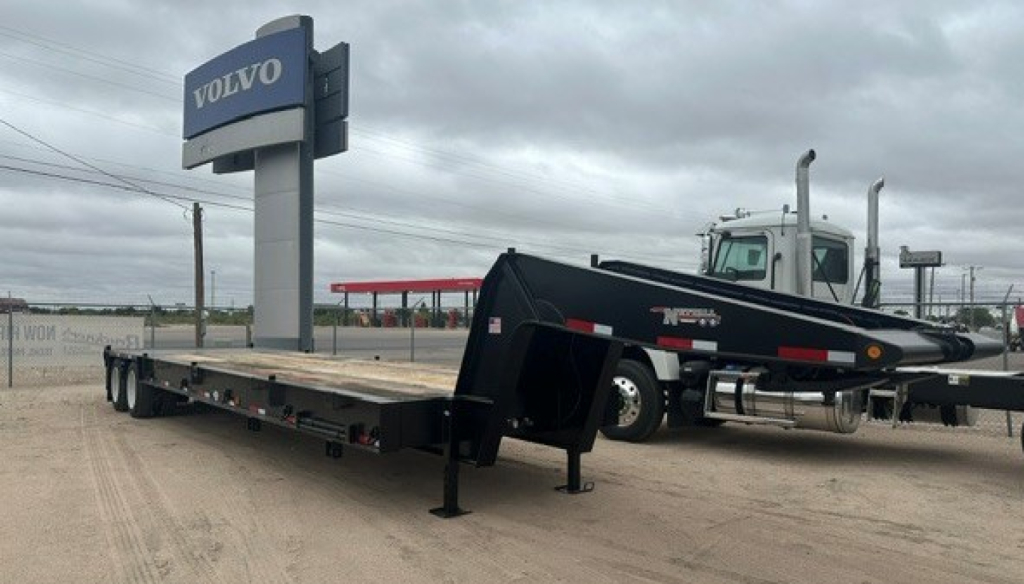
Selling a nuttall lowboy trailer? List your nuttall lowboy trailer for sale and reach thousands of commercial buyers.
Nuttall Lowboy Trailers
Most buyers compare lowboys by usable deck height, axle configuration, and whether the trailer has a fixed neck or a detachable gooseneck. A detachable gooseneck, often called an RGN in some configurations, makes loading tracked equipment easier because the machine can be driven on from the front instead of climbing ramps at the rear. Depending on the build, Nuttall lowboy trailers may be set up as tandem axle, tri-axle, or multi-axle units for higher legal payloads and better load distribution. Suspension type, axle spacing, tire size, apitong or hardwood flooring, and deck length all matter if the trailer will see mixed freight instead of one dedicated machine.
For buyers working across state lines, legal dimensions and permit requirements are just as important as rated capacity. Lowboy trailers are chosen specifically to manage height restrictions, bridge law considerations, and concentrated machine weights. Frame construction, main beam design, crossmember spacing, and neck structure all affect long-term durability when the trailer is used in construction, paving, aggregate, oilfield, or utility fleets. Features like outriggers, D-rings, chain slots, winch tracks, full-width rear loading ramps, and self-cleaning deck layouts can make a noticeable difference in day-to-day productivity.
A good Nuttall lowboy fit comes down to the machines you haul most often and the roads you run. Buyers should look closely at loaded deck length between the neck and wheels, ground clearance, swing clearance for taller equipment, and how the trailer handles concentrated weight over the deck. If the application includes oversized iron, it also makes sense to review removable wheel areas, jeep and booster compatibility where applicable, and the ease of service on air, electrical, brake, and hydraulic components. The right lowboy trailer should reduce permit headaches, speed up loading, and hold up under repeated heavy-haul work cycles.
Frequently Asked Questions about Nuttall Lowboy Trailers
What is a Nuttall lowboy trailer used for?
A Nuttall lowboy trailer is used to haul heavy equipment and machinery that needs a lower deck height than a standard flatbed can provide. Common loads include excavators, bulldozers, wheel loaders, pavers, compactors, and other construction or industrial machines. The low deck helps keep overall loaded height within legal limits and improves stability when carrying tall or heavy freight.
What should I look for when comparing Nuttall lowboy trailers?
The key factors are rated capacity, deck length, loaded deck height, axle count, and neck design. Buyers should also check suspension type, flooring material, tie-down layout, ramp or detachable gooseneck loading method, and how the trailer is configured for the weight and footprint of the equipment being hauled. If the trailer will cross multiple states, axle spacing and overall dimensions matter for permits and legal compliance.
What is the advantage of a detachable gooseneck on a lowboy trailer?
A detachable gooseneck allows front loading, which is often safer and more efficient for tracked and heavy machinery. Instead of climbing steep rear ramps, the machine can be driven directly onto the deck from the front after the neck is removed. This setup can reduce loading time, improve approach angle, and make the trailer more practical for fleets hauling larger equipment every day.
How do axle configuration and capacity affect lowboy trailer performance?
Axle configuration directly affects legal payload, weight distribution, ride quality, and permit flexibility. Tandem and tri-axle lowboys are common for general heavy equipment hauling, while more specialized multi-axle setups are used for heavier or concentrated loads. A trailer's capacity rating should be matched to the actual operating weight of the machine, plus attachments, fuel, and any jobsite accessories that travel with it.
Are lowboy trailers better than flatbeds for hauling construction equipment?
For many types of construction equipment, a lowboy trailer is the better choice because it offers lower deck height and better handling of heavy, tall loads. A flatbed can work for smaller machines, but larger equipment often exceeds legal height or becomes more difficult to load safely. Lowboys are specifically designed for machinery transport, which is why they are common in construction, road building, and heavy-haul applications.