
New Alpha Lowboy Trailers For Sale in Colorado

Have new alpha lowboy trailer to sell? List it here to reach thousands of buyers.
New Alpha Lowboy Trailers in Colorado
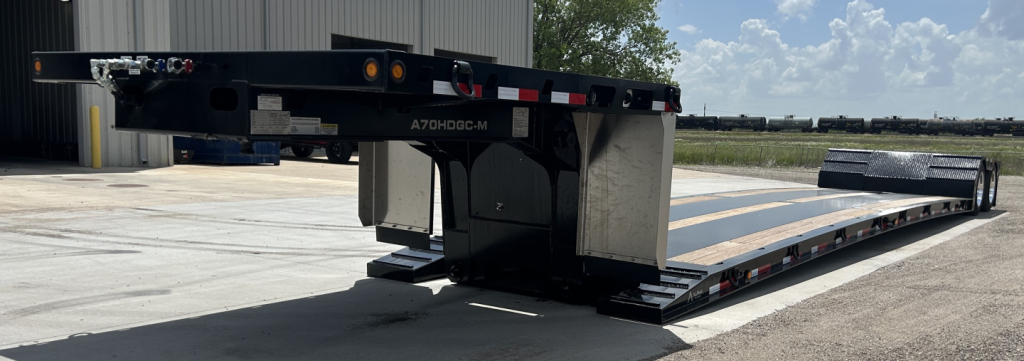
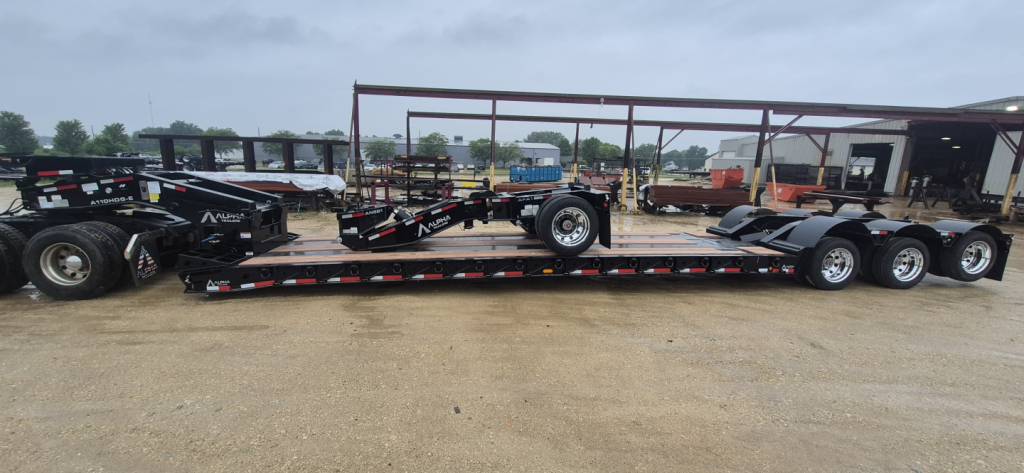
Alpha lowboys are often spec'd with hydraulic detachable necks around 10'5", which speeds loading without separate ramps and helps operators handle tracked equipment more safely. Key setup details include kingpin setting, swing clearance, loaded deck height, and ground clearance. Buyers moving machines with low belly clearance should pay close attention to loaded deck height and the breakover point between the deck and neck. Mini-deck versions can be a strong fit when maximizing usable deck width and keeping a very low profile is the priority. Extendable lowboys add flexibility for longer loads such as cranes, components, or equipment with attachments that push beyond a fixed well length.
The running gear and rear frame matter just as much as the deck. Common specs in this class include tandem or tri-axle groups with 25,000 lb axles, air ride suspension, drum brakes, spring brakes, ABS, raise-lower valves, and lift axle provisions. Many buyers also look for trailers prepped for a flip axle or stinger to increase legal payload options and improve bridge compliance. Features like Airweigh scales, manual ride height control, and adjustable ride height can make a real difference in day-to-day operation, especially on uneven loading areas or when matching deck angle to specific machines. Tire size, axle spacing, and wheel-end spec are worth reviewing closely if the trailer will see high annual mileage or mixed on-road and jobsite use.
Deck equipment and securement details are where one lowboy can separate itself from another. Apitong decking, D-rings, chain slots, swing-out outriggers, stake pockets, flag holders, boom trough covers, toolboxes, and wide load sign provisions are all practical features for equipment haulers. In Colorado, buyers should also think about terrain, elevation, and permit routing. Steeper grades and mixed highway-jobsite work put added value on stable suspension behavior, good weight distribution, and a trailer that can adapt to different machine footprints. A new Alpha lowboy is typically chosen by fleets and owner-operators that need a purpose-built heavy haul trailer with straightforward specs, strong securement options, and the versatility to handle both routine iron and occasional over-dimensional work.
Frequently Asked Questions about New Alpha Lowboy Trailers in Colorado
What is the difference between a lowboy and an RGN lowboy trailer?
A lowboy is a general term for a low deck heavy equipment trailer, while an RGN, or removable gooseneck, is a specific lowboy design with a detachable front neck. Hydraulic detachable necks let the trailer drop to the ground for drive-on loading, which is especially useful for tracked machines and heavy equipment with limited ramp approach angles. Many Alpha lowboys in this category are hydraulic detachable models because they improve loading speed and reduce the need for separate ramp setups.
How do I choose the right capacity for a new lowboy trailer?
Start with the heaviest machine you plan to haul, then look beyond the headline ton rating. Concentrated load rating, axle configuration, well length, and whether the trailer is designed for a flip axle or stinger can matter as much as the gross capacity number. A trailer rated at 55 tons may be ideal for one type of equipment, while a 70,000 lb or 80,000 lb model may fit better if your loads are longer, heavier in a short footprint, or subject to stricter axle weight distribution requirements.
When does an extendable lowboy make more sense than a fixed deck model?
An extendable lowboy makes sense when load length changes from job to job or when attachments, booms, or components regularly exceed the well length of a fixed trailer. Extendable designs give more flexibility for long or awkward freight while still keeping a low deck height for taller equipment. The tradeoff is added complexity and, in some operations, extra weight compared with a fixed deck trailer. Buyers who mostly haul one machine size often prefer a fixed deck, while mixed-use heavy haul operations usually benefit from the added range of an extendable model.
Why are deck height and ground clearance so important on a lowboy?
Deck height affects overall loaded height, which directly impacts bridge clearance, route planning, and permit requirements. Ground clearance matters because equipment with low undercarriage clearance can hang up during loading or while crossing transitions. A low loaded deck height is valuable for tall machines, but it has to be balanced against enough ground clearance to work on uneven yards and jobsites. That is why buyers often compare loaded deck height, neck angle, ride height adjustment, and breakover geometry before deciding on a trailer spec.
What features are most useful for equipment securement on a lowboy trailer?
The most useful securement features are the ones that match the equipment you haul most often. D-rings, chain slots, and stake pockets provide flexible anchor points for chains and binders. Swing-out outriggers help with wider machine tracks or attachments. Apitong decking holds up well under repeated equipment loading, and boom troughs can help lower excavator stick or boom position for better legal height. Buyers who routinely handle oversize loads also tend to value flag holders, wide load sign provisions, and toolboxes that keep securement gear organized and accessible.