
Used Flatbed Trailers For Sale in New Mexico
Browse used flatbed trailers in New Mexico. Compare 48' and 53' specs, axle setups, deck materials, securement features, and legal dimensions.
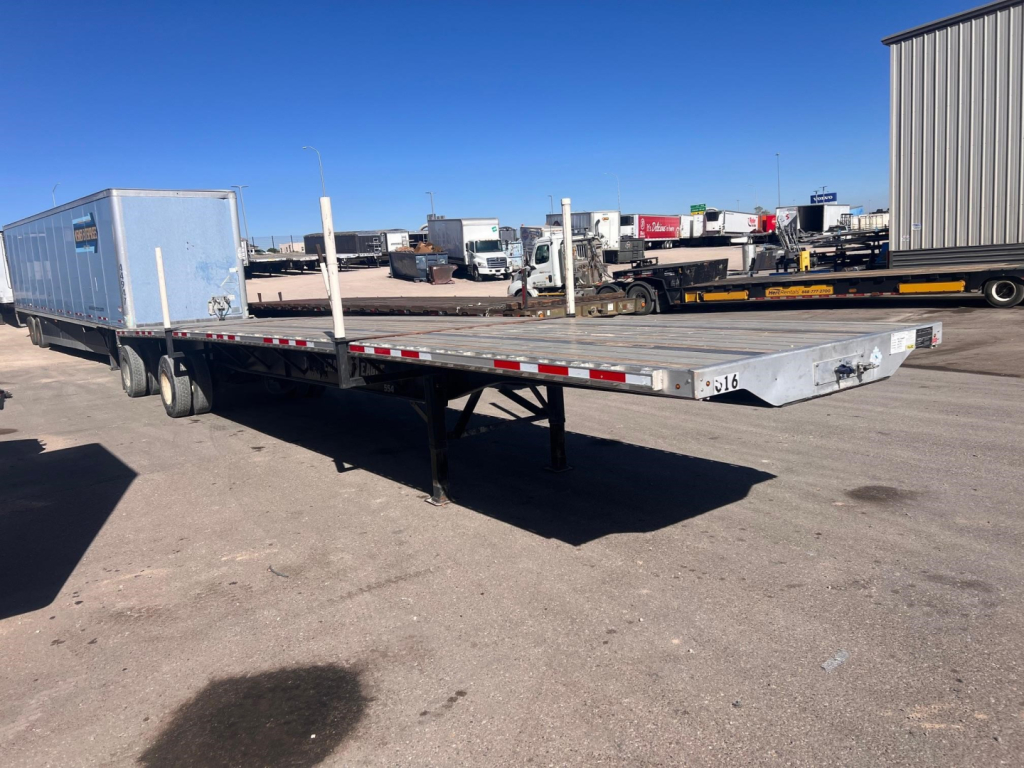
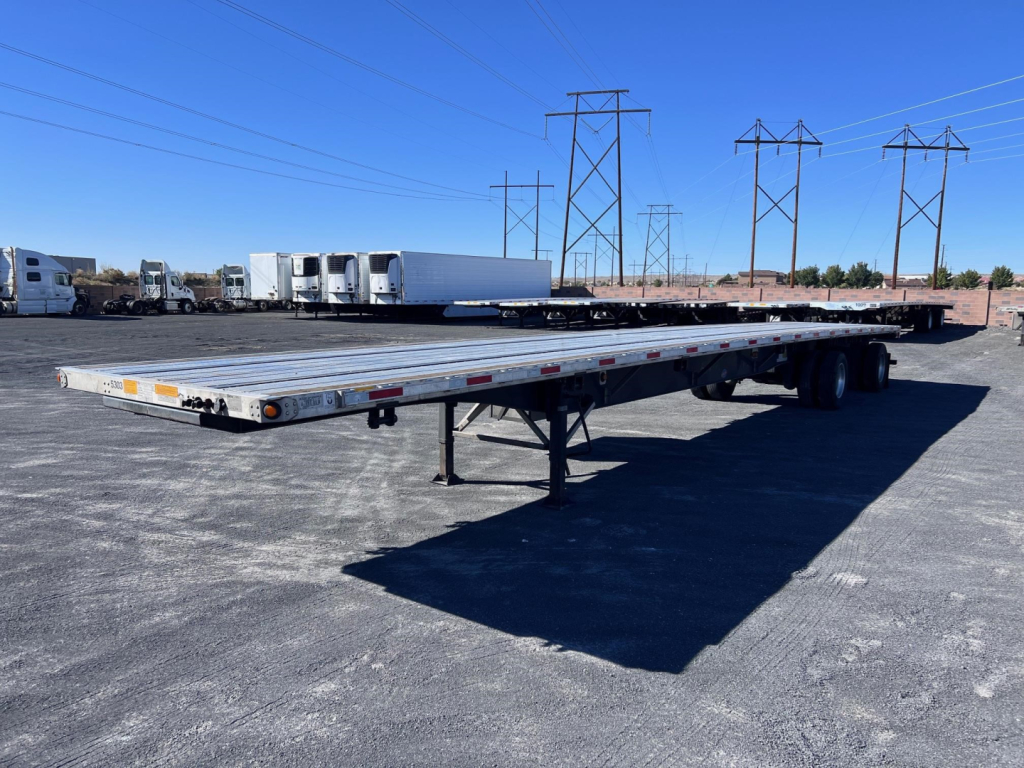
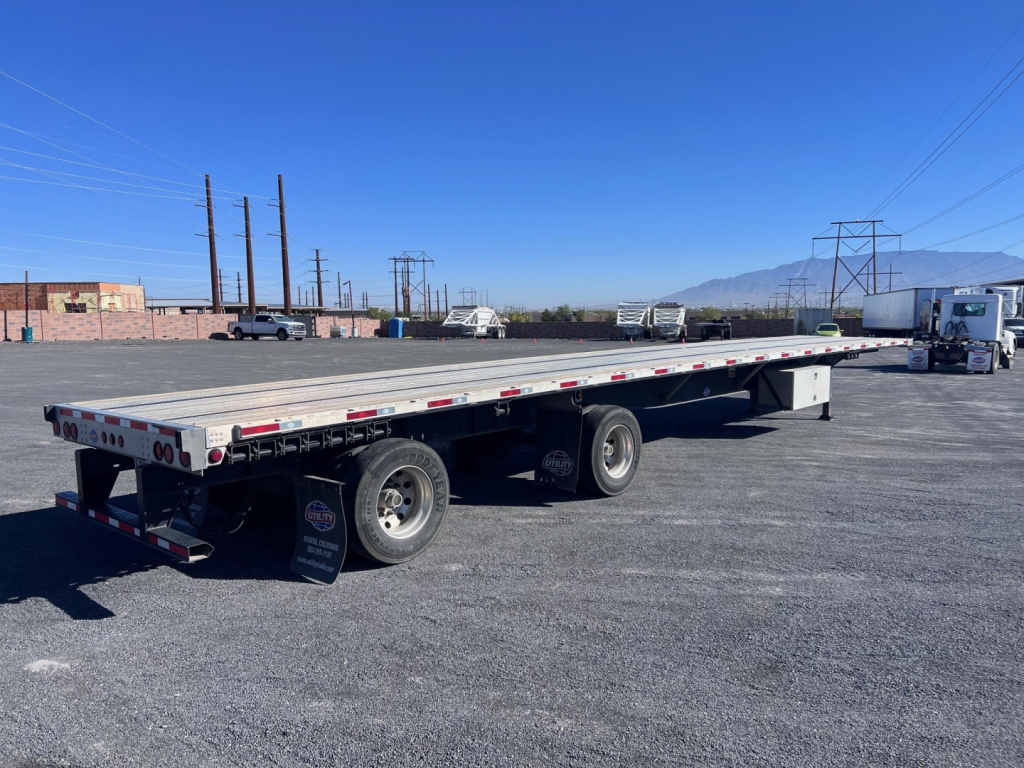
Selling a used flatbed trailer? List your used flatbed trailer for sale and reach thousands of commercial buyers.
Used Flatbed Trailers in New Mexico
Frequently Asked Questions about Used Flatbed Trailers in New Mexico
What should I look at first on a used flatbed trailer?
Start with the frame, deck, and running gear. Check the main beams for repairs, cracks, corrosion, or signs of overloading. Look closely at crossmembers, deck fasteners, nail strips, and the condition of the flooring, especially around forklift traffic areas and coil wells. Then inspect suspension components, axle alignment, brakes, wheel ends, tires, and air system condition. On a working flatbed, securement hardware matters just as much as structure, so stake pockets, winches, sliding winch tracks, pipe spools, rub rail, and chain tie-down points should all be usable and not bent or torn out.
What is the difference between a combo flatbed and an all-steel flatbed?
A combo flatbed typically uses steel main beams with aluminum crossmembers, rails, or other structural components to reduce tare weight while keeping strength where it is most needed. That lighter empty weight can increase payload capacity and improve operating efficiency. An all-steel flatbed is usually heavier but can be attractive in severe-duty applications where buyers want a simpler repair profile and lower upfront cost. The right choice depends on your freight, route density, and how much value you place on payload versus durability and repair strategy.
Is a spread axle or tandem axle flatbed better?
Neither is automatically better. A spread axle flatbed can help distribute weight and can be a strong fit for certain loads, but it may be less maneuverable in tight yards and can increase tire scrub in sharp turns. A tandem axle flatbed is generally easier to maneuver and remains common for general freight. Some trailers add a sliding rear axle to give more compliance flexibility. The best setup depends on the states you run, the freight you haul, and how often you deal with crowded jobsites, ports, or urban delivery points.
What flatbed features matter most for steel, pipe, or machinery loads?
For steel and machinery, buyers usually prioritize a strong securement package and a deck built for concentrated weight. Common features include coil packages, pipe spools, stake pockets, sliding winches, nail strips, and robust rub rails. Air ride suspension is also common because it helps protect sensitive freight and improves ride quality. If the trailer will see repeated loading by crane or forklift, pay close attention to deck wear, crossmember spacing, and the overall condition of the load surface. Matching the trailer’s securement layout to your actual freight mix is more important than chasing one brand or model alone.
Are 48-foot and 53-foot used flatbed trailers both common in New Mexico?
Yes. Both sizes are common, but they serve slightly different needs. A 48-foot flatbed remains practical for many heavy or specialized loads and can be easier to place in certain operations. A 53-foot flatbed is often preferred when deck length is the priority for general building materials, palletized freight, or mixed loads. Buyers in New Mexico often compare not just length, but overall tare weight, axle placement, suspension type, and state-to-state legality because many loads move beyond local lanes into Texas, Arizona, Colorado, and the broader Southwest.