
Rogers Drop Deck Trailers For Sale
Shop Rogers drop deck trailers. Compare detachable lowboy-style specs, axle setups, deck dimensions, capacities, and heavy-haul features.
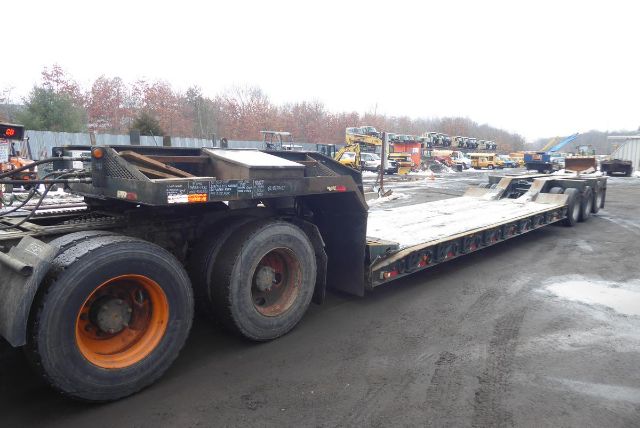
Have rogers drop deck trailer to sell? List it here to reach thousands of buyers.
Rogers Drop Deck Trailers
Capacity and axle arrangement matter more in this category than brand name alone. Rogers drop deck trailers are often found in tandem, tri-axle, and specialized heavy-spec configurations, with air ride or mechanical suspension depending on age and intended use. A buyer hauling construction equipment, agricultural machines, or compact crawler units should check axle spacing, brake condition, tire size, and whether the trailer is set up for axle additions to spread weight. Rear deck ratings and well ratings can differ, so it is important to match the trailer to the actual machine footprint, not just the advertised tonnage. A 50-ton class trailer, for example, may have the structural strength for the work, but legal payload still depends on bridge law, state permitting, and how the machine sits in the well.
Loading style is another key decision. Some Rogers drop decks use flip ramps for easier loading of wheeled equipment, while others are configured more like a detachable lowboy for heavier tracked machinery. Buyers should inspect ramp width, ramp length, hinge area condition, deck transition points, and kingpin area wear, especially on older units. Crossmember condition, neck structure, suspension mounts, and frame rail straightness tell you more about remaining service life than paint or cosmetics. On heavy application trailers, details like deck height at the well, rear deck clearance, and the availability of tie-down points can directly affect loading safety and permit compliance.
For buyers comparing used Rogers drop deck trailers, the best fit usually comes down to the type of freight and the lanes being run. A contractor moving mixed equipment locally may prioritize rugged construction and simple loading, while a permit-heavy carrier may need specific overall height control, axle flexibility, and stronger tie-down arrangements. Rogers has long been associated with heavy-duty trailer design, so many units in this category appeal to operators who need a durable platform for machinery rather than general palletized freight. The right trailer is the one whose dimensions, structure, and axle package match the equipment you haul most often, with enough flexibility to stay useful when job requirements change.
Frequently Asked Questions about Rogers Drop Deck Trailers
What is the difference between a Rogers drop deck trailer and a standard step deck?
A Rogers drop deck trailer in this class is often heavier built and more equipment-focused than a standard commodity step deck. Many are designed to handle concentrated machine loads, lower deck heights, and specialized loading setups such as flip ramps or heavy-duty rear decks. A standard step deck is commonly used for palletized freight, building materials, and lighter equipment, while a heavy-spec Rogers drop deck is more likely to be used for construction, industrial, and agricultural machinery.
What specs matter most when buying a used Rogers drop deck trailer?
The most important specs are well length, well height, rear deck length, deck height, axle configuration, and rated capacity. Buyers should also verify suspension type, brake condition, tire size, frame integrity, floor condition, and tie-down equipment such as D-rings, outriggers, or wings. If the trailer will haul machinery, ramp design and rear transition angle are also critical because they affect loading safety and machine clearance.
Can a Rogers drop deck trailer haul heavy equipment legally at its rated capacity?
The structural rating of the trailer is only part of the equation. Legal hauling capacity depends on axle group spacing, tractor setup, state bridge laws, permit requirements, and how the load is positioned on the trailer. A trailer may be built for 50 tons or more, but the legal payload on the road can be lower unless the combination is configured correctly with the proper axle spread or additional equipment such as a flip axle.
Are older Rogers drop deck trailers still a good buy?
Older Rogers trailers can still be a solid investment if the structure is sound and the trailer matches the intended work. Heavy steel construction often gives these trailers long service life, but buyers should inspect the neck, frame rails, crossmembers, suspension mounts, floor, ramp assemblies, and air or hydraulic systems closely. A thorough inspection matters more than model year because repair costs on structural or loading components can outweigh the purchase price advantage.
What kinds of freight are commonly hauled on Rogers drop deck trailers?
Common loads include skid steers, mini excavators, backhoes, compact dozers, tractors, industrial equipment, and other machinery that benefits from a lower deck height. Some units are also used for taller freight that would exceed legal height on a flatbed. The exact application depends on trailer capacity, deck dimensions, and loading style, but this category is generally chosen for equipment that needs a stable low platform and secure tie-down points.