
Drop Deck Trailers For Sale in New York
Browse drop deck trailers for sale, including tandem and tri-axle models built for taller freight, machinery, and legal-height hauling.
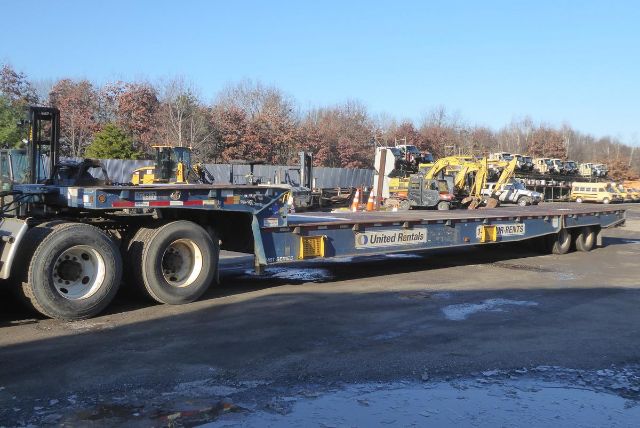
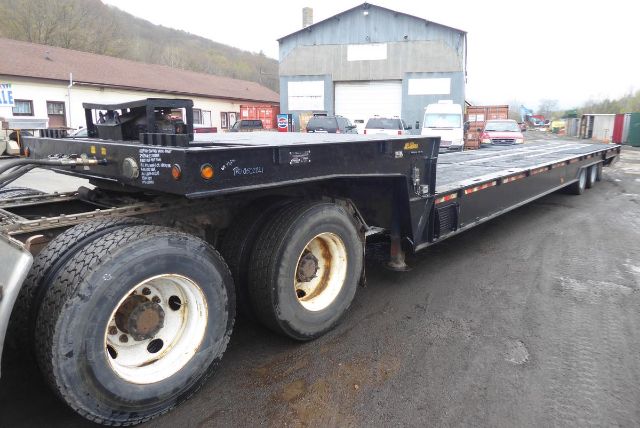
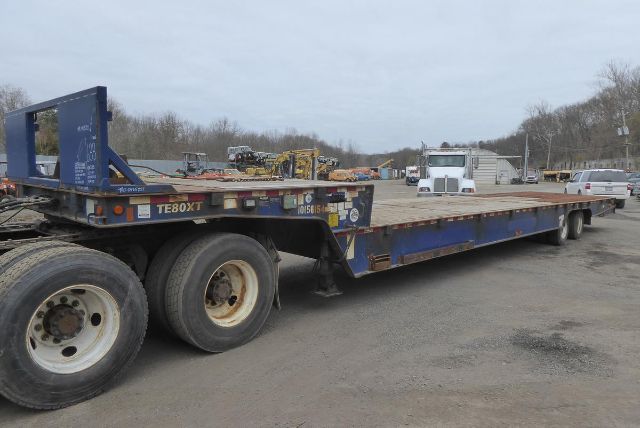
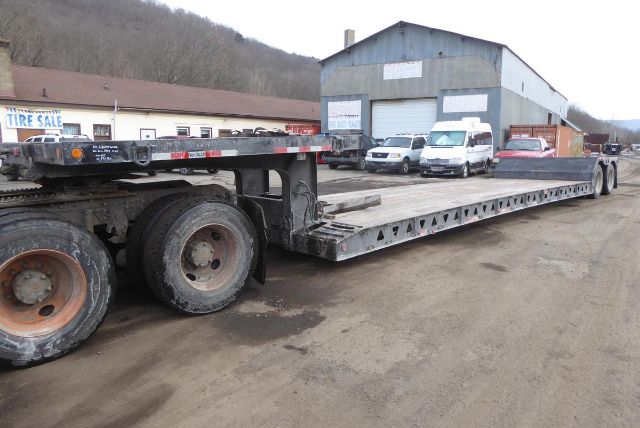
Selling a drop deck trailer? List your drop deck trailer for sale and reach thousands of commercial buyers.
Drop Deck Trailers in New York
The main buying decision is how the trailer will be loaded and what weight concentration it needs to handle. Many drop decks are spec'd with tandem axles, but heavier applications may call for tri-axle setups, sliding tandems, or the ability to run a flip axle. Main deck length, top deck usable space, and rear transition design all affect how practical the trailer is for machinery, building products, palletized freight, or longer pieces that need careful axle placement. Hydraulic ramps, rear deck sections, fold-under tails, and fixed or hydraulic winches are common on equipment-oriented models. If you regularly haul compact equipment, scissor lifts, ag machinery, or concentrated loads in a short footprint, pay close attention to rated load concentration over 10 feet, deck reinforcement, and frame condition.
Most drop deck trailers in this class use steel construction with wood or wood-over-steel floors, air ride suspension, and either 17.5-inch or 22.5-inch rubber depending on intended deck height and capacity. Lower-profile 17.5-inch tires can help keep deck height down, while 22.5-inch tires may be preferred for certain heavier-duty or older configurations. Crossmember spacing, floor condition, tie-down layout, D-rings, chain slots, and rub rail design all matter if the trailer will see mixed freight instead of a single dedicated commodity. Buyers should also look closely at brake condition, suspension wear, kingpin area integrity, ramp cylinders, hydraulic plumbing, and any corrosion around the main frame, rear transitions, and deck supports, especially on older Northeast trailers exposed to road salt.
A good drop deck is a balance of legal payload, deck geometry, and securement options. If the work is mostly general freight, a lighter tandem unit with a clean main deck and solid tie-down package may be the better fit. If the trailer is going to load self-propelled equipment, haul dense freight, or work on jobsites, a heavier frame, hydraulic load-assist features, and higher GVWR can justify the extra tare weight. The best listings in this category usually make deck measurements, axle configuration, suspension type, and concentrated load rating easy to verify because those are the details that determine how useful a drop deck trailer will be day to day.
Frequently Asked Questions about Drop Deck Trailers in New York
What is the difference between a drop deck trailer and a flatbed trailer?
A drop deck trailer has two deck levels instead of one continuous deck. The front upper deck sits over the tractor drives, and the main deck drops down behind it to provide more legal load height than a standard flatbed. That lower deck is the reason step decks are commonly used for taller freight such as machinery, crated equipment, and stacked materials that would exceed height limits on a flatbed.
What deck height is typical on a drop deck trailer?
Most drop deck trailers have a top deck height around the mid-50-inch range and a main deck height commonly around 34 to 40 inches, depending on tire size, suspension, and frame design. Trailers on 17.5-inch tires usually sit lower than comparable units on 22.5-inch tires. Buyers should confirm actual loaded and unloaded deck height if legal height is a critical part of the job.
Are sliding tandems important on a drop deck trailer?
Sliding tandems can be very useful when axle placement and bridge law compliance matter. They allow the trailer to adjust weight distribution for different freight lengths and loading positions, which can help with permit loads, dense cargo, and varying state bridge requirements. Fixed tandems are simpler and often lighter, but a sliding axle setup adds flexibility for operators who haul more than one type of load.
What should I inspect first on a used drop deck trailer?
Start with the frame, neck, kingpin area, deck supports, suspension, brakes, and any hydraulic components if the trailer has ramps or a hydraulic rear section. On older units, inspect closely for rust, cracked welds, frame repairs, and corrosion around crossmembers and transitions. Floor condition, tire size match, air system leaks, securement points, and ramp cylinder performance also deserve attention because those items directly affect safety and day-to-day usability.
What kind of freight is a drop deck trailer best suited for?
Drop deck trailers are commonly used for machinery, construction equipment, agricultural equipment, steel products, palletized freight, building materials, and other loads that benefit from extra deck height without moving into lowboy territory. They are especially useful for freight that is too tall for a flatbed but still needs the loading flexibility of an open trailer. Models with ramps, winches, and reinforced deck sections are often chosen for equipment hauling, while cleaner deck layouts are better suited to general commodity freight.