
Fontaine Drop Deck Trailers For Sale in Illinois
Browse Fontaine drop deck trailers for hauling taller freight, machinery, steel, and palletized loads with lower deck height and strong payload balance.
Learn moreNo exact matches found for your search
Showing Drop Deck Trailers in Illinois instead.
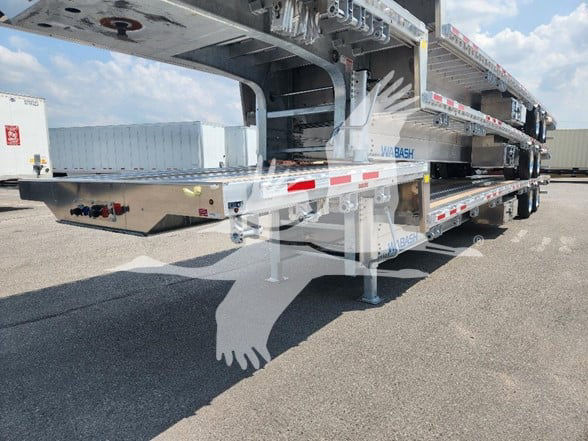
Have fontaine drop deck trailer to sell? List it here to reach thousands of buyers.
About Fontaine Drop Deck Trailers in Illinois
A buyer looking at Fontaine step decks should pay close attention to deck length, rear axle configuration, suspension, and the trailer’s material construction. Common setups include 48-foot and 53-foot lengths, often with a shorter upper deck and a longer lower deck for maximizing usable freight space. Fontaine is well known for aluminum-steel composite designs that balance tare weight and durability, with steel in high-stress structural areas and aluminum components used to save weight. Air ride suspension is common and desirable for ride quality and load protection, while spread axles or sliding rear axles can help with bridge compliance, weight distribution, and state-by-state operational flexibility.
Spec details make a real difference in day-to-day use. Buyers often look for sliding winch tracks, chain ties, multiple tie-down points, coil package options, nail strips, and toolboxes because securement flexibility is critical on a drop deck. Floor type matters too. Aluminum floors help keep weight down, while steel-intensive builds may appeal in severe-duty applications where abuse resistance is the priority. Tire size, including 22.5 low-profile rubber on some configurations, can affect loaded deck height. If the trailer will handle steel, machinery, or container-compatible work, it is worth confirming deck ratings, concentrated load capability, twist-lock availability, and kingpin setting to make sure the trailer matches the tractor and the freight profile.
Used Fontaine drop deck trailers are often evaluated first on frame condition, deck wear, suspension health, brake system condition, tire life, and signs of hard securement damage around winch tracks and tie-down areas. On older units, inspect crossmembers, floor attachment points, lighting, air system leaks, and any corrosion around steel-to-aluminum transition areas. A well-spec'd Fontaine step deck can serve a broad range of open-deck applications, but the right choice depends on freight mix, legal route requirements, and how much value you place on tare weight versus long-term structural ruggedness.
Frequently Asked Questions
What is the main advantage of a Fontaine drop deck trailer over a standard flatbed?
A Fontaine drop deck trailer gives you lower deck height on the main deck, which allows taller freight to move legally without immediately requiring a lowboy or permit-heavy configuration. That makes it a strong choice for machinery, taller palletized products, crated industrial equipment, and certain steel or building material loads that would sit too high on a conventional flatbed.
What specs matter most when buying a Fontaine step deck trailer?
The most important specs are overall length, upper deck and lower deck dimensions, trailer weight, axle spacing, suspension type, and securement equipment. Buyers should also verify floor construction, concentrated load ratings, kingpin setting, axle slide or spread configuration, and whether the trailer includes features such as winch track, chain ties, coil package components, toolboxes, or container locks. These details determine how well the trailer fits your freight and route requirements.
Are Fontaine drop deck trailers typically aluminum, steel, or a combination of both?
Many Fontaine drop deck trailers use a combination design with steel main structural components and aluminum in areas where weight savings are valuable. This aluminum-steel composite approach is popular because it balances strength, durability, and payload efficiency. Some buyers prefer more steel content for severe-duty use, while others prioritize lower tare weight to maximize legal payload.
Is air ride suspension important on a drop deck trailer?
Air ride suspension is important for many drop deck applications because it improves ride quality and reduces shock transmitted to sensitive or high-value freight. It also supports better load protection on rougher roads and is widely preferred for general open-deck work. For buyers hauling machinery, finished products, or freight with stricter handling requirements, air ride is often a practical must-have rather than a luxury.
What should I inspect on a used Fontaine drop deck trailer?
On a used Fontaine drop deck, inspect the main beams, crossmembers, floor condition, suspension components, brakes, tires, wheel ends, and all lighting and air lines. Pay close attention to tie-down points, winch track areas, ramps if equipped, and any corrosion or fatigue where steel and aluminum components meet. A careful inspection should also confirm that the trailer’s deck remains straight, the axle alignment is correct, and the trailer can meet current inspection and compliance standards.