
New Dura Haul Drop Deck Trailers For Sale in Kansas
New Dura Haul drop deck trailers for sale in Kansas. Compare 53-foot models with beavertails, ramps, air ride, and spread axle setups.
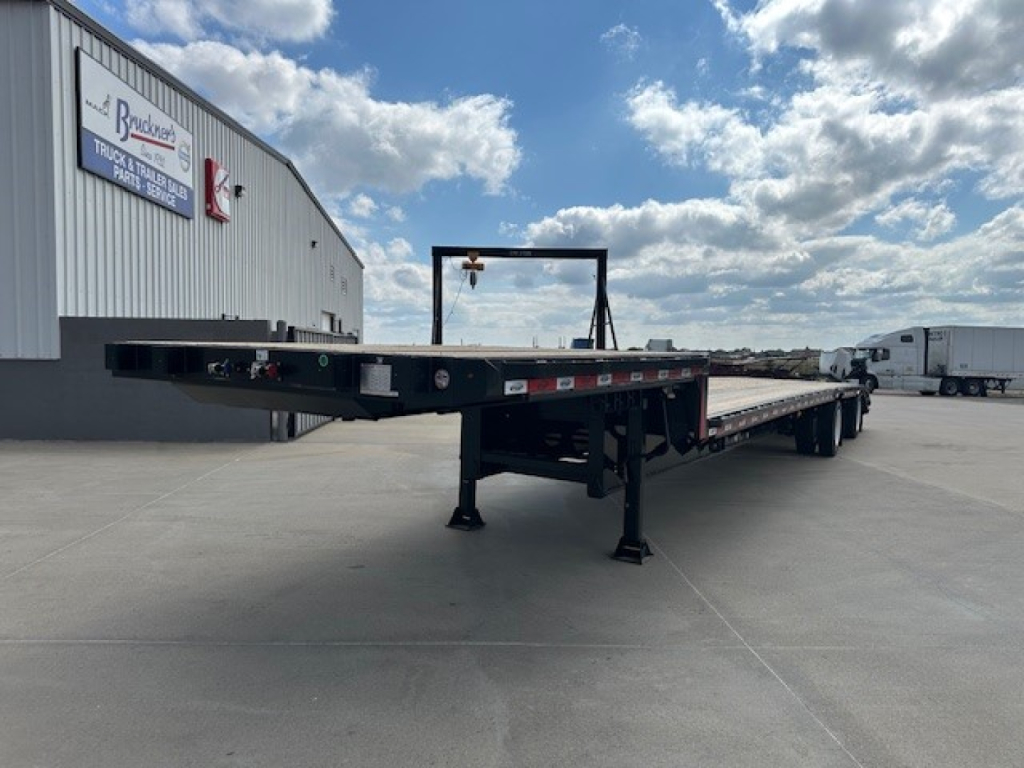
Selling a new dura haul drop deck trailer? List your new dura haul drop deck trailer for sale and reach thousands of commercial buyers.
New Dura Haul Drop Deck Trailers in Kansas
The most important buying decision on a drop deck is deck layout. Many 53-foot Dura Haul models use an upper deck around 10 feet 6 inches and a lower deck around 42 feet 6 inches, giving a good balance between maneuverability and usable lower deck space. A beavertail with flush-mount spring-assisted ramps is especially useful if the trailer will see compact equipment, skid steers, small tractors, lifts, or other wheeled and tracked machines. Buyers should also look closely at axle configuration and suspension. A spread axle setup, such as a 122-inch spread, can improve weight distribution and stability, while air ride suspension helps protect sensitive freight and smooths out rougher secondary roads.
Structural details make a real difference in daily use. Twelve-inch crossmember spacing generally points to a trailer built for harder service and concentrated loads. Sliding winches along the driver side speed up securement changes across mixed freight, and the trailer width, deck height, and kingpin setting all affect how easily the unit fits your typical freight profile. On new drop deck trailers, it is worth checking landing gear spec, tire size, wheel type, and air system features like a liquid-filled air gauge and dump valve. Those details can reduce loading time, improve dock and yard handling, and lower maintenance headaches over the life of the trailer.
For buyers comparing new Dura Haul step deck trailers in Kansas, the right spec usually comes down to freight mix. If the trailer will spend most of its time on machinery, ramps and a beavertail are high-value features. If it will be used more like a flatbed with height-sensitive freight, deck length, securement options, and suspension setup may matter more. A properly spec'd drop deck trailer should match your commodity lanes, axle laws, and loading methods first, then address convenience features second. That approach usually produces better payload flexibility and a stronger long-term return.
Frequently Asked Questions about New Dura Haul Drop Deck Trailers in Kansas
What is the advantage of a drop deck trailer compared with a flatbed?
A drop deck trailer, also called a step deck trailer, gives you a lower main deck than a standard flatbed. That lower deck allows taller freight to move legally without requiring the same level of permitting that a taller flatbed load might trigger. It also improves loading for certain equipment and can provide better overall freight flexibility for machinery, building products, and industrial cargo.
Why would a buyer choose a beavertail and ramps on a new Dura Haul drop deck trailer?
A beavertail and ramp package is a practical choice when the trailer will regularly haul self-loading equipment such as skid steers, compact excavators, scissor lifts, small tractors, or other rubber-tire and track machines. Flush-mount spring-assisted ramps make loading faster and reduce the need for separate loading equipment. For buyers focused on machinery transport, this setup can improve turnaround time and jobsite convenience.
What does spread axle mean on a drop deck trailer, and why does it matter?
A spread axle trailer has the rear axles positioned farther apart than a close-coupled tandem. On a drop deck, that wider spacing can improve weight distribution, help with certain bridge-law and state weight considerations, and add stability on the road. The tradeoff is that spread axle trailers can scrub tires more in tight turns, so the benefit depends on your routes, commodity weights, and operating environment.
How important is crossmember spacing on a step deck trailer?
Crossmember spacing is a key structural spec because it affects deck support and how the trailer handles concentrated loads. Closer spacing, such as 12-inch centers, generally offers better support for heavier or more demanding freight and can be a sign of a more work-ready build. Buyers hauling machinery, steel, or dense palletized materials should pay attention to this detail instead of focusing only on overall trailer length.
Is air ride suspension worth it on a new drop deck trailer?
Air ride suspension is often worth the added cost if the trailer will haul sensitive freight, equipment, or mixed commodity loads over varied road conditions. It helps reduce shock transfer to the cargo, improves ride quality, and can support better load protection. For operations that run long regional miles or want broader freight versatility, air ride is a common and practical spec on a new drop deck trailer.