
2026 Drop Deck Trailers For Sale
Compare 2026 drop deck trailers with key specs like deck height, axle spread, flooring, tie-downs, and weight-saving construction.
Learn moreBrowse Drop Deck Trailers by Make
Showing 25 to 25 of 25 results
Have 2026 drop deck trailer to sell? List it here to reach thousands of buyers.
About 2026 Drop Deck Trailers
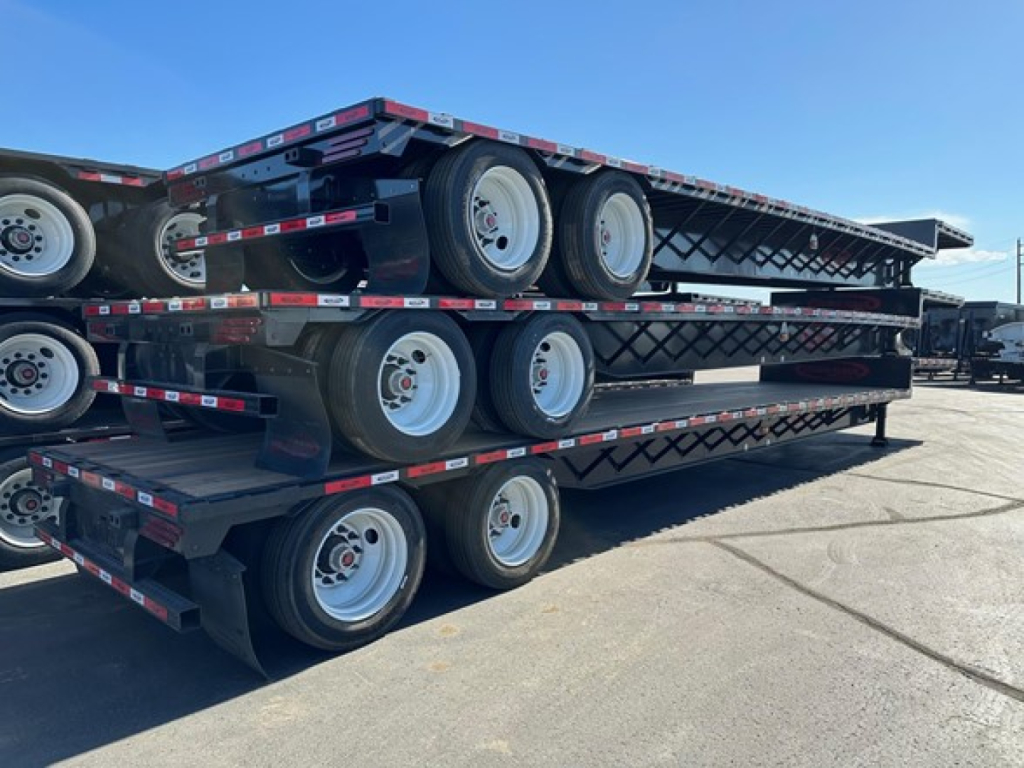
For most buyers, the real decision starts with trailer construction and tare weight. Aluminum and combo construction are popular because every pound saved on trailer weight can be used for payload. All-aluminum drop decks are common in freight operations focused on maximizing legal cargo weight, while combo trailers balance durability with reduced tare. Flooring and deck layout matter just as much. Aluminum floors, Apitong nail strips, stake pockets, pipe spools, and double L winch tracks are common on general freight trailers. If you haul steel or concentrated loads, look closely at crossmember spacing, coil package design, stub crossmembers, and rated capacity in a 10-foot section. Buyers hauling machinery should pay attention to ramp kits, rear approach, and deck length behind the neck.
Suspension and axle setup affect both legality and daily usability. Tandem axle air ride is the standard on most drop deck trailers, often with Hendrickson suspension and a sliding rear axle or spread setting to help meet bridge and California legal requirements. Kingpin setting, closed and open axle dimensions, dump valves, and lift or slide configurations all influence maneuverability, weight distribution, and how easily the trailer matches your routing. Tire size is another practical detail. Many units run 255/70R22.5 tires, while some lower-profile builds use 17.5 rubber to reduce deck height. Features like tire inflation systems, disc brakes, enclosed rear frameworks, and polished aluminum wheels can improve uptime, maintenance intervals, and resale appeal.
The best 2026 drop deck trailer is the one spec'd around your freight mix, not just the one with the lowest empty weight. A contractor hauling forklifts and compact equipment may prioritize ramps, nail strips, and toolbox space. A steel hauler may care more about coil bunks, dense crossmember spacing, chain tiedowns, and winch placement on both sides. A shipper focused on high-cube freight may zero in on lower deck height, axle slide settings, and overall legal height. When comparing listings, pay close attention to main deck length, loaded deck height, tiedown package, construction material, suspension spread, and any California legal or concentrated load ratings. Those details determine how versatile the trailer will be across real loads and real lanes.
Frequently Asked Questions
What is the difference between a drop deck trailer and a flatbed trailer?
A drop deck trailer has two deck levels, with the main deck sitting lower than the upper deck behind the tractor. That lower main deck allows taller freight to be hauled while staying under legal height limits that would be harder to meet on a standard flatbed. Drop decks are commonly used for machinery, building products, crated freight, and other loads that need more vertical clearance but do not require the extreme low deck of a lowboy.
What length and deck dimensions are common on a 2026 drop deck trailer?
The most common overall lengths are 48 feet and 53 feet, usually at 102 inches wide. Upper decks are often around 10 to 11 feet long, while lower decks typically run from about 37 feet 6 inches on a 48-foot trailer to roughly 41 to 43 feet on a 53-foot trailer. Main deck height is frequently around 40 to 41 inches, although certain all-aluminum builds and 17.5 tire configurations can help reduce loaded deck height.
What specs matter most when buying a drop deck for steel or concentrated loads?
For steel or other concentrated freight, pay close attention to crossmember spacing, coil package configuration, number of extra crossmembers in the coil area, main beam construction, and rated capacity in a short section such as 10 feet. Tie-down equipment also matters, including chain tiedowns, pipe spools, stake pockets, winch tracks, and sliding winches. A lighter trailer is useful, but structural support and proper securement layout are usually the deciding factors for demanding load profiles.
Are sliding axles and California legal settings important on a drop deck trailer?
Yes. A sliding rear axle or adjustable spread can be very important for bridge law compliance, state-specific rules, and load positioning flexibility. California legal settings are especially relevant for fleets that operate in or route through California, where closed tandem dimensions must meet strict requirements. Buyers should confirm kingpin setting, axle spread range, and whether the trailer can be run in both closed and open positions for the lanes they plan to cover.
Is an all-aluminum drop deck always the best choice?
Not always. All-aluminum drop deck trailers usually offer lower tare weight, corrosion resistance, and strong resale value, which makes them attractive for maximizing payload. However, combo construction can be a smart choice when buyers want a balance of lighter weight and added durability in high-stress areas. The right answer depends on what the trailer hauls, how often it sees concentrated loads, the operating region, and how much value the fleet places on every pound of legal payload.