
New Double Drop Deck Trailers For Sale
Shop new double drop deck trailers built for heavy haul freight, low deck height, detachable goosenecks, and legal transport of taller equipment.
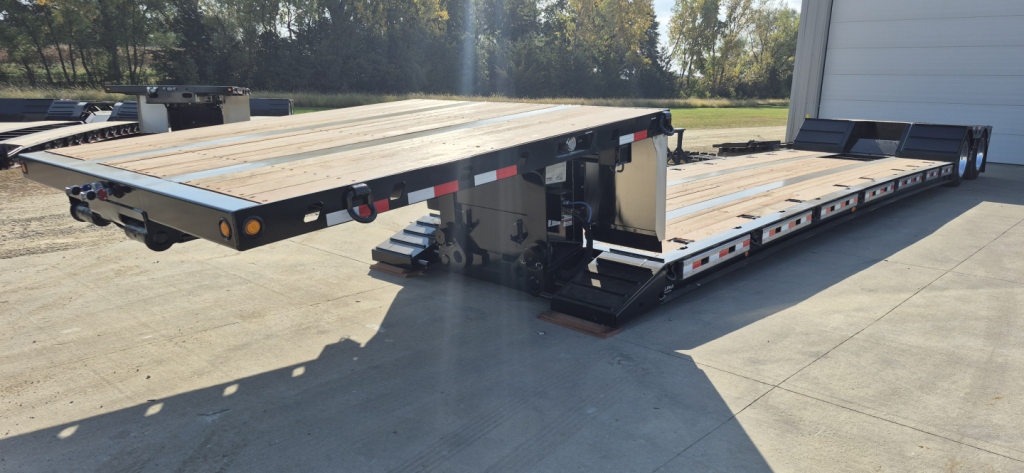
Looking for the easiest place to sell your new double drop deck trailer? List it here to reach thousands of buyers.
New Double Drop Deck Trailers
The first decision is usually fixed neck versus detachable gooseneck. Mechanical detachable goosenecks are common for straightforward loading and solid durability, while hydraulic detach models speed up loading cycles and can be a better fit for fleets handling frequent equipment moves. Common capacities start around 35 to 40 tons and move up into 55 ton and heavier configurations. Main deck lengths often fall in the high 20-foot to low 30-foot range, with overall trailer lengths around 48 to 53 feet, though extendable models can open up much longer deck space for specialized freight. Loaded deck height is often in the 18-inch to 20-inch range, and that number matters because it directly affects what can move legally without extra route restrictions.
Suspension, axle layout, and deck setup deserve close attention. Tandem axle double drops are common in 40 ton applications, while tri-axle and flip axle ready setups help distribute weight for higher capacity work. Air ride suspension is popular because it protects cargo and helps with ride quality on mixed road conditions. Buyers should also look at swing clearance, gooseneck length, ground clearance under the well, axle spread, and whether the trailer is prepped for a flip axle, jeep, or wet-line operation. On the deck itself, practical details matter: outriggers, slide-out deck widener sections, chain drops, bent D-rings, traction cleats on loading ramps, recessed lighting, toolboxes, and durable wood or steel flooring all affect daily usability.
A good new double drop deck trailer should match the freight profile first, then the permitting environment, then the tractor it will run behind. If the work is concentrated on excavators, dozers, pavers, or other tracked machines, ramp design, concentrated load rating, and deck durability become critical. If the freight changes week to week, flexibility features like a detachable neck, outriggers, and extendable deck length can add real value. Buyers comparing listings should pay close attention to legal payload by axle group, empty weight, loaded deck height, and how the trailer is configured for future accessories. In this class, the most important spec is not just rated capacity on paper. It is how efficiently the trailer carries the load you move most often while staying legal, stable, and fast to load.
Frequently Asked Questions about New Double Drop Deck Trailers
What is a double drop deck trailer used for?
A double drop deck trailer is used to haul tall, heavy, or irregular freight that will not fit well on a standard flatbed or step deck. The low center deck lets operators carry equipment such as excavators, loaders, tractors, industrial tanks, and other machinery with more vertical clearance. This design helps keep loads within legal height limits and can reduce the need for more restrictive permits on certain moves.
What is the difference between a double drop and a step deck trailer?
A step deck has two deck levels, while a double drop has three sections with a much lower center well between the front and rear decks. That center well is the key advantage because it provides significantly lower loaded deck height than a step deck. For freight that is especially tall, a double drop is usually the better choice because every inch of deck height affects legal transport and route flexibility.
Should I choose a mechanical detachable gooseneck or a hydraulic detachable gooseneck?
A mechanical detachable gooseneck is generally simpler and often costs less up front, making it a strong fit for many heavy haul applications. A hydraulic detachable gooseneck speeds up loading and unloading and can improve efficiency for operations that load equipment frequently. The right choice depends on how often the trailer is detached, the type of machines being loaded, available tractor hydraulic setup, and how much loading time matters in your operation.
What specs matter most when comparing new double drop deck trailers?
The most important specs are rated capacity, loaded deck height, main deck length, axle configuration, suspension type, empty weight, and ground clearance. Buyers should also review kingpin setting, swing radius, width between outriggers, deck flooring, tie-down layout, and whether the trailer is set up for a flip axle or other weight-distribution equipment. These details determine not just what the trailer can carry, but how legally and efficiently it can carry it.
How do I know what ton rating I need in a double drop deck trailer?
Ton rating should be matched to the actual freight you haul, the weight concentration of that freight, and the axle and permit laws in the states where the trailer will run. A 40 ton trailer may be suitable for many common construction machines, but heavier or more concentrated loads may require a 55 ton or higher configuration with additional axle options. Buyers should evaluate real operating weight, not just machine brochure weight, and include attachments, fuel, buckets, and any accessories that travel with the load.