
Container Trailers For Sale in Georgia
Find container trailers for sale in Georgia, including chassis specs, axle options, container sizes, and port-ready features for drayage work.
Selling a container trailer? List your container trailer for sale and reach thousands of commercial buyers.
Container Trailers in Georgia
Key spec decisions on a container trailer come down to frame configuration, tandem location, axle spread, and tare weight. A lightweight chassis can help maximize payload, but it still needs the structural strength for repeated terminal use and rough yard conditions. Buyers should pay attention to kingpin setting, overall length, loaded weight distribution, twist locks, bolster design, tire size, suspension type, and brake spec. Air ride can offer cargo protection and a smoother pull, while spring ride may appeal in hard-use applications where simplicity matters. Radial tires, anti-lock brakes, LED lighting, and corrosion-resistant finishes are common priorities, especially for units that see salt air and heavy port exposure.
Georgia operators often need a trailer that can cycle fast through port and warehouse environments without constant downtime. That makes condition and maintenance points especially important. Look closely at crossmembers, main rails, slider mechanisms, locking pins, landing gear, brake chambers, wheel ends, and electrical system integrity. On older chassis, rust, weld repairs, and alignment issues deserve careful inspection because they directly affect tire wear, tracking, and DOT compliance. If the trailer will spend time in crowded terminals or urban delivery areas, turning radius, rear underride protection, mud flap setup, and lighting visibility matter more than many buyers first expect.
The best container trailer for sale is usually the one that fits your freight mix, port requirements, and daily dispatch pattern without adding unnecessary weight or complexity. A dedicated drayage fleet may prefer standardized chassis specs to simplify parts and maintenance, while an owner-operator may lean toward a more versatile combo chassis that can cover a wider range of loads. If your lanes involve overweight 20-foot containers, pay close attention to axle placement and legal payload strategy. For buyers comparing listings in Georgia, the real value is not just price. It is how well the chassis matches container length demand, terminal conditions, maintenance expectations, and the revenue profile of your freight.
Frequently Asked Questions about Container Trailers in Georgia
What is the difference between a container trailer and a container chassis?
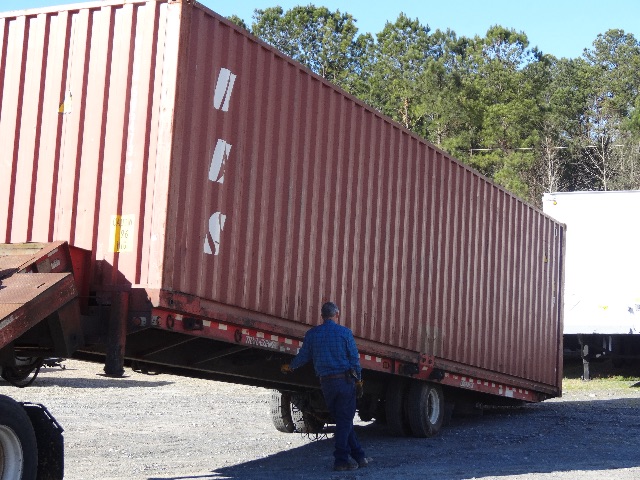
In most trucking and intermodal use, the terms container trailer and container chassis refer to the same type of equipment. It is a specialized trailer designed to carry ISO shipping containers using twist locks and a frame layout built around standard container dimensions. Some buyers use "container trailer" as the broader marketplace term, while "chassis" is the more common industry term in drayage and port operations.
What container sizes can a container trailer handle?
That depends on the chassis design. Some are fixed-length units built for 20-foot or 40-foot containers only, while others are combo, slider, or extendable chassis that can accommodate multiple sizes such as 20-foot, 40-foot, 45-foot, and sometimes longer box configurations. Buyers should confirm container length compatibility, lock positions, and bridge-law-friendly axle settings before choosing a unit for mixed freight.
What should I inspect first on a used container trailer?
Start with the frame, crossmembers, twist locks, suspension, brakes, tires, wheel ends, and all slider or extension components if equipped. On port-exposed units, corrosion and prior weld repairs are critical inspection points. Also verify landing gear operation, ABS function, lighting, air system condition, and alignment. A chassis that tracks poorly or shows uneven tire wear can quickly become more expensive than a higher-priced unit in better condition.
Are lightweight container chassis better for port work in Georgia?
A lightweight chassis can improve payload potential, which matters on dense freight and overweight container moves, but lower tare weight should not come at the expense of durability. Georgia port operations can be tough on equipment because of frequent turns, yard impacts, and exposure to moisture and salt air. The better choice is a chassis that balances low tare weight with a strong frame, dependable running gear, and corrosion resistance suited to Savannah-area service.
Is a fixed chassis or an extendable chassis better for mixed container freight?
A fixed chassis is often the better choice for fleets hauling the same container size every day because it is simpler, lighter, and easier to maintain. An extendable or combo chassis is more versatile and can improve utilization when dispatch patterns change between 20-foot, 40-foot, and other common container lengths. The tradeoff is added mechanical complexity, more moving parts to inspect, and sometimes higher tare weight.