
Trailers For Sale in Connecticut
Browse trailers for sale in Connecticut, including flatbeds, roll-off trailers, and other commercial trailer types for regional and heavy-duty hauling.
Selling a trailer? List your trailer for sale and reach thousands of commercial buyers.
Trailers in Connecticut
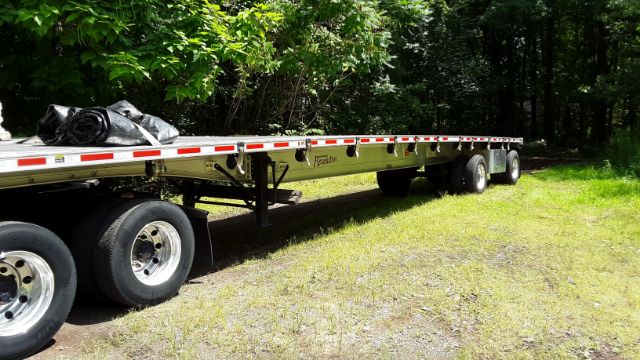
Length, frame material, suspension, and axle configuration drive both payload and day-to-day usability. Aluminum flatbeds are common when tare weight matters, especially in 48-foot and 53-foot lengths, while steel construction is still favored for severe-service trailer applications that take repeated impact and abrasive loading. Tandem and spread axle layouts each have tradeoffs in bridge compliance, tire scrub, and maneuverability. Air ride suspension is common on road-going freight trailers because it protects cargo and improves ride quality, while heavy-duty roller bed and roll-off designs focus more on structural durability, floor integrity, and reliable loading cycles.
Connecticut operators also need to think about regional realities. Tight urban deliveries, transfer stations, jobsite access, and Northeast bridge laws can all affect the best trailer spec. Buyers should look closely at kingpin setting, overall length, width, tire size, brake condition, lighting, and whether the axle slide or spread setup fits their routes. On flatbeds, useful details include winch track layout, number of winches, coil package, floor type, crossmember construction, and toolbox capacity. On roll-off trailers, check rail and roller wear, frame condition, lighting, suspension condition, and how the trailer matches the containers or beds already in service.
A good trailer purchase is usually less about the badge on the nose and more about serviceability, structural condition, and fit for the lane. Clear title status, axle and brake condition, tire remaining life, and evidence of prior frame or floor repairs all deserve a close look. Buyers comparing used trailers should also consider parts support for common makes such as Wabash, Great Dane, and Fontaine, along with how easy the trailer will be to keep compliant and productive in regional Connecticut operation.
Frequently Asked Questions about Trailers in Connecticut
What should I look for first when buying a used trailer in Connecticut?
Start with trailer type, axle configuration, and structural condition. A buyer should confirm the trailer matches the intended freight or container system, then inspect the frame, crossmembers, floor, suspension, brakes, and tires. In Connecticut, route restrictions, bridge laws, and tighter delivery areas make overall length, spread versus tandem axles, and kingpin setting especially important.
Is an aluminum flatbed better than a steel trailer?
An aluminum flatbed is usually preferred when lower tare weight and higher payload are priorities. Steel trailers generally offer greater resistance to repeated impact and harsh vocational use. The better choice depends on the freight, loading method, and expected abuse level. For highway freight, aluminum often wins on payload efficiency. For severe-service applications, steel can be the more durable long-term spec.
What is the difference between a flatbed trailer and a roll-off trailer?
A flatbed trailer is designed to haul freight loaded from the side, rear, or overhead, such as lumber, machinery, pipe, and steel. A roll-off trailer is built to transport roll-off containers or roller beds used in waste, scrap, and demolition work. Flatbeds are judged heavily on deck design, securement features, and weight. Roll-off trailers are judged more on frame strength, roller bed condition, suspension durability, and compatibility with the container system.
How important is axle configuration on a trailer?
Axle configuration directly affects legal weight distribution, maneuverability, tire wear, and route flexibility. Tandem axles are simple and common for many applications. Spread axles can improve weight distribution but may increase tire scrub in tight turns. Sliding axle configurations add flexibility for adjusting load position. Buyers should match axle layout to the freight, the states they run, and the type of loading docks or jobsites they enter.
What used trailer components usually cost the most to repair?
Major structural repairs are typically the most expensive. That includes cracked or bent frames, damaged crossmembers, floor replacement, suspension issues, and axle damage. Brake systems, tires, lighting, and air system repairs can add up quickly as well, but frame and floor problems usually have the biggest effect on overall value. A thorough inspection is important because cosmetic appearance alone does not show how a trailer has been worked.