
Service/Utility Trucks For Sale in Iowa
Browse service and utility trucks for sale, including mechanic bodies, cable pullers, and field support trucks built for on-site repair and utility work.
Selling a service/utility truck? List your service/utility truck for sale and reach thousands of commercial buyers.
Service/Utility Trucks in Iowa
A buyer should start with chassis class, axle ratings, and powertrain compatibility with the body. Many service trucks are built on medium-duty and heavy-duty platforms from International, Ford, Freightliner, Chevrolet, GMC, Peterbilt, and Kenworth. Common considerations include diesel engine make, automatic versus manual transmission, PTO provision, wheelbase, and rear axle capacity. If the truck carries a crane, compressor, or puller system, check the GVWR against actual working payload and mounted equipment weight. Hydraulic system condition, PTO engagement, outrigger function, body corrosion, compartment door seals, and electrical system integrity are all critical on used service and utility trucks. In Iowa, rust, frame condition, and underbody exposure from winter road treatment deserve close attention.
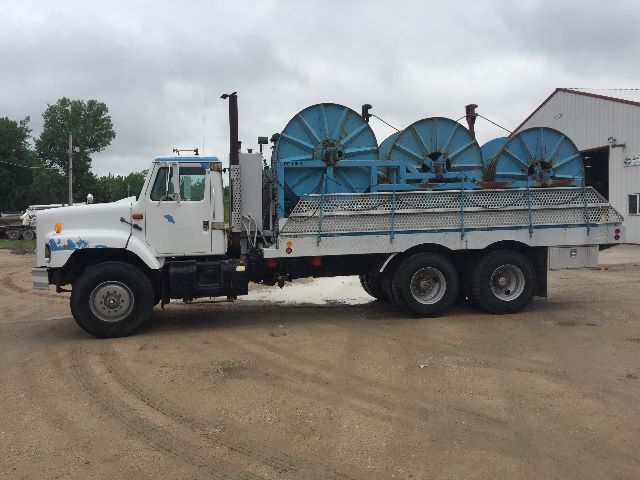
The term service truck often overlaps with utility truck, but the job focus can be different. Mechanic service trucks are designed for tools, parts, lifting, and field repairs on construction equipment, farm machinery, and fleet vehicles. Utility trucks may be outfitted for line work, cable installation, reel transport, vacuum excavation support, or municipal maintenance. A cable puller truck, like some units found in this category, needs close inspection of drum capacity, hydraulic controls, reel motors, fairlead condition, and overall pulling system wear. Buyers should also verify crane certification where applicable, inspect compressor hours separately from chassis miles, and confirm whether the body was factory-installed or added later by an upfitter.
For Iowa operations, service and utility trucks are commonly used by contractors, co-ops, municipalities, road crews, ag service businesses, and independent field mechanics who need one truck to carry tools, power equipment, and repair capability to the worksite. The best choice depends on service radius, terrain, and the type of equipment being supported. A lighter single-axle setup may be easier to route through towns and job entrances, while a heavier tandem or severe-service chassis may be better suited for crane work or specialized utility gear. When evaluating listings, look past paint and mileage and focus on PTO performance, body structure, compartment usability, mounted equipment condition, and whether the truck’s upfit matches your service work without requiring a costly rebuild.
Frequently Asked Questions about Service/Utility Trucks in Iowa
What is the difference between a service truck and a utility truck?
A service truck is typically configured for field repair and maintenance, with compartments for tools, parts, fluids, and often a crane, welder, or compressor. A utility truck is a broader term that can include service bodies but also specialized equipment for electrical, telecom, municipal, or cable work. In the used market, the terms often overlap, so buyers should focus on the body upfit, PTO equipment, and intended application rather than the label alone.
What should I inspect first on a used service or utility truck?
Start with the upfit and working systems before focusing on cosmetics. Confirm PTO operation, hydraulic performance, crane or compressor function, compartment condition, latch integrity, and any signs of structural cracking around body mounts or outriggers. Then verify chassis fundamentals such as engine condition, transmission operation, brake life, tire condition, axle ratings, and frame rust. A truck with good miles but a worn-out service body can become expensive quickly.
Are service and utility trucks in Iowa prone to rust issues?
Yes. Iowa trucks often see winter road salt, moisture, and agricultural environments that can accelerate corrosion on frames, brake lines, body floors, outriggers, crossmembers, and compartment doors. Buyers should inspect underbody metal, mounting points, wiring, hydraulic lines, and door seams carefully. Surface rust is common, but scaling, perforation, or weakened mounts can affect safety and long-term value.
How important is PTO compatibility on a service truck?
PTO compatibility is essential because many service and utility bodies rely on engine-driven power for cranes, compressors, reel systems, and hydraulic tools. Buyers should confirm the truck has the correct PTO setup for the installed equipment, that engagement is smooth, and that the hydraulic pump and controls operate properly under load. PTO repairs and reconfiguration can be costly, especially if the transmission and body equipment are not well matched.
What body features matter most when comparing service truck listings?
The most important body features depend on the work, but buyers usually compare compartment layout, crane rating, compressor output, generator or welder capacity, reel or puller setup, and usable payload. Also check scuff-prone areas, shelf condition, lighting, locking compartments, and whether the body design allows safe access to tools and equipment in the field. A practical layout that fits your daily service calls is often more valuable than extra accessories you will not use.