
Rears Parts For Sale
Shop rear axle assemblies and rear-end parts for heavy-duty trucks, including tandem rears, ratios, housings, carriers, and brake setups.
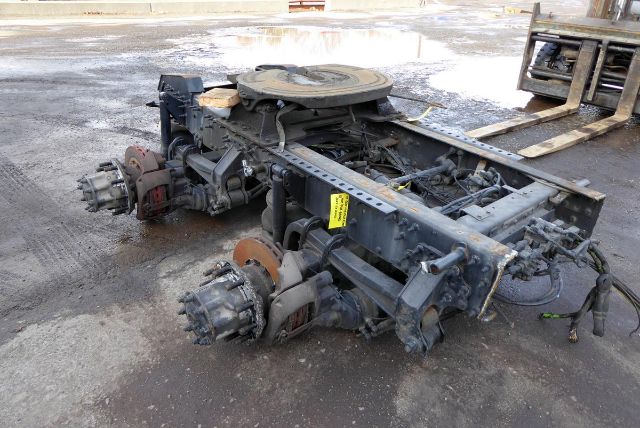
Selling a rears part? List your rears part for sale and reach thousands of commercial buyers.
Rears Parts
Ratio is one of the first decisions to get right. A faster ratio such as 3.08 is commonly seen in highway tractors focused on fuel economy and lower cruise RPM, while deeper ratios are often preferred for heavier vocational work, startability, and low-speed pulling power. GAWR, tandem capacity, and differential features matter just as much. Buyers should confirm whether the assembly is a single or tandem rear, whether it includes a power divider, and whether the carrier style matches the existing setup. On tandem-drive trucks, matching front and rear inter-axle compatibility is critical. It is also smart to verify axle spline count, input yoke series, wheel-end style, and whether the housing is designed for a specific suspension configuration.
Brake and suspension details can make or break a parts swap. Some rear assemblies are equipped with air drum brakes, while others use air disc brakes that change service parts, wheel-end packaging, and maintenance cost. Suspension interfaces also vary widely, including four-bag air ride and other OEM-specific layouts. Buyers should check spring pad spacing, torque rod bracket locations, ABS sensor provisions, hub-pilot versus stud-pilot wheel ends, and axle track width before purchase. If the rear is being used as a replacement rather than a rebuild core, inspect for housing damage, spun bearings, excessive backlash, metal contamination, and wear in the differential lock or power divider components.
Meritor, Dana Spicer, Eaton, and Mack-spec rears are common in the market, but interchange is never something to assume. The safest approach is to match the axle model tag, ratio, capacity, brake package, and major mounting dimensions to the original component. For fleets trying to control downtime, a complete takeout rear can be the fastest path back into service. For shops rebuilding a truck in stages, the value may be in the carrier, axle shafts, or wheel-end hardware. A good rear assembly should match the truck’s duty cycle, driveline geometry, and maintenance plan, not just the bolt pattern.
Also known as: Rear End, Rear Axle Assembly
Frequently Asked Questions about Rears Parts
What should I verify before buying a heavy-duty truck rear axle assembly?
Verify the axle model number, gear ratio, GAWR, brake type, suspension mounting configuration, and wheel-end style first. You should also confirm spline count, yoke series, ABS provisions, track width, and whether the axle is part of a tandem set with a compatible power divider. Matching the original tag information is the best way to avoid driveline mismatch, fitment issues, and unnecessary downtime.
Why does rear axle ratio matter so much?
Rear axle ratio affects cruise RPM, fuel economy, startability, and grade performance. A numerically lower ratio such as 3.08 is often used in highway applications where lower engine speed at road speed is the priority. A numerically higher ratio is generally better for heavy loads, stop-and-go work, and vocational service where low-speed pulling power matters more than highway fuel economy.
Can I swap from drum brakes to air disc brakes on a rear assembly?
It is possible in some cases, but it is not a simple one-for-one decision. Air disc and drum brake rear assemblies can differ in wheel-end packaging, service parts, control components, and sometimes wheel fitment. Buyers should confirm clearance, hub and rotor or drum setup, ABS compatibility, and the truck’s existing brake system configuration before making that change.
What is a power divider on a tandem rear?
A power divider is the mechanism that splits torque between the drive axles in a tandem setup. It helps both axles pull under varying traction conditions and is a key feature in many heavy-duty tandem rears. If you are replacing one axle or one carrier in a tandem system, power divider compatibility with the mating axle and inter-axle driveline is essential.
Is it better to buy a complete rear or individual rear-end parts?
A complete rear assembly can reduce labor time and speed up installation when the housing, carrier, shafts, and wheel ends all need replacement. Individual parts make more sense when the housing is still serviceable and only the carrier, shafts, hubs, or brake components are damaged. The right choice depends on shop labor cost, parts availability, and how quickly the truck needs to return to service.